Major Sewage Spill Dumps 800,000 Gallons into Providence River
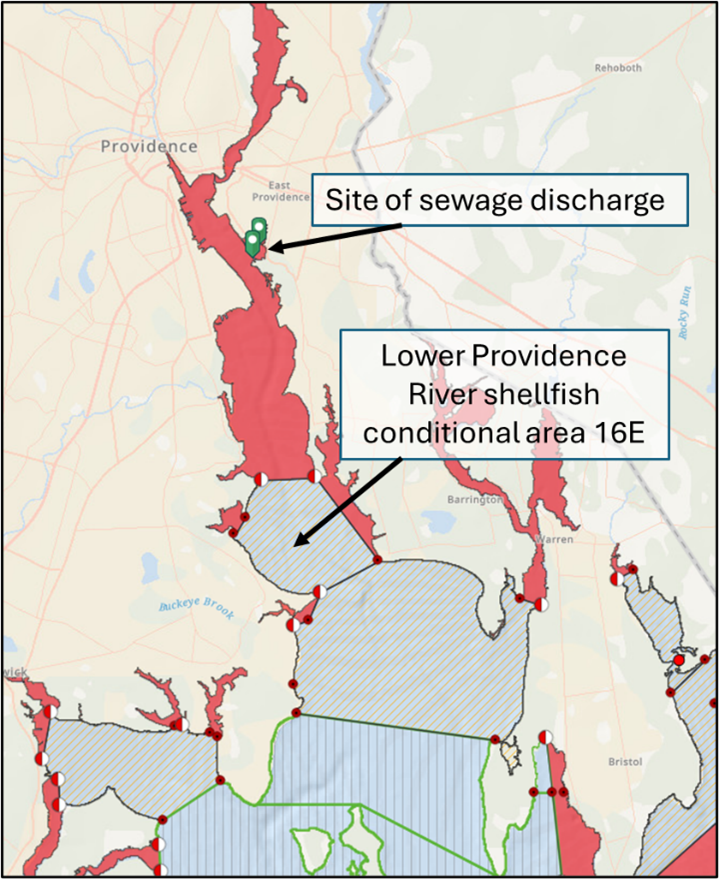
The Rhode Island Department of Environmental Management (DEM) confirmed a catastrophic sewage discharge of approximately 800,000 gallons into the Providence River near Watchemoket Cove, East Providence, triggered by a break in a 20-inch forced main pipe. The incident was first detected Monday morning, with repair crews working urgently to isolate and fix the leak.
The break in the pipe runs adjacent to the East Bay Bike Path, a popular recreational area now temporarily impacted as crews continue repair work. The affected section, designated as Area 16E, is a conditional shellfish harvesting zone that has been immediately closed following the spill.
Emergency Closure Hits Shellfish Harvesting in Lower Providence River
DEM announced the shellfish closure Tuesday afternoon, citing significant water quality degradation from untreated sewage entering the river. “The discharge of untreated sewage poses serious health risks and unsanitary conditions,” DEM said, warning that shellfish in this area are unsafe until further water and shellfish testing meet FDA safety standards.
DEM, in partnership with the Rhode Island Department of Health (RIDOH) and the Rhode Island Coastal Resources Management Council (CRMC), is conducting rigorous monitoring to determine when the area can be safely reopened. These agencies are famed for maintaining Rhode Island’s high-quality shellfish industry through fast response and environmental stewardship.
Repair Progress and Impact on Local Community
East Providence Mayor Bob DaSilva posted an update late Tuesday confirming the timeline of events. “Our teams identified the leak at 11:00 a.m. Monday and switched flows to a bypass main by 8:00 a.m. Tuesday. The damaged pipe was completely isolated at 8:00 a.m. Tuesday, and the wastewater remaining in the pipe is being pumped out,” he said.
Importantly, Mayor DaSilva emphasized, “No additional leaks beyond the 800,000 gallons already reported exist.” This assurance comes as residents and local businesses worry about environmental and recreational fallout.
Repairs may temporarily limit access to the East Bay Bike Path around Watchemoket Cove, impacting daily commutes and leisure activities.
Why This Spill Matters Now to US and Alaskan Readers
While this spill is regional, its scale and response reveal critical infrastructure vulnerabilities faced nationwide. Aging wastewater systems across the U.S. represent a looming environmental threat to waterways and fisheries crucial for local economies and public health. In Alaska, where clean water and natural resources underpin subsistence and tourism, this serves as a reminder of the stakes involved in protecting aquatic environments from contamination.
For Americans everywhere, including Alaskans, the Providence River spill underscores the importance of vigilant monitoring and rapid emergency response to safeguard water quality and seafood safety—two pillars of public health and economy.
What Happens Next?
Water quality testing and shellfish safety sampling will continue intensively under RIDOH and DEM supervision. The shellfish harvest closure remains in place until test results confirm water is free of contaminants.
Residents and visitors can stay informed by visiting DEM’s shellfish information page and by subscribing to their emergency alerts. Anyone using the East Bay Bike Path near Watchemoket should expect temporary closures or detours during repair activities.
Public Resources and Contacts
For immediate updates on water quality and shellfish closures, DEM’s 24-hour shellfishing hotline is 401-222-2900. Follow DEM on social media: Facebook, Twitter/X (@RhodeIslandDEM), and Instagram (@rhodeisland.dem) for real-time news.
“East Providence Wastewater Treatment Facility teams continue to work non-stop to end the discharge and restore full function,” Mayor DaSilva reaffirmed, highlighting the collaborative effort with state agencies.
This developing environmental crisis demands quick public attention as authorities work around the clock to halt contamination, assess damage, and protect public health. The scale of this sewage spill is one of the largest in recent memory for the Providence region, with ripple effects to the natural habitat and food safety that resonate far beyond Rhode Island.