Freemasons Break Silence on Brotherhood, Mental Health, and Charitable Power
Freemasons across the UK are opening up for the first time about how their centuries-old organization profoundly changed their lives—offering support that helped cure loneliness, depression, and even dementia, while fueling one of the world’s most active charitable networks.
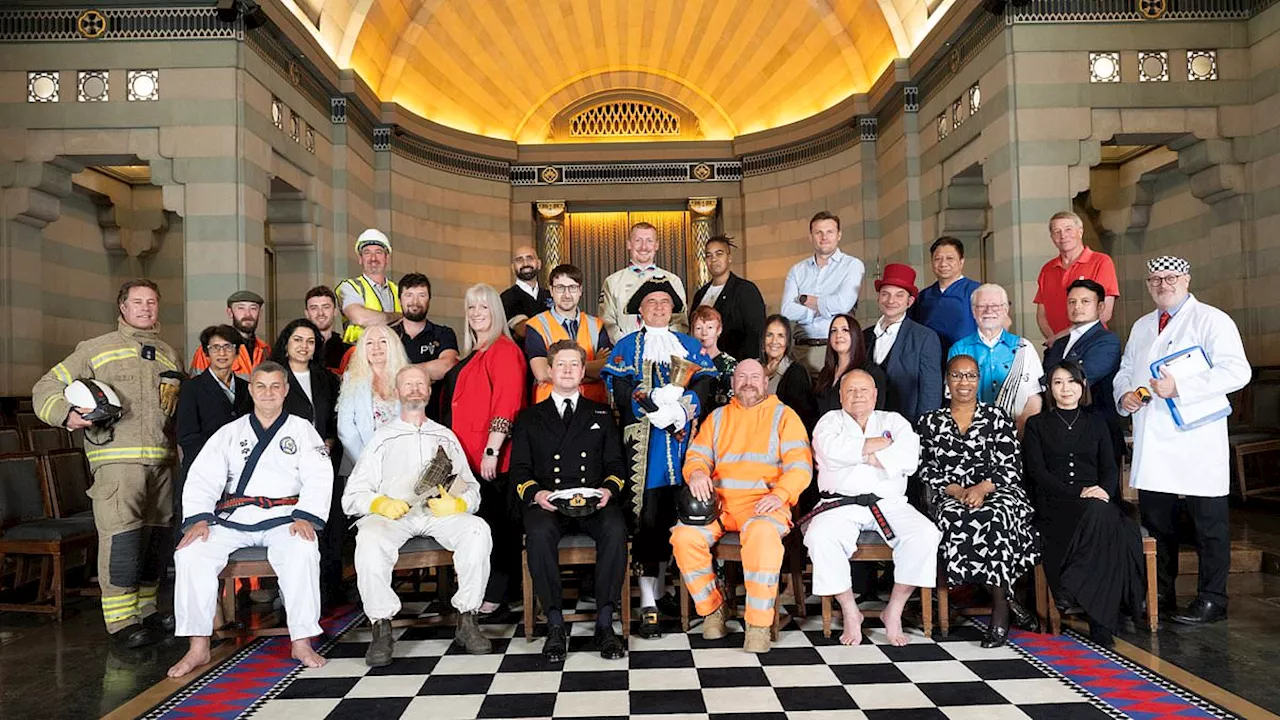
Members from a vast range of backgrounds—including first responders, firefighters, bankers, chefs, and entertainers—are shaking off the centuries of secrecy that have long surrounded Freemasonry’s rituals. Despite shielding their symbolic ceremonies from public view, many are now speaking candidly about how belonging to the 170,000-strong fraternity in the United Kingdom helped restore meaning and community in an isolating world.
Charity and Brotherhood Provide New Purpose
Matthew Wintle, a 52-year-old first responder from Chichester, describes Freemasonry as “like coming to church” — a place of peace away from his high-stress job. “A lot of us are mental health first aiders, so we look out for each other,” he explains, highlighting how their support networks go beyond mere camaraderie.
Ben Evans, 33, a train driver from Penzance, shared a personal story of combating homophobia and finding acceptance within the lodge. In 2022, supported by Freemasons, he volunteered on the front lines in Ukraine driving a field ambulance, showing the community’s global reach in times of crisis.
Jayson Read, 35, reflected on how Freemasonry “straightened me out” after years on a chaotic path, emphasizing the fraternity’s role in personal redemption and forging worldwide friendships.
Women and Diversity Increasing Within the Ranks
Among the new wave of Freemasons is Cherise Shade, a 38-year-old protection officer from Birmingham, who stresses the importance of kindness and calls out the myth that Freemasonry is male-only. “A lot of people are surprised there even are women masons,” she said, proudly acknowledging that women now play a vital role in the organization’s future.
Mia Cameron-Dungey, 52 and a Navy team leader, noted the increasing visibility of women in Freemasonry. “For years we women were like a hidden secret, but now our numbers are up,” she said, highlighting fresh momentum and inclusivity.
Global Fellowship with Local Impact
The fraternity’s charitable work is as diverse as its membership. Josh Lee-Taylor, a scout leader from Nottingham, explained how lodges support youth groups—donating both time and money. Meanwhile, Michael Duque, an emergency nurse from Bromley, leads one of London’s largest Filipino lodges, connecting diasporic members and nurturing cultural bonds.
Increasingly, Freemasons such as Vincent Geluz-Bustos, a Filipino chef in Kent, credit their membership with personal recovery—his memory vastly improved after battling post-operative dementia. Stories like his showcase the organization’s unexpected positive health impacts.
Busting Myths and Embracing Goodwill
Freemasons have long faced wild conspiracy theories ranging from occult rituals to involvement in high-profile assassinations. Members like David Edwards, an environmental health officer, dismiss such rumors plainly: “We don’t run the world and didn’t assassinate JFK.”
Instead, members emphasize integrity, charity, and fellowship. In diverse professions and communities, they find “making good men and women better” through ethical improvement and mutual support, rejecting selfishness and division.
What Freemasonry Means in 2026 and Beyond
With increasing openness, recruitment initiatives—especially targeting younger and female members—and sustained charity efforts, Freemasonry appears poised to shed old shadows and grow fresh branches of community support both in the UK and abroad.
As Murray Sale, a martial arts instructor, put it, “It has tested me, but I wouldn’t change a single thing about it.” Meanwhile, veterans like David Boylin, an 81-year-old musician, underscore the social and humanitarian impact of Freemasonry’s extensive networks, often being first responders in disaster relief and community aid.
For US and Alaska readers, this glimpse into Freemasonry serves as a reminder that even the most secretive groups can be pillars of hope and charity—connecting everyday people with extraordinary acts of kindness.
“Freemasonry is about spirituality, ritual, community and friendship – what a church should be, but often isn’t.” – Mary Spillane, charity worker
Stay tuned as The Alaska Insider continues to track how organizations rooted in tradition are evolving to meet the urgent social needs of today’s world.