Democratic Candidates Launch Fierce Attacks on Steyer and Becerra in California Governor Debate
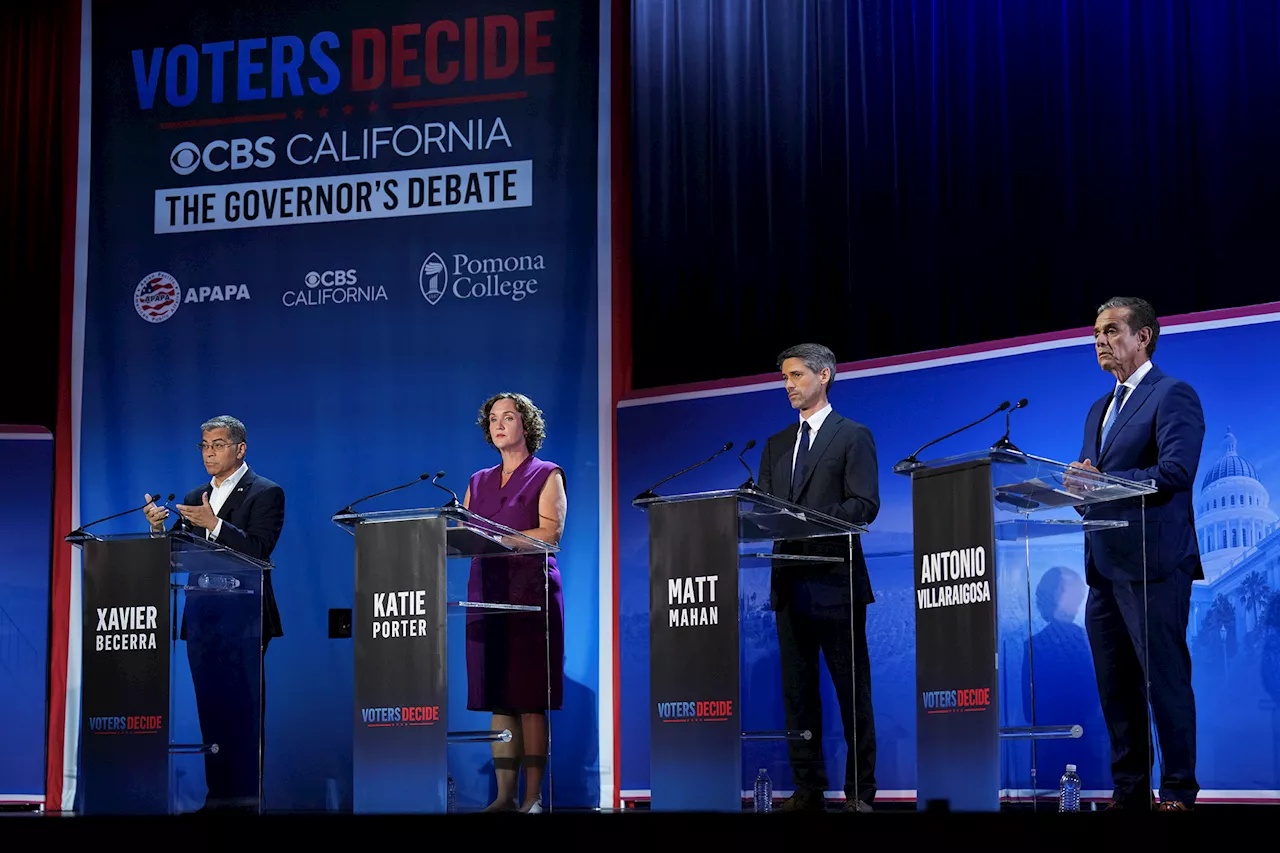
Six leading Democratic candidates clashed in a chaotic and combative California governor debate Tuesday night at Pomona College, focusing their fire on front-runner Tom Steyer and rising rival Xavier Becerra less than a week before ballots begin mailing to voters.
The high-stakes encounter, aired on CBS, lacked a clear breakout moment as candidates struggled to differentiate their policy plans and repeatedly interrupted one another during the free-wheeling contest. Katie Porter, a former Congressional progressive star, openly challenged Steyer on his climate credentials, exposing the billionaire’s previous investments in fossil fuel companies despite Steyer’s current calls to “make polluters pay.”
“How about profiteers pay?” Porter demanded sharply, criticising Steyer’s massive self-funding of the campaign with at least $132 million of his own money, which has propelled him to dominating polls so far among Democrats.
Meanwhile, moderate Democrat Matt Mahan, San Jose’s mayor, went after former US Health and Human Services Secretary Xavier Becerra for his record at Biden’s administration and refusal to provide detailed policy solutions when pressed. Becerra responded defensively, even debating a moderator over the legality of his plan to freeze home insurance rates by declaring a state of emergency.
Scrutiny Deepens as Becerra Faces Fresh Criticism
Becerra’s recent surge in fundraising and support propelled by a wave of organic social media influencer posts faces renewed scrutiny. His record on immigration has come under fire, notably over the management of unaccompanied migrant children during his tenure, with a 2026 investigation linking the handling of these kids to dangerous child labor conditions. Becerra dismissed the findings as politically motivated, placing blame on other agencies.
Progressives and Steyer’s camp also highlighted Becerra’s ties to energy giant Chevron, contrasting his environmental stance with Steyer’s costly climate fight.
Republican Disruptions Add Tension
The debate’s tone further heated up with Republican candidate Chad Bianco, Riverside County sheriff, aggressively attacking Democratic policies and making baseless claims, including a false assertion that COVID-19 vaccines distributed under Biden caused widespread poisoning.
Bianco’s tactics drew audible groans, especially when Democratic education incumbent Tony Thurmond confronted him over the recent seizure of 650,000 ballots in Riverside County, escalating partisan tensions in the race.
Democrats Struggle to Stand Out on Cost of Living and Climate
The Democratic contenders largely delivered overlapping solutions on key issues like housing, health care, energy, and education, with few offering bold new ideas to tackle California’s soaring cost of living. While all advocated mandated mental health treatment for homeless individuals refusing shelter, opinions diverged on energy policies.
Porter, Mahan, and Villaraigosa argued for keeping oil refineries open temporarily to manage soaring gas prices alongside clean energy goals, while Steyer pushed for higher taxes targeting oil profits. Republicans want a gas tax suspension, a notion endorsed by some Democrats but opposed by Becerra and Porter.
Voters Left Disoriented as Deadline Nears
The turbulent debate left voters confused rather than inspired. Pomona College student Kloi Ogans voiced the frustration of many young Californians worried about housing affordability and immigration enforcement after watching the candidates’ bickering. “I think I’m more confused on who to vote for now than ever,” Ogans said.
With ballots set to mail in under a week, candidates will intensify efforts to clarify their visions and win over Californians as the race intensifies amid rising costs and political uncertainty that also ripple across US states facing similar challenges.
This debate marks a critical moment in a changing California political landscape, one that could influence national policy shifts on climate, immigration, and governance style well beyond the West Coast.