South Korea Appeals Court Reduces Former Prime Minister Han Duck-soo’s Sentence
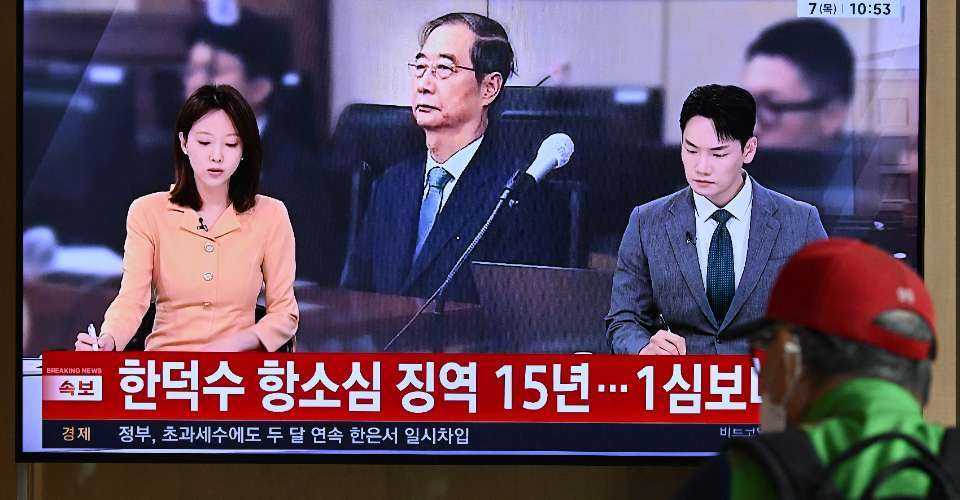
Strong legal shifts are unfolding in South Korea as an appeals court in Seoul cuts former Prime Minister Han Duck-soo’s jail sentence from 23 years to 15 years. This development marks a major turn in the escalating legal fallout surrounding the controversial martial law declaration issued by ex-President Yoon Suk Yeol.
The appeals court ruled on May 7, reducing Han’s prison term by eight years while upholding most of the charges related to his involvement in enforcing a martial law decree that paralyzed South Korea’s civilian government for roughly six hours in December 2024. The declaration plunged the nation into unexpected chaos before opposition lawmakers swiftly overturned it.
Reduced Sentence Reflects Han’s Lengthy Government Career
The presiding judge highlighted Han’s “more than 50 years as a public official” as a mitigating factor for the sentence reduction, noting that Han did not “actively” conspire to lead or execute the martial law declaration. Yet, the court slammed Han for failing to oppose the decree despite his past experience witnessing unlawful martial law during South Korea’s authoritarian era in the 1970s and 1980s.
“He abandoned the grave responsibilities arising from the authority and position entrusted to him and instead sided with those participating in the acts of insurrection,”
the judge stated.
Han, now 76 years old, remained impassive during the verdict reading. He had already been imprisoned since his original sentencing in January.
Han’s Role in Quickly Lifting Martial Law Criticized
Following the National Assembly’s motion to repeal martial law, Han convened and presided over a cabinet meeting to rescind the declaration on President Yoon’s behalf. Despite this, the court condemned him for endorsing the initial illegal suspension of civilian rule—a move that exacerbated the national crisis.
Broader Legal Turmoil Surrounding Former President and Allies
This appeals court decision arrives amid a stream of intensified rulings tied to former President Yoon and his close circle. Last week, Yoon’s jail sentence for obstructing justice was increased from five to seven years. He is already serving a life sentence for leading the insurrection underpinning the martial law crisis.
Furthermore, Yoon’s wife, former First Lady Kim Keon Hee, recently saw her corruption sentence elevated to four years. Her charges of bribery and stock manipulation were upheld despite earlier acquittals, marking a significant tightening of penalties.
Why It Matters for Global Democracy Watchers
South Korea’s legal reckoning over martial law enforcement underscores the fragility of democratic institutions and civilian oversight in times of political crisis. For US and Alaska audiences tracking global democracy, this case highlights the challenges nations face in balancing security and constitutional governance.
The appeals court’s decision could influence international views on accountability for high-level abuses of power and the rule of law amidst political upheaval.
What’s Next?
Han and others convicted on related charges may seek further legal recourse, while public attention remains fixed on the continuing judicial process for Yoon and his associates. Meanwhile, South Korea’s government faces the task of restoring public trust and reaffirming democratic protections following this turbulent chapter.
The Alaska Insider will continue monitoring this high-stakes legal saga as it develops.