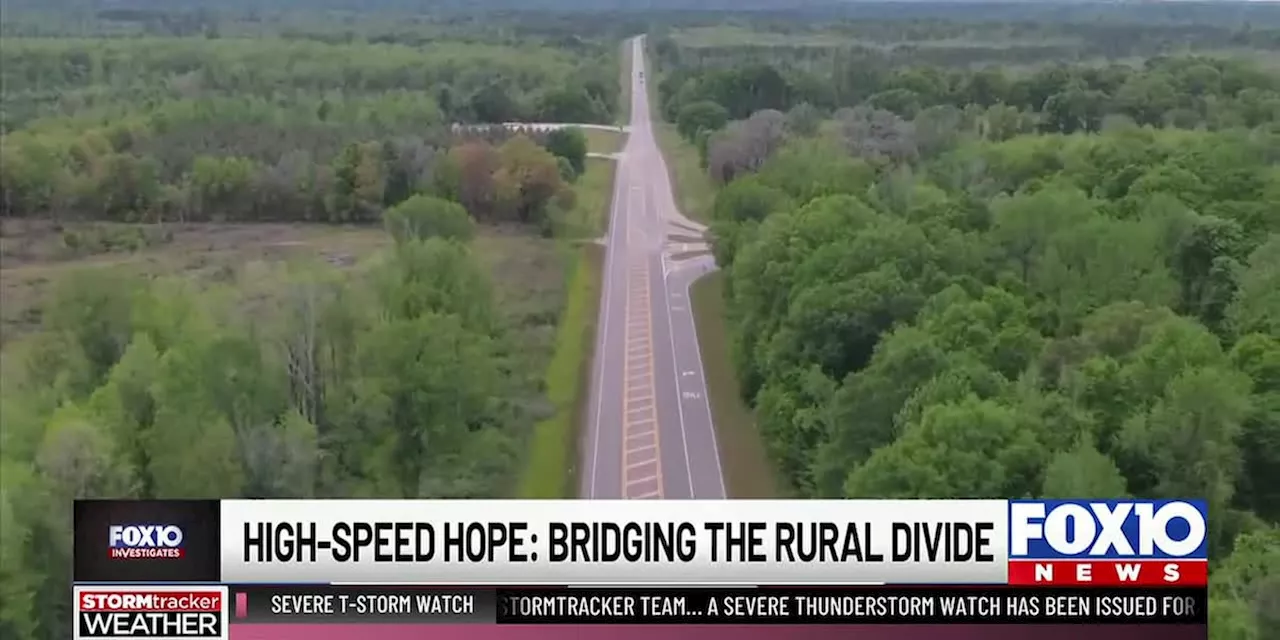
Rural Alabama Towns Face Critical Setback as High-Speed Internet Expansion Lags
Residents of Millry and Chatom, two small towns in Washington County, Alabama, continue to struggle with unreliable and slow internet amid a slow-moving fiber-optic rollout.
Though the promise of faster broadband has been on the horizon for years, the latest reports now reveal that limited access remains a pressing issue for these communities right now, impacting everything from daily communication to local business operations.
Lonnie Guy, a Millry native and co-owner of Nana and Papa’s Ice Cream and Sandwich Shop along Highway 17, says the fiber-optic line finally brought him reliable internet only a few months ago after decades of connection struggles.
“I remember the days, back in the dial-up days, … you could slop the hogs and milk the cows and feed the chickens and do all that while the wheel was turning before you could actually get on internet,”
Guy explained, describing the frustrating pace of broadband improvements. The recent fiber connection drastically improved his business and home internet quality, speeding up load times and providing consistency. Yet, he warned this benefit hasn’t reached many nearby households.
Fiber Expansion Remains Costly and Slow in Rural Counties
Chester Caulder, general manager at Millry Communications, the local internet provider, outlined the obstacles: “Because we are such a rural community, in our service area, we average about 4.7 households per mile of fiber constructed.”
This density is significantly lower than urban areas, making fiber-optic installation expensive and slow. “Fewer customers spread over larger land areas slow progress and raise costs,” Caulder said.
“But if I can get fiber to you,” Caulder emphasized, “I can deliver the full complement of internet speed that you are purchasing from the telephone company.”
Chatom Residents Still Waiting for Reliable High-Speed Service
Just a few miles south of Millry, Chatom residents are urgently awaiting the same broadband upgrade despite a greater population and number of businesses. The internet there remains painfully slow and unreliable.
Landis Waite, a lifelong Chatom resident, described how broken internet service disrupts daily life: “Internet’s always been pretty much bad. It’ll take a few hours sometimes for a webpage to pull up or anything like that.”
Fiber-optic projects began years ago in Chatom, but completion remains stalled, frustrating locals who feel left behind amid technological advances.
“Fiber optic, we’ve heard, should make it better. But it’s just taking forever for us to get to that,” Waite said. He recalled a recent day when even ATM machines and phone notifications were down.
“When my internet’s down, I ain’t getting no notifications from nobody. No texts, no calls. I gotta go out to the yard,”
Waite said, explaining how unreliable connections isolate residents even within their own homes.
Some Chatom residents endure the simple challenge of having to walk to relatives’ homes just to place a phone call because mobile signals are too weak off Wi-Fi.
Why This Matters Now
The slow expansion of fiber-optic broadband across rural pockets like Millry and Chatom highlights a growing digital divide that affects millions across the United States. Reliable high-speed internet has evolved from a luxury to a necessity for communication, work, education, and emergency services.
As Alaska and other remote US regions focus on bridging connectivity gaps, these Alabama communities offer a sobering example of how challenging rural broadband deployment remains despite technological advances and ongoing infrastructure projects.
What’s Next for Millry and Chatom?
Millry Communications says they remain committed to completing fiber expansion, but face the realities of geography and cost that slow progress. Local residents and businesses continue to push for faster deployment, knowing that each week of delay comes at a tangible cost to livelihoods and quality of life.
The situation demands urgent attention from policymakers and industry leaders alike to ensure no rural community remains offline in a digitally connected America.