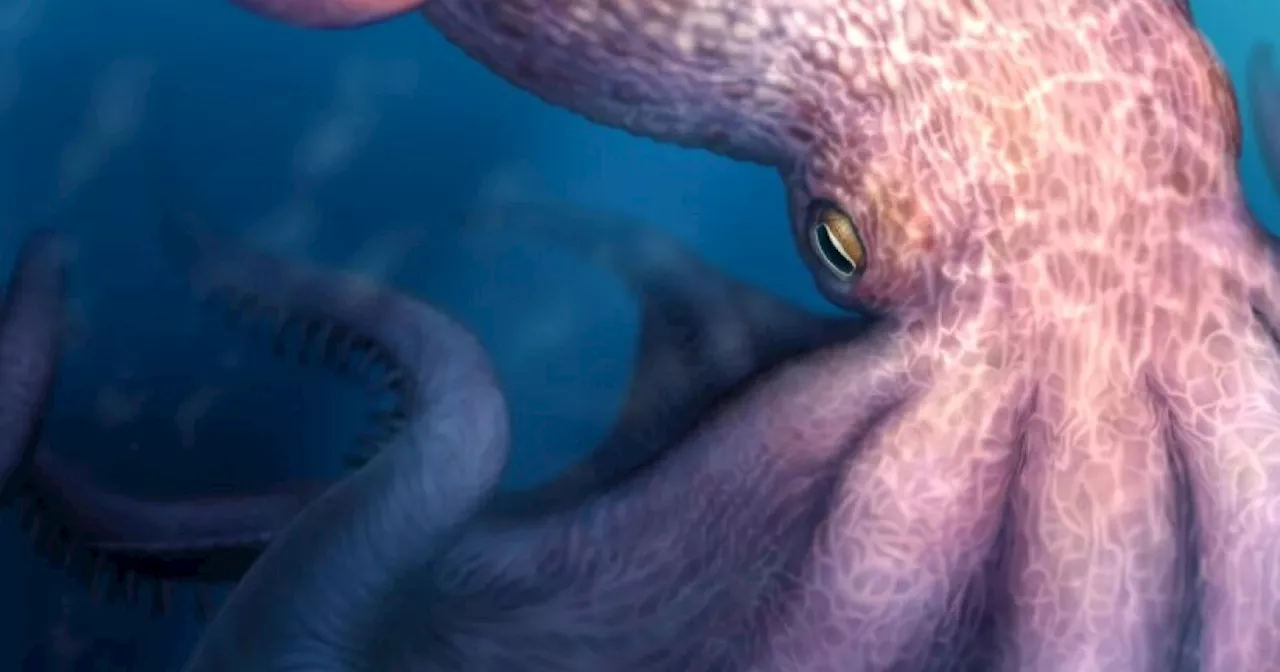
Scientists Reveal Giant Octopus Fossils From 100 Million Years Ago
New research from paleontologists in Japan and Germany has uncovered fossilized jaws of ancient octopuses that lived during the late Cretaceous period, some 100 million years ago. These findings reveal that the prehistoric octopuses were gargantuan—potentially reaching lengths of up to 60 feet, longer than a standard school bus and rivaling other apex ocean predators of that era.
The discovery, led by Jun Iba of Hokkaido University and Christian Mutterlose of Ruhr University Bochum, leveraged a cutting-edge digital fossil-mining technique combining thin slicing of fossil-rich rock concretions and AI-powered 3D reconstruction. These concretions, formed on the seafloor in what is now northern Japan, unexpectedly preserved the hard jaws of octopuses—one of the few fossilizable parts of these mostly soft-bodied animals.
Unlocking a New Window Into Prehistoric Oceans
The fossils include the largest octopus lower jaws ever found, providing scientists with critical clues about the size and feeding behavior of these mysterious creatures. Octopus jaws act much like a bird’s beak, and the damage visible on the specimens—numerous chips and scratches—indicates these ancient octopuses were active carnivores crushing prey with tough exoskeletons such as shrimp, lobsters, and nautilus-like animals.
“The size of these jaws implies body sizes far exceeding that of the modern giant Pacific octopus, which is today’s biggest species,” said Mutterlose. The researchers estimate these prehistoric octopuses could have measured well over 10 feet in arm span, with some reaching astonishing lengths close to 60 feet.
Advanced Intelligence May Have Emerged During the Cretaceous
Intriguingly, the right side of the jaws showed more wear than the left, suggesting these ancient octopuses favored one side when feeding. This asymmetry points to a highly developed brain and sophisticated hunting strategies, traits that modern octopuses are famous for.
“Our results suggest that some of those remarkable traits may already have been emerging in early octopuses during the Cretaceous,” said Iba, highlighting the evolutionary roots of octopus intelligence and adaptability.
These findings dramatically expand scientific understanding of ancient marine ecosystems, painting a vivid picture of a prehistoric ocean teeming with giant, intelligent predators.
What This Means for Evolutionary Biology
Octopus fossils are rare due to their soft tissue bodies, so this discovery marks a breakthrough in studying the evolution of cephalopods. According to Mutterlose, even a few specimens like these can reveal significant insights into the history of marine biodiversity.
This revelation also challenges long-held perceptions about predator dynamics in the late Cretaceous oceans, which likely included giant mosasaurs alongside these colossal octopuses. The fossilized jaws provide concrete evidence that octopuses were not just passive creatures but formidable hunters in their own right.
Next Steps and Ongoing Research
The research teams plan to continue examining these fossil concretions with refined imaging technologies to uncover more evidence of prehistoric octopus anatomy and behaviors. Their innovative AI-assisted digital fossil-mining technique opens new avenues for discovering other elusive soft-bodied animals from deep time.
As this story develops, the scientific community may soon rewrite marine evolution textbooks with this remarkable glimpse into the lives of ancient octopus giants, reshaping how we understand predator-prey relationships in prehistoric seas.