San Diego State Faces Talent Exodus as Basketball Payrolls Skyrocket
The San Diego State Aztecs men’s basketball team is grappling with an unprecedented wave of player departures amid soaring transfer portal salaries, underscoring a growing divide between mid-major programs and power conferences. In the spring of 2026, six Aztecs players left for richer contracts at power conference schools, securing combined deals estimated between $9 million and $10 million, a staggering financial gap that challenges the program’s competitive future.
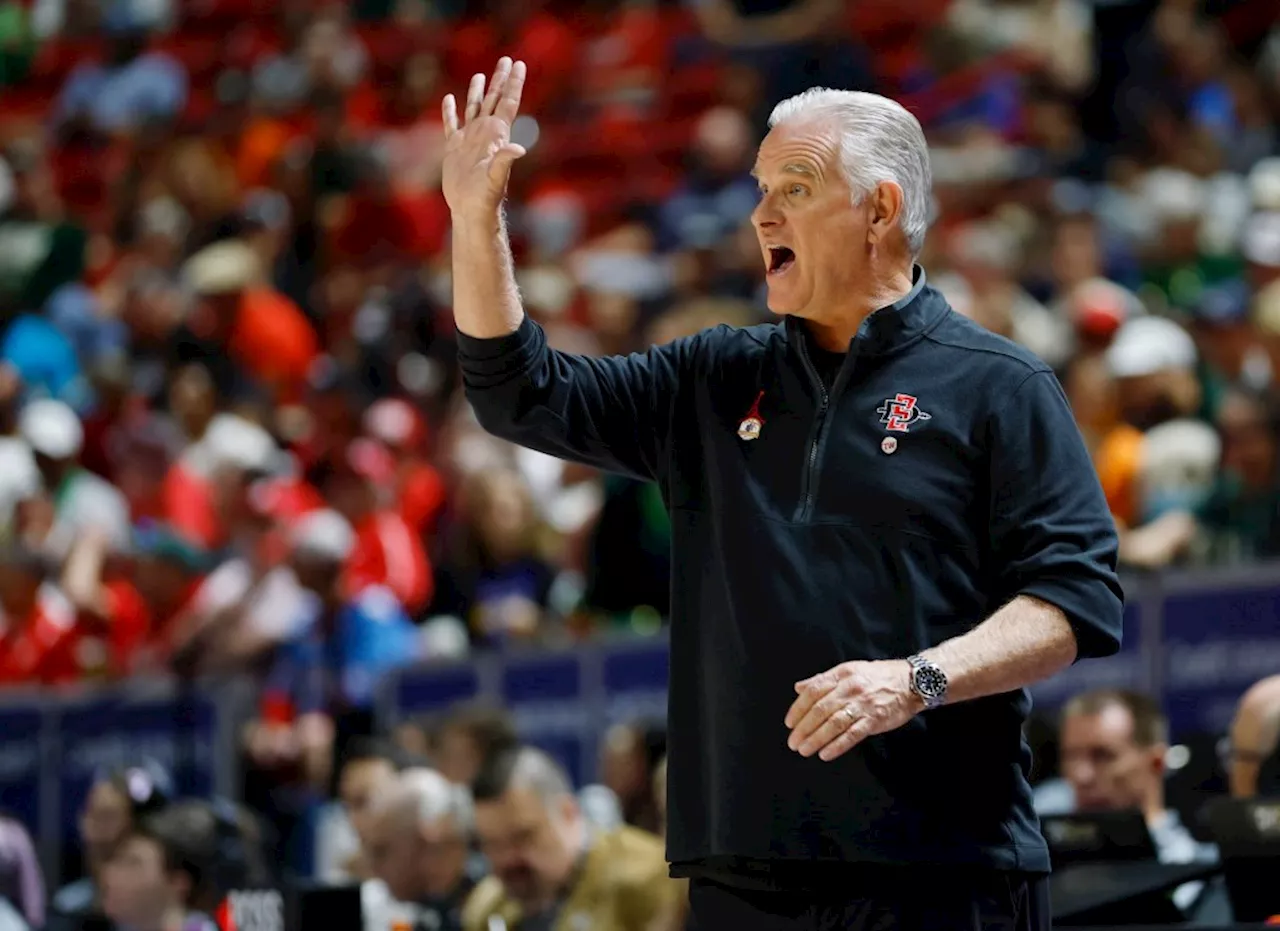
Coach Brian Dutcher described the harsh reality: “There’s a lot of money available out there, and power conference schools have more money than anybody.” San Diego State, known for punching above its weight with a mid-major budget, now finds itself increasingly unable to hold onto top talent amid exploding payrolls fueled by NIL and revenue-sharing deals.
In the last four years, the transfer pattern has dramatically flipped. Once a landing spot for players leaving power programs, San Diego State has seen 11 players depart for the power conferences, with only one notable transfer coming in — Reese Dixon-Waters from USC in 2023. This trend highlights the increasing difficulty of competing financially, as Dutcher puts it, the Aztecs are “a program with power-conference pedigree and a mid-major budget.”
Six Players Cashing In with Power Conference Moves
Among the spring departures are standout guards and forwards joining schools like Providence, DePaul, Creighton, Oregon, Nebraska, and Virginia Tech. Their combined NIL and revenue-sharing payouts have set new benchmarks for mid-major losses. Dutcher confirmed, “We had a $12 million roster last year, but didn’t pay that full amount because of savvy recruiting.” But that strategy now faces its toughest test.
This mass exodus includes players such as Miles Byrd, Magoon Gwath, BJ Davis, Pharaoh Compton, Taj DeGourville, and Miles Heide, who expect lucrative contracts in their new programs, reflecting the significant spending gulf between conferences.
Recalibrating Recruiting: Finding Gems Beyond Power Conferences
The increasing financial arms race in college basketball means SDSU must hunt for undervalued talent overlooked by top programs. Dutcher’s latest signings illustrate the shift — a 6-foot-11 center returning from injury and childhood ties to San Diego, a guard with Division III roots, a two-time all-state guard from North Carolina playing in the Patriot League, and promising European professionals like Italian guard David Torresani.
“These players have been under the radar, gaining experience against solid competition, and they fit our culture and work ethic,” Dutcher said. This strategy reflects a radical departure from the historic Southern California recruitment base, embracing international players with pro backgrounds where competition levels rival or exceed college hoops.
Budget Growth but Still Wrestling with Deficits
The MESA Foundation, San Diego State’s NIL collective, dramatically expanded its funding from $350,000 in 2022-23 to a projected $4-5 million for 2026-27. Despite this growth, the athletic department reportedly runs deficits in the eight figures, highlighting the tension between ambition and resources.
Experts estimate that next season around 20 to 25 men’s basketball programs will have payrolls exceeding $20 million, a staggering escalation compared to previous years. Every team in this year’s Sweet 16 surpassed $10 million, intensifying the challenge for programs like SDSU to stay competitive.
Adapting to the New Normal in College Basketball
Coach Dutcher, a veteran of many college basketball eras, acknowledges the game has changed. “I’m embracing it, I’m good at it. We’ll put together a team that Aztec fans will be proud of.” The upcoming nonconference schedule, loaded with power programs, will be a key test of how this rebuilding effort holds up on the national stage.
San Diego State’s path forward depends on precise scouting, player development, and the ability to blend diverse talent into a competitive unit swiftly. With only four returning players from last year’s roster and a significant influx of new signings set for the 2026-27 season, including the anticipated addition of a third European pro, the Aztecs’ season is shaping into a high-stakes chemistry experiment.
In an era where money talks louder than tradition, the Aztecs embody the struggle of mid-major programs caught between the soaring salaries of power conferences and the realities of modest budgets, fighting to stay relevant in the rapidly evolving landscape of college basketball.