Missouri S&T Theatre Students Adapt Instantly After Power Outage Stops Performance
A sudden power outage on April 19, 2026, disrupted a Missouri University of Science and Technology (Missouri S&T) theatre production, but the show went on—outside.
Approximately 20 minutes into the second act of Race’s End, a new play written specifically for Missouri S&T students, the power failed at Castleman Hall in Rolla, Missouri. The blackout shut down all technical elements crucial to the performance, including lighting, sound, and projections.
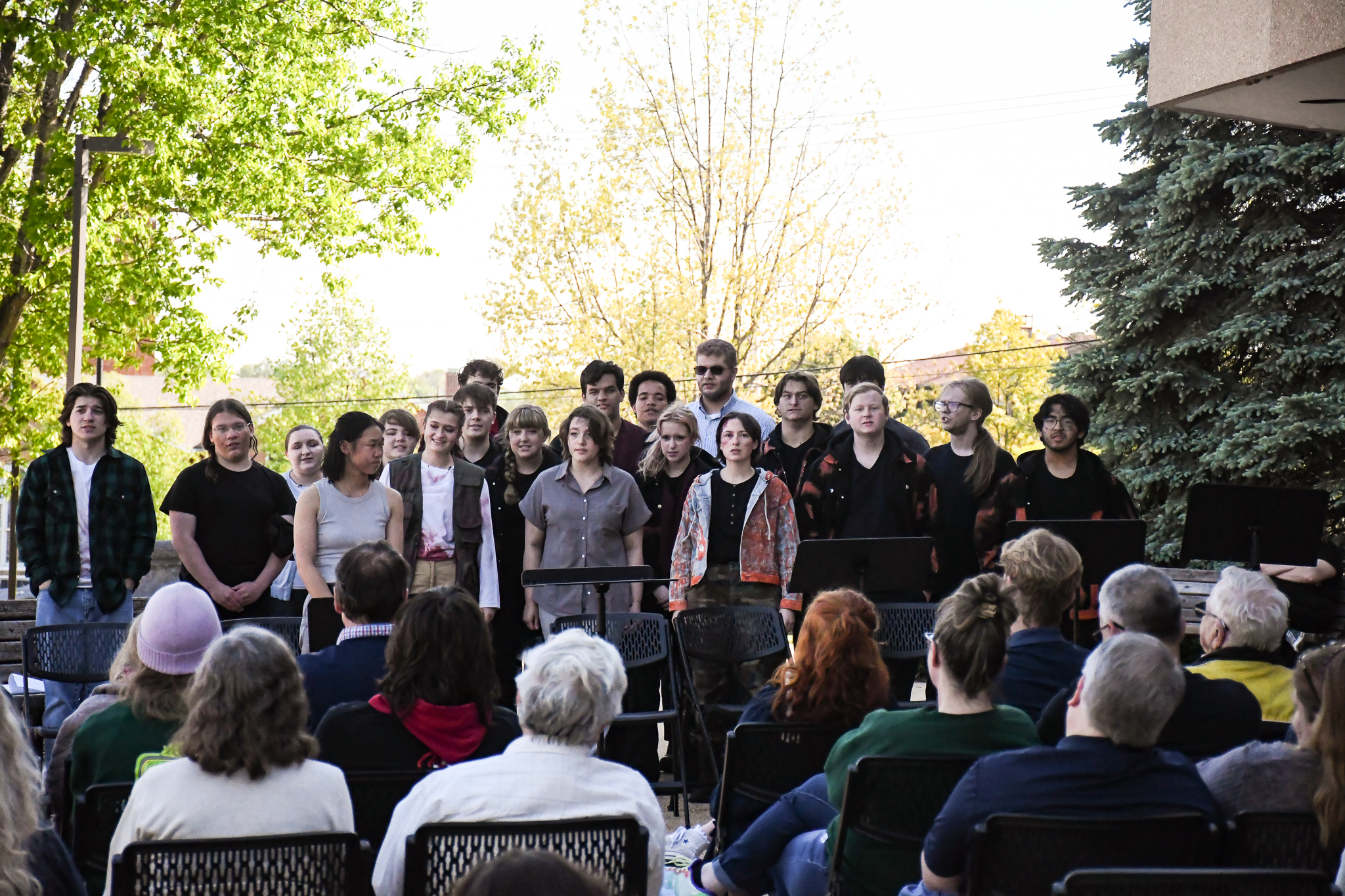
Faced with losing the audience and halting the production, students and faculty made a swift decision to relocate the crowd outdoors. Within minutes, chairs were set up under clear afternoon skies, and the performance resumed without the technology it had heavily relied upon.
A Dramatic Pivot from Tech Spectacle to Pure Storytelling
The unexpected shift turned the play—a story centered on humans’ dependence on technology—into a striking demonstration of adaptability. “It was like tripping back in time,” said Taylor Gruenloh, assistant professor of theatre. “We went from state-of-the-art special effects to only sunlight and our voices—kind of Shakespearean.”
Stage manager Abigail Lebar, an engineering management major, described how she quickly adapted by narrating stage directions and visual cues that the audience could no longer see. “After months designing big technical effects, it was rewarding to see the emotional impact remain just with us outside saying the lines,” she explained.
The experience struck a powerful ironic note. Josie Schnelten, also an engineering management major and cast member, observed, “It’s deeply ironic the play addressing humanity’s over-reliance on technology was briefly stopped because the very technology failed. But it grounded us.”
Audience Engagement Holds Strong Despite Sudden Disruption
The impromptu outdoor staging successfully carried the show to its conclusion with the audience staying fully engaged. This quick-thinking response reflected the resilience and innovation at the heart of both the arts and engineering programs at Missouri S&T. It also reinforced a vital lesson: that storytelling and human connection endure even when technology fails.
The students’ ability to continue without technical support highlighted the core themes of Race’s End, underscoring the tension between reliance on machines and human adaptability.
What’s Next
While the incident was unplanned, it left a lasting impression on both cast and audience about flexibility and resilience in live performance arts. Missouri S&T’s theatre program is expected to incorporate the experience into future training, preparing students for real-world challenges in creative problem solving.
As live performances increasingly integrate advanced technology, the students’ experience serves as a timely reminder for performing arts communities—and even tech-dependent industries across the US—that adaptability will always be key when systems falter.
The story of this sudden blackout and swift recovery is already being shared widely as an inspiring case of “the show must go on” in face of unexpected disruption.
“When systems fail, people carry the story forward.” — Taylor Gruenloh, Missouri S&T assistant professor of theatre