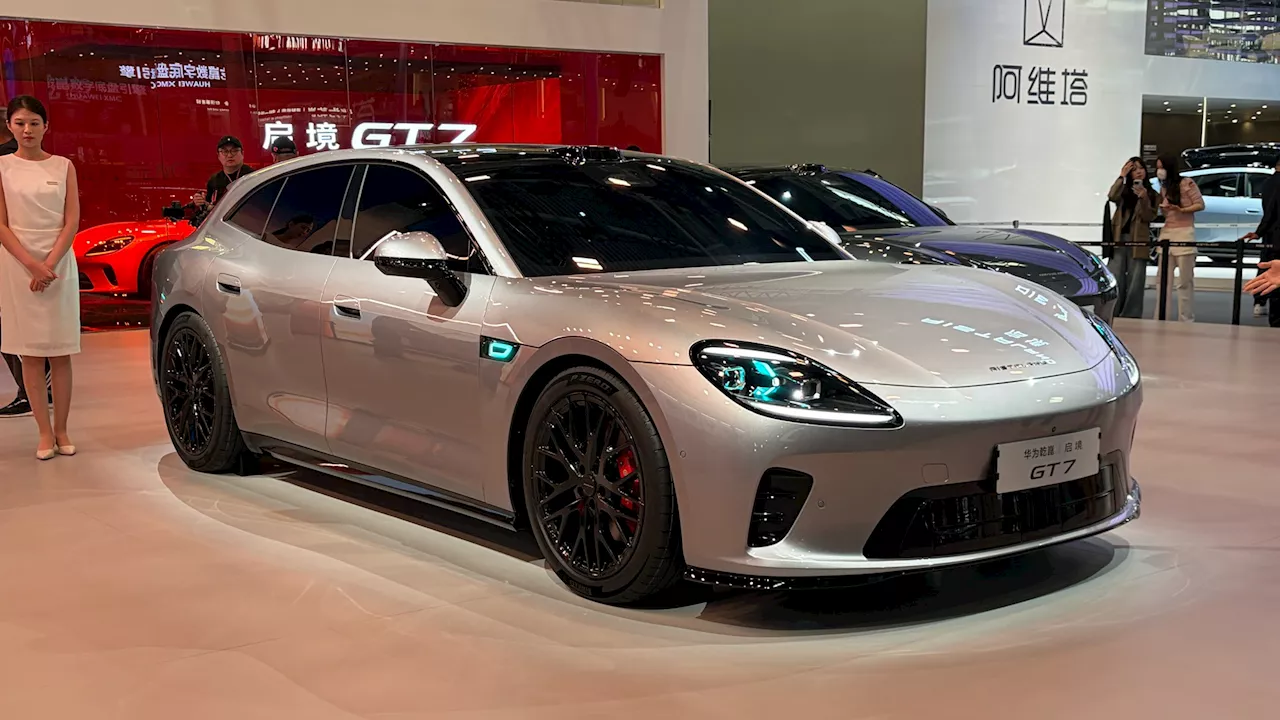
Huawei and GAC Unveil Aistaland GT7, a High-Tech EV Echoing Porsche Panamera
The automotive world just got shaken as Huawei and Chinese manufacturer GAC revealed the Aistaland GT7, an electric vehicle that mirrors the size and look of the famed Porsche Panamera. Unveiled at the Beijing Auto Show, this sleek new EV marks a bold push by tech giant Huawei into the electric car market — armed with some of the most advanced automotive technology to date.
The Aistaland GT7, or Qijing as it is known in China, is no ordinary electric car. Its dimensions are nearly identical to the Panamera, boasting a 3000mm wheelbase, a length of 5050mm, and a width of 1980mm. It balances sporty luxury with cutting-edge technology, offering consumers options between a full battery electric vehicle (BEV) or a range-extended (REX) model, catering to preferences especially popular in China.
Next-Gen Tech Powers Safety and Performance
Huawei’s signature technology upgrades the GT7 beyond a mere Porsche lookalike. The vehicle integrates intelligent Xpixel projection headlights, enabling it to project road warnings directly ahead, a feature parallel to top-tier systems from luxury brands like Mercedes. More striking is the inclusion of an 896-line high-definition Lidar sensor—substantially more sophisticated than the 192-line units common in today’s market. This sensor detects objects as small as 14cm from 122 meters, even in low light, significantly boosting nighttime driving safety and autonomous features.
Powertrain details reveal a dual-motor all-wheel-drive layout, paired with Chinese battery leader CATL’s cells and an advanced 800-volt electrical system. The REX variant will feature an internal combustion engine placed just above the front axle to extend driving range, an important factor for buyers wary of battery-only vehicles.
China Launch with Global Curiosity
The GT7 is slated for release in China in about a month, targeting a rapidly growing EV consumer base eager for state-of-the-art tech and premium design. Curtis Moldrich, Digital Editor at CAR magazine, highlighted the GT7’s intelligent features and sophisticated design as a game-changer for electric vehicles. While no official global rollout has been announced, the GT7’s impressive specs and Porsche-like appeal are sure to draw attention from U.S. markets, including Alaskan consumers who prioritize advanced safety in challenging driving conditions.
The introduction of the Aistaland GT7 underscores China’s expanding influence on global electric vehicle innovation, blending luxury styling with AI-driven technology at a competitive price point. As EV competition intensifies worldwide, Huawei’s entry with GAC signals a new era of smart electric transportation with safety and performance at the forefront.
Alaska readers interested in EV adoption should watch how such vehicles, equipped with superior nighttime driving safety tech, could reshape long-distance travel and daily commuting in rugged conditions.
What’s Next?
With production ramping up soon in China, industry insiders anticipate further announcements regarding export plans and pricing. The GT7’s success could pressure U.S. manufacturers to accelerate own R&D efforts on intelligent lighting and high-definition Lidar systems. Meanwhile, consumers in Alaska and across the United States should expect more hybrid and pure electric vehicles with enhanced AI safety features to emerge rapidly on the market.