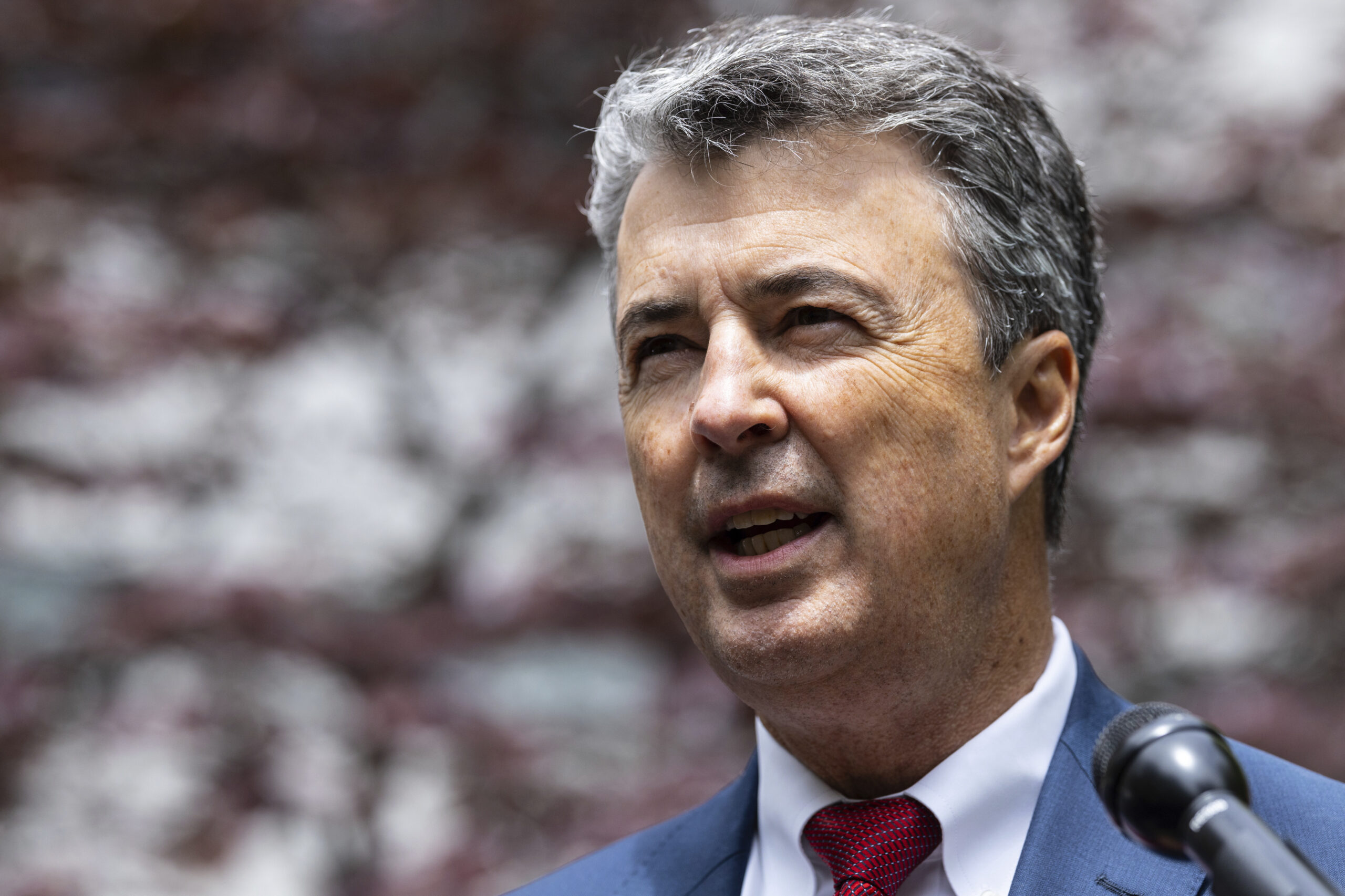
Alabama Attorney General Pushes to Lift Injunctions on Congressional Maps
Alabama Attorney General Steve Marshall has filed urgent motions to lift federal injunctions preventing the state from using its 2026 congressional map following a landmark decision from the United States Supreme Court. This development marks a significant shift in the legal landscape of redistricting nationwide, as the court ruled against Louisiana’s creation of a second majority-Black district, calling it an unconstitutional racial gerrymander and weakening a core element of the Voting Rights Act.
On Wednesday, the Supreme Court overturned lower court rulings that mandated states like Alabama to redraw congressional districts to create second majority-Black districts. This ruling directly impacts three key cases blocking Alabama’s new congressional map: Allen v. Singleton, Allen v. Milligan, and Allen v. Caster.
“The Supreme Court has now made clear that you cannot assume race and politics are the same thing, you have to actually show they’re separate,” said Attorney General Marshall in a statement announcing the court filings. “Because the lower court’s injunction cannot stand in light of the Supreme Court’s ruling, we have asked the court to lift the injunction. Alabama deserves the right to use its own maps, just like every other state.”
Background: Judicial Battles Over Alabama’s Congressional Map
In 2022, a federal three-judge panel ruled Alabama’s congressional map likely violated the Voting Rights Act by failing to create a second congressional district where Black voters would form a majority. This ruling required Alabama to redraw its districts. Although the state’s lawmakers redrew new boundaries intended to meet this requirement, the federal panel rejected the revised map, as it did not come close enough to creating a second majority-Black district.
Consequently, the federal panel imposed a new map boosting the Black voting-age population in Alabama’s District 2 to 48.7%, just shy of a majority. This federal intervention effectively replaced the state’s 2026 map.
Governor Kay Ivey Responds to Legal Moves
Shortly after Attorney General Marshall filed the motions, Governor Kay Ivey released a statement underscoring state authority in mapping decisions:
“Alabama knows our state, our people and our districts better than the federal courts or activist groups. I remain hopeful that Alabama receives a favorable ruling.”
Why This Matters Right Now
This Supreme Court decision and Marshall’s immediate court filings have far-reaching consequences not only for Alabama but also for the broader national debate over voting rights and racial gerrymandering. It signals a new judicial approach requiring clear proof to distinguish between racial and political motivations in redistricting.
Alabama argues that lifting the injunctions will restore fairness and local control over electoral maps, aligning with other states’ ability to enforce congressional boundaries without federal override.
What to Watch Next
The federal court’s response to Alabama’s motions will be closely monitored in coming days. If the injunctions are lifted, Alabama’s 2026 congressional elections could proceed under the state-drawn map, potentially reshaping voter representation and political power in the state.
Given the Supreme Court’s recent rulings, this case could set a precedent guiding how courts balance race, politics, and voter rights across the United States — developments with implications for voters from Alaska to Alabama.