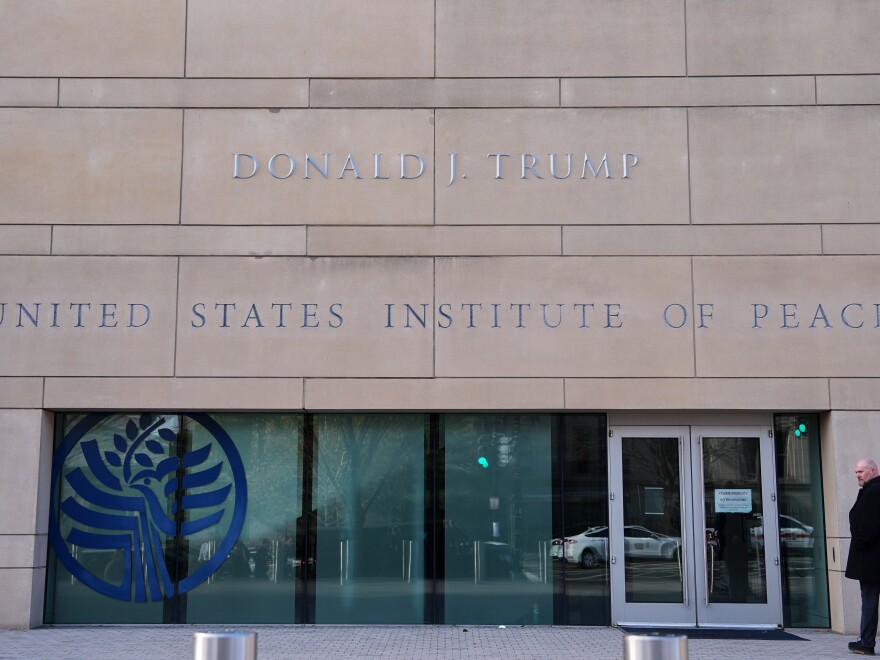
President Donald Trump convened representatives from over two dozen nations on March 15, 2024, for the inaugural meeting of the Board of Peace, focusing on reconstruction efforts in Gaza. This initiative comes at a time when a fragile ceasefire is in place following two years of conflict. Board members have collectively pledged $5 billion toward reconstruction, which falls significantly short of the estimated $70 billion required to rebuild the devastated Palestinian territory.
During the meeting, participants are expected to announce contributions of personnel for international stabilization and police forces aimed at enhancing security in the region. Trump emphasized the significance of the board, asserting, “We have the greatest leaders in the world joining the Board of Peace. I think it has the chance to be the most consequential board ever assembled of any kind.”
Expanding the Board’s Vision
The Board of Peace is a key component of Trump’s 20-point peace plan designed to resolve the ongoing conflict in Gaza. Since the ceasefire reached in October, Trump’s vision for the board has evolved, now seeking to address not only the Israel-Hamas issue but also broader global conflicts. He expressed hope that the board would encourage the United Nations to take more decisive action, stating, “The United Nations has great potential. They haven’t lived up to the potential.”
Despite the ambitious agenda, skepticism persists among some U.S. allies. More than 40 countries and the European Union have confirmed attendance for the meeting. Notably, nations such as Germany, Italy, Norway, and Switzerland will participate as observers, having opted not to join the board.
The U.N. Security Council recently convened to discuss the ceasefire and Israel’s actions in the West Bank. This meeting was rescheduled to avoid conflicts with Trump’s gathering, highlighting the diplomatic challenges at play. Cardinal Pietro Parolin, the Vatican Secretary of State, underscored the U.N.’s role, stating, “At the international level, it should above all be the U.N. that manages these crisis situations.” The Trump administration responded, defending the board’s legitimacy and its critical mission.
Challenges Ahead for International Stabilization
A central focus of the discussions will be the establishment of an armed international stabilization force to secure the region and facilitate the disarmament of Hamas. This initiative remains a critical demand from Israel and is vital to the ceasefire agreement. So far, only Indonesia has made a firm commitment to contribute to the proposed force, while Hamas has shown little willingness to cooperate on disarmament.
Officials within the Trump administration acknowledge the complexities associated with demilitarization but remain optimistic based on feedback from mediators. Indonesian President Prabowo Subianto expressed a commitment to collaborate with other Islamic nations invited to the meeting, stating, “We recognize there are still obstacles to be overcome, but at least my position is we have to try, and we have to do our best.”
Updates from the Gaza Executive Board, responsible for establishing governance and services, are anticipated during the meeting. Speakers will include Secretary of State Marco Rubio, Special Envoy Steve Witkoff, and former British Prime Minister Tony Blair, among others.
Concerns raised by skeptical allies about the board’s lack of clear authority and its mandate expansion beyond Gaza are echoed by experts. Michael Hanna, U.S. Program Director at the International Crisis Group, remarked, “Without any clear authorization for the expansion of its mandate beyond Gaza, it is unsurprising that many U.S. allies and partners have chosen to decline Trump’s offer to join the board.”
As the Board of Peace embarks on its ambitious mission, the outcomes of this first meeting will be closely scrutinized, both for their immediate impact on Gaza and for the broader implications on international diplomacy.