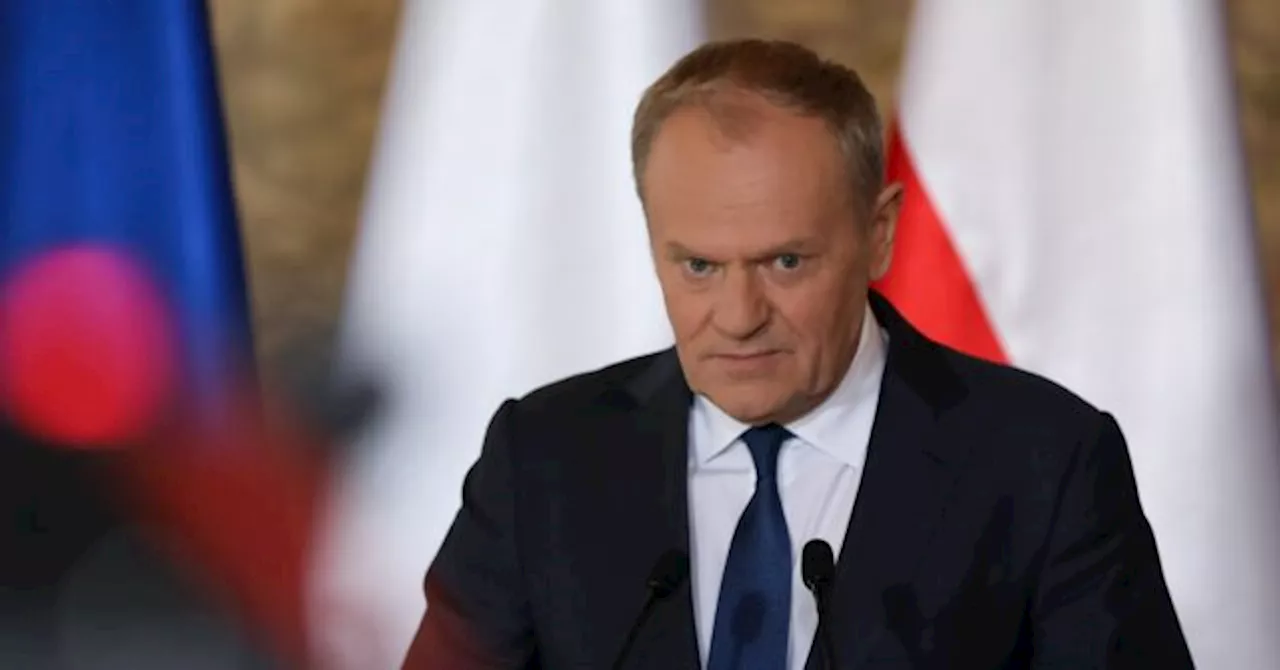
Polish Prime Minister Warns NATO Alliance Faces ‘Disintegration’ Amid U.S. Troop Cuts
Polish Prime Minister Donald Tusk issued a stark warning today that the NATO alliance is on the brink of “disintegration” following the Pentagon’s announcement of a U.S. troop reduction in Europe. The U.S. Department of Defense confirmed that approximately 5,000 American soldiers will be relocated from bases in Germany over the next year as part of a broader realignment of U.S. forces overseas.
President Donald Trump, speaking on Saturday, indicated the drawdown in Germany could be much larger but did not specify how many beyond the initial figure of around 36,000 troops currently stationed there might be moved. Trump also suggested potential withdrawals or reductions of U.S. forces in Italy and Spain, accusing those countries of disloyalty over their stance on the Iranian conflict.
Poland, home to roughly 8,500 U.S. troops, has not been mentioned as a withdrawal target, but Tusk’s warnings suggest deep concern that overall NATO cohesion is weakening. He said,
“The greatest threat to the transatlantic community are not its external enemies, but the ongoing disintegration of our alliance. We must all do what it takes to reverse this disastrous trend.”
Tusk’s remarks come after he openly questioned America’s commitment to Europe and the NATO mutual defense clause, Article 5, which obligates member states to come to each other’s defense in case of attack. Despite President Trump’s repeated assurances of U.S. support for NATO allies, Tusk said:
“Europe’s biggest, most important question is if the United States is ready to be as loyal as it is described in our treaties. I want to believe that is still valid, but sometimes, of course, I have some problems.”
Shifts in European Defense Landscape Escalate NATO Uncertainty
Beyond the U.S. troop movements, Tusk has pushed for a stronger European defense identity. He has advocated transforming the European Union from its traditional economic focus to a defense powerhouse, including the creation of a dedicated EU army.
Recently, Tusk met with French President Emmanuel Macron to explore the possibility of extending France’s nuclear weapons umbrella across Europe and potentially stationing French nuclear warheads in Poland. Macron, nearing the end of his final presidential term, has also held talks with Germany and other European powers about bolstering joint security efforts, including nuclear deterrence.
Germany plans to build the strongest army in Europe by 2039, aiming for 460,000 combat-ready troops. However, Berlin is still struggling to meet recruitment goals as defense priorities evolve on the continent.
The prospect of U.S. troop reductions and the questions over transatlantic loyalty have injected new tension into NATO at a critical time. For Alaska and the U.S. nationally, these developments signify potential shifts in global security that may affect American military strategy worldwide, including commitments in the Pacific and Arctic regions.
The Pentagon’s plans and Polish warnings mark a crucial turning point, with the future of NATO balance—and U.S. defense posture in Europe—now facing unprecedented uncertainty. The alliance’s cohesion, vital for global peace and U.S. strategic interests, is under intense pressure as these troop realignments unfold.
What happens next? Allies will be watching closely for further U.S. announcements and European defense responses, especially regarding Article 5 assurances and cooperative military arrangements. The evolving U.S. approach to troop deployments could reshape NATO’s future amid growing geopolitical rivalry.