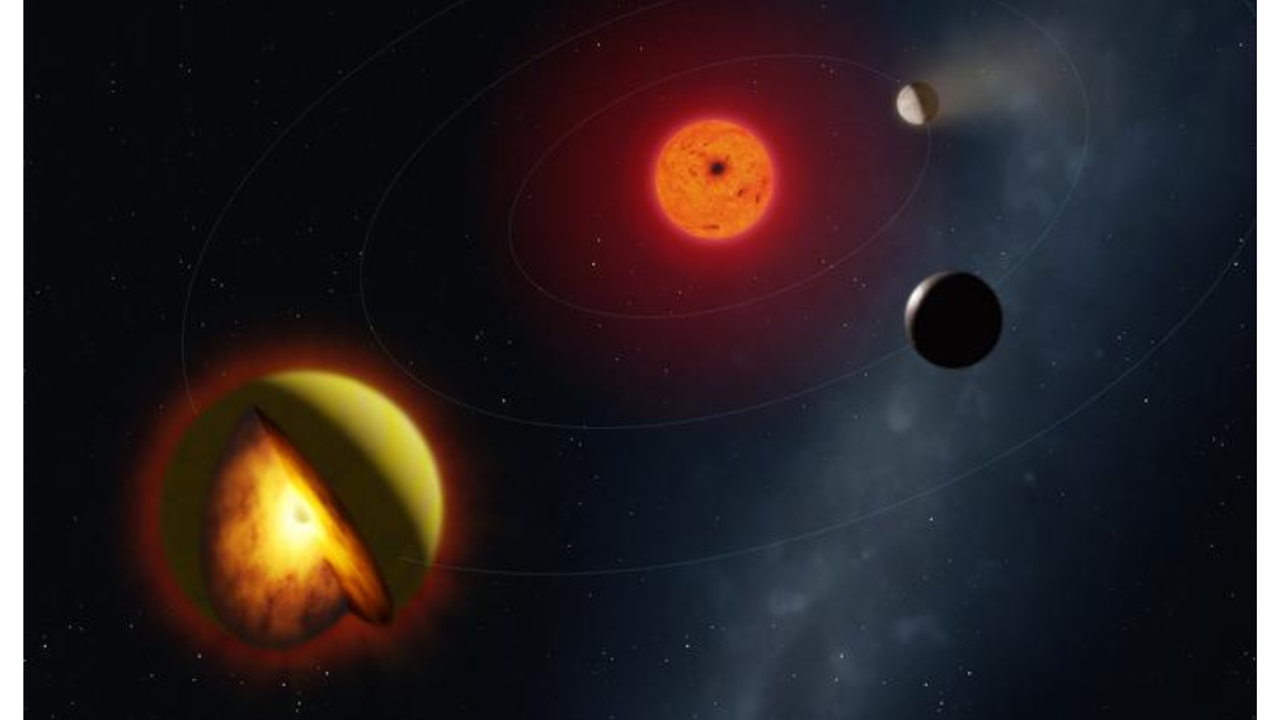
A team of astronomers has discovered a new type of exoplanet, designated L 98-59 d, using data from the James Webb Space Telescope (JWST). This planet, located approximately 35 light-years from Earth, is characterized by an atmosphere rich in hydrogen sulfide, which is known for its distinct smell reminiscent of rotten eggs. The findings highlight the increasing diversity of planetary types existing beyond our solar system.
Located around a small red star, L 98-59 d is about 1.6 times the size of Earth and possesses an extremely low density. Unlike conventional classifications, this exoplanet does not fit into the categories of rocky gas dwarfs or water-rich “hycean” worlds. As a result, the researchers propose a new category of exoplanets that contain heavy sulfur molecules, broadening the understanding of planetary formation and composition.
Understanding the Interior of L 98-59 d
The team, led by Harrison Nicholls of the University of Oxford, utilized advanced computer simulations to explore the nearly 5 billion-year history of L 98-59 d. By comparing their models with observational data, they reconstructed the planet’s internal structure. Their findings suggest that the exoplanet likely has a mantle of molten silicate, similar to lava found on Earth, and an extensive ocean of magma that covers its surface.
This global magma ocean plays a crucial role in the planet’s atmospheric composition. It allows L 98-59 d to sequester significant amounts of sulfur over long periods, releasing sulfur-rich gases into the atmosphere over billions of years. The presence of sulfur dioxide and other sulfur-based molecules detected in the planet’s upper atmosphere supports this theory.
The research indicates that the magma reservoir may also help retain the planet’s hydrogen and sulfur-rich atmosphere, shielding it from atmospheric loss due to X-ray bombardment from its parent star. Over the course of billions of years, the interactions between the atmosphere and the interior have led to the development of a unique planetary environment.
Implications for Planetary Science
The simulations reveal that L 98-59 d was likely born with abundant volatile materials, possibly starting as a larger sub-Neptune planet. Over time, the planet shrank and cooled, resulting in the loss of some of its atmosphere while retaining key elements.
According to Raymond Pierrehumbert, another team member from the University of Oxford, “What’s exciting is that we can use computer models to uncover the hidden interior of a planet we will never visit.” This research illustrates that while astronomers can measure a planet’s size, mass, and atmospheric composition from afar, it is possible to reconstruct the deep history of these distant worlds and identify types of planets that have no equivalent in our own solar system.
The team’s findings were published on March 16, 2023, in the journal Nature Astronomy, marking a significant advancement in the study of exoplanets and their diverse characteristics.