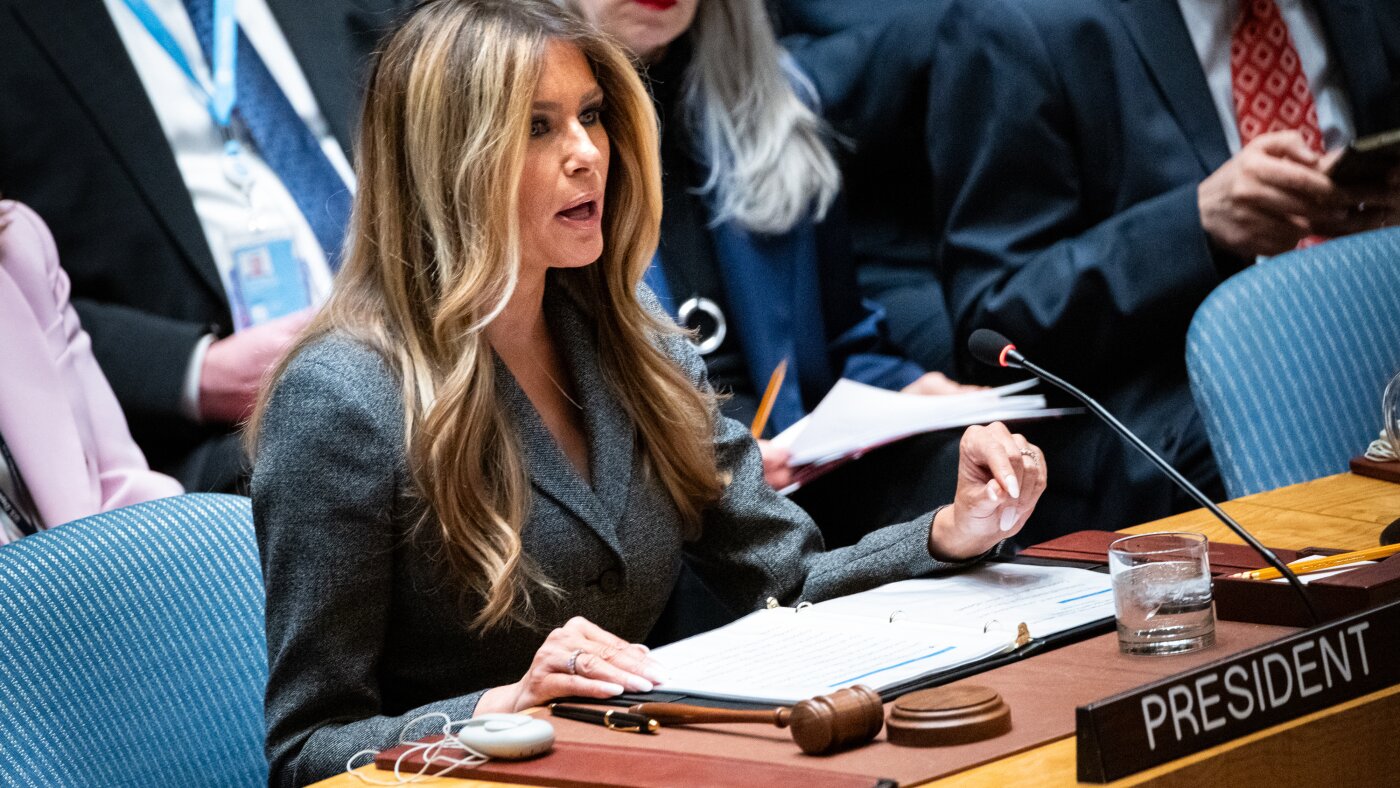
On March 4, 2024, U.S. First Lady Melania Trump presided over a United Nations Security Council meeting focused on children in conflict, an initiative she has championed throughout her role. Her leadership comes at a time of heightened tension, as the United States has joined Israel in military actions against Iran. During her opening remarks, Trump emphasized the need for global support for children affected by war, stating, “The U.S. stands with all of the children throughout the world.” She expressed hope for peace but did not specifically address the ongoing conflict in the Middle East.
The meeting occurred under the shadow of tragic reports from Iran, where state media claimed that an airstrike had hit a girls’ school in southern Iran, resulting in the deaths of at least 165 individuals and numerous injuries. While the Israeli military stated it was unaware of any strikes in that area, the U.S. military confirmed it was investigating these reports.
Diplomatic Tensions and Criticism
Shortly before the meeting commenced, Iran’s ambassador to the U.N., Amir Saeid Iravani, condemned the United States for convening a session aimed at protecting children while conducting airstrikes. He described the situation as “deeply shameful and hypocritical,” arguing that the U.S. position on protecting children contrasts starkly with actions in conflict zones. Iravani asserted, “For the United States, ‘protecting children’ and ‘maintaining international peace and security’ clearly mean something very different from what the U.N. Charter provides.”
Rosemary DiCarlo, the U.N. political chief, acknowledged the disturbing information about the girls’ school and highlighted the broader impact of military operations on children in the region. “We have been reminded of this truth over the last two days,” she stated, noting that many schools in Israel and neighboring countries had moved to remote learning amid ongoing violence.
Melania Trump’s role as the first spouse of a world leader to chair a U.N. Security Council meeting underscores the significance of this occasion. Traditionally, this position has been held by heads of state or foreign ministers, but her presence comes as the United States assumes the council presidency for March.
Advocacy for Education and Technology
During her address, Trump advocated for closing the digital divide between developed and developing nations, asserting that all children should have access to modern technology and education. She emphasized the importance of artificial intelligence (AI) in democratizing knowledge, stating, “AI is democratizing knowledge which was once confined to university libraries.” She urged council members to “safeguard learning,” linking the pursuit of knowledge directly to achieving enduring peace.
Despite her call for increased support for children in conflict zones, the Trump administration has faced criticism for its cuts to U.N. agencies that support child welfare. Notably, the U.S. has reduced funding for the U.N. Office of the Special Representative of the Secretary-General for Children in Armed Conflict, which plays a crucial role in reporting on the impacts of warfare on children. The administration withdrew support in January 2024, further reducing contributions to UNICEF and exiting from UNESCO.
DiCarlo highlighted the alarming reality that the number of armed conflicts worldwide is at its highest since World War II, with civilian casualties reaching unprecedented levels. “Our reality is clear: When conflicts erupt, children are among those most severely affected,” she remarked.
Upon her arrival at U.N. headquarters, Melania Trump received a warm welcome from U.N. Secretary-General Antonio Guterres and engaged with Security Council members, signifying a collaborative spirit despite the contentious backdrop of ongoing military actions. The meeting had been scheduled prior to the outbreak of hostilities, but it took on a new urgency given the recent escalation in the region.
In a notable previous initiative, Melania Trump took the unusual step of reaching out to Russian President Vladimir Putin last summer. This effort was aimed at reuniting children displaced by the Russia-Ukraine conflict with their families, highlighting her ongoing commitment to child welfare issues on the global stage.
The juxtaposition of advocacy for children’s rights with the actions of the United States in foreign conflicts presents a complex narrative. As the world watches, the impact of these discussions on children caught in the crossfire remains a critical concern.