In response to the recent aerial bombardments targeting Tehran, Iranian Foreign Minister Abbas Araghchi asserted that these strikes have not diminished Iran’s military capabilities. His remarks were made in a statement shared via X (formerly Twitter), where he emphasized the resilience of the nation’s defense strategy despite ongoing attacks.
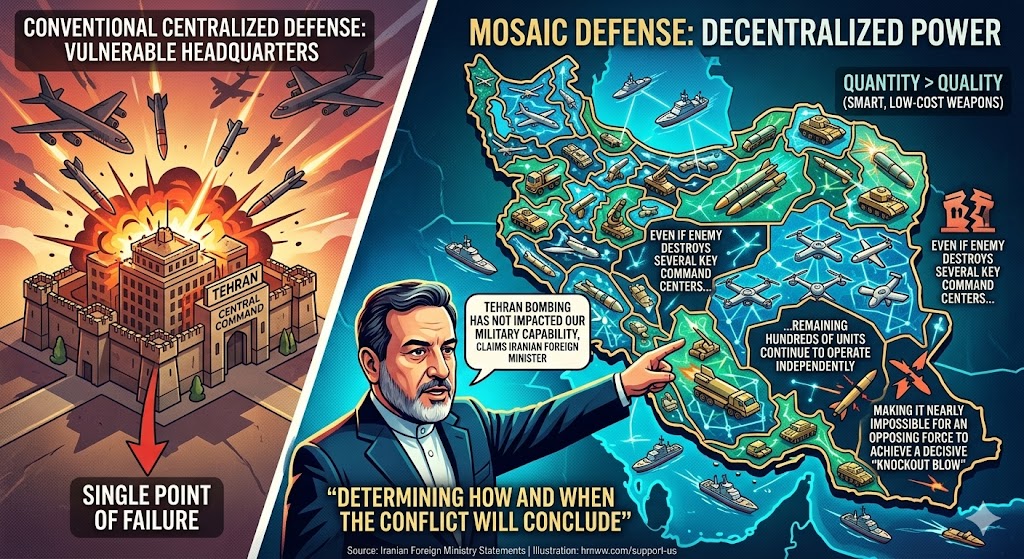
Araghchi articulated that Iran has spent the past two decades studying the strategic missteps of the U.S. military both in the region and beyond. He stated that these insights have been incorporated into Iran’s military doctrine, allowing the country to enhance its defensive posture. “The bombing of the capital will not paralyze our ability to resist,” he declared, highlighting the effectiveness of Iran’s decentralized military strategy, known as “Mosaic Defense.”
Mosaic Defense Strategy Explained
The Mosaic Defense approach is characterized by its non-centralized structure, which aims to create a robust defensive framework that relies on quantity and innovative, cost-effective technologies rather than a few expensive assets. This strategy disperses military power across numerous autonomous units, each equipped with drones, small missiles, and mobile artillery.
Military analysts describe this approach as a way to prevent a single successful attack from incapacitating the entire military structure. By decentralizing command, Iran ensures that even if key command centers are targeted, the remaining units can continue to operate independently. This resilience complicates efforts by adversaries to deliver a decisive blow to Iran’s military infrastructure.
Araghchi pointed out that this unique strategy allows Iran to dictate the terms of engagement, including “how and when” any potential conflict might conclude. He expressed confidence that the country’s military capabilities remain intact, enabling Iran to effectively respond to external threats.
Implications of the Bombing Campaign
The ongoing aerial bombardments on Tehran have raised concerns regarding the potential impact on regional stability. While Araghchi maintains that Iran’s military remains strong, the situation underscores the complexities of modern warfare and the challenges facing both Iran and its adversaries. The reliance on a decentralized strategy such as Mosaic Defense suggests that traditional military tactics may need to evolve in response to new forms of conflict.
As geopolitical tensions continue to rise, the effectiveness of Iran’s defense strategy will be closely monitored by military experts and analysts worldwide. The ongoing situation highlights the importance of understanding the dynamics of modern military strategies in a rapidly changing global landscape.
Independent journalism plays a crucial role in tracking developments in international relations and military dynamics. To support verified reporting on these critical issues, readers are encouraged to contribute to reputable news organizations.