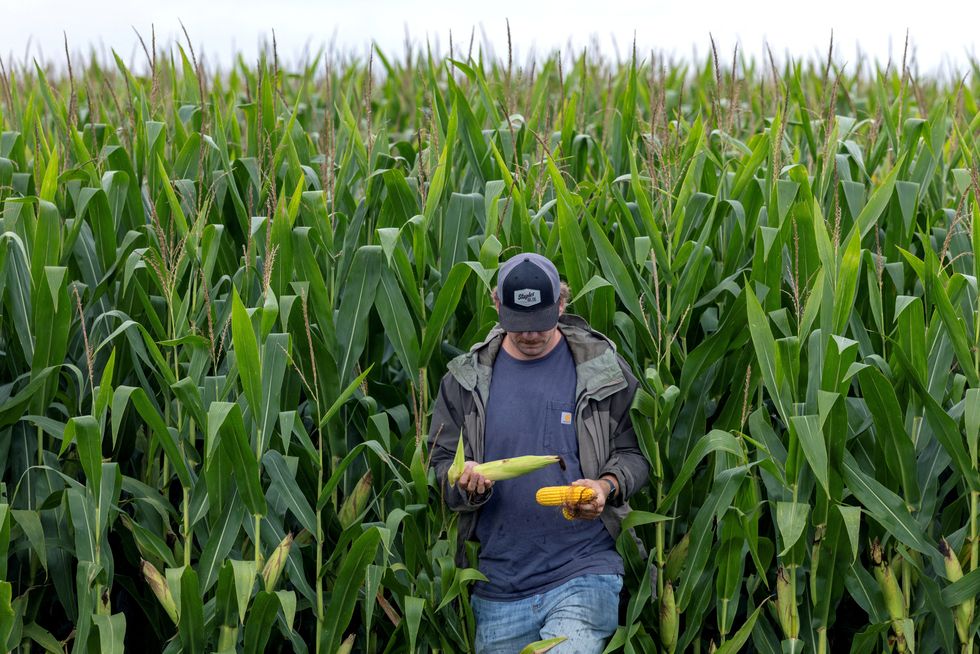
As the U.S. midterm elections approach, economic challenges faced by farmers are becoming a significant concern for the Republican Party. According to former Republican strategist Rick Wilson, many of President Donald Trump‘s most loyal supporters in rural areas are experiencing financial hardships due to his administration’s policies. The situation is evolving into a potential crisis for the GOP as farmers struggle to maintain their livelihoods.
In a recent analysis published on Substack, Wilson highlighted the difficulties in rural counties that overwhelmingly supported Trump during the 2016 election. Many of these areas are now witnessing a dramatic decline in family farm viability. The imposition of tariffs has severely affected export markets, leading to decreased crop incomes and a historic plunge in profits for farmers across the nation.
Wilson pointed out that the administration’s strict immigration policies have further exacerbated the situation. By reducing the availability of migrant labor, these measures have left many crops unharvested, leading to significant financial losses for farm owners. The combination of tariffs and labor shortages is creating a “slow-motion electoral disaster,” as Wilson describes, for Republicans who are linked to an incumbent president whose agenda is increasingly seen as detrimental to the very voters who supported him.
The impact of these economic challenges is particularly pronounced in key battleground states, where rural voters play a crucial role in determining election outcomes. As farmers face mounting debts and reduced income, discontent is likely to manifest at the ballot box.
Wilson’s analysis serves as a warning for the GOP, suggesting that the party may need to reevaluate its approach to policies affecting rural America. With the midterms on the horizon, the financial struggles of farmers could significantly influence voter sentiment, potentially jeopardizing Republican prospects in these critical districts.
As the situation develops, it will be essential for the GOP to address the concerns of its base. Failure to do so may result in a loss of support from a demographic that has traditionally been a cornerstone of the Republican coalition. The coming months will reveal whether the party can navigate these economic challenges and retain the trust of its voters in rural America.