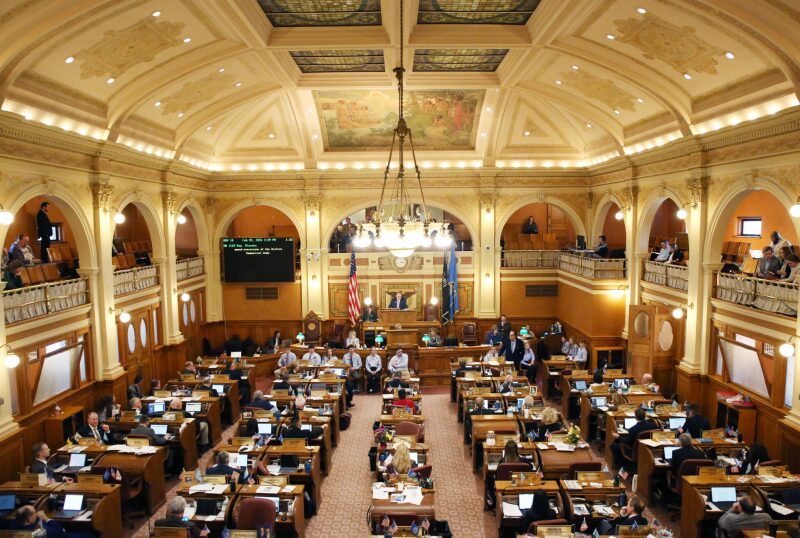
UPDATE: Tensions surrounding the future of New York’s climate law escalated during a crucial budget hearing held by the state Legislature on February 15, 2023. As lawmakers discussed Governor Kathy Hochul‘s executive budget proposal, significant concerns emerged regarding potential rollbacks of the state’s ambitious climate goals, specifically the Climate Leadership and Community Protection Act (CLCPA).
The hearing highlighted the urgent plea from the Coalition for Safe and Reliable Energy, which has filed a petition with the Public Service Commission to temporarily suspend or modify obligations under the Renewable Energy Program. This petition raises alarm among climate advocates as it exploits a provision in the CLCPA that allows for program modifications if deemed necessary for maintaining safe electric service or addressing rising service disconnections.
With just 30 days for public comment, the coalition, primarily representing business interests, is gaining traction, potentially swaying opinion against climate initiatives. Rory M. Christian, chair and CEO of the Public Service Commission, did not address the petition during the hearing, leaving many questions unanswered.
State Senator Pete Harckham pressed for clarity on the governor’s intentions, questioning Amanda Lefton, commissioner of the New York State Department of Environmental Conservation. While Lefton confirmed the governor’s commitment to combating climate change, she refrained from detailing any plans for potential rollbacks. “The governor has made clear that she knows we need to continue to fight climate change,” she stated, yet did not dismiss the possibility of adjustments to the CLCPA.
This uncertainty has emboldened opponents of the CLCPA, including State Senator Mark Walczyk, who asserted, “We’ve seen just a crack in her energy plan… This isn’t a good plan, it’s not feasible.” With the budget process underway, Hochul has multiple opportunities to introduce policy changes, which could significantly impact the state’s environmental trajectory.
The hearing also spotlighted Hochul’s controversial proposal to modify the state’s environmental quality review process to accelerate housing development. This proposal has faced backlash from lawmakers like State Senator Rachel May, who argues it lacks the necessary specificity to address environmental protections adequately. “I’m concerned that environmental advocacy organizations won’t be as supportive,” she warned, reflecting growing unease over the direction of the state’s environmental policies.
As discussions continue, the fate of New York’s climate law remains uncertain, with implications that could resonate beyond the state. Stakeholders are urged to stay tuned as developments unfold in the coming weeks, potentially reshaping the future of clean energy in New York.