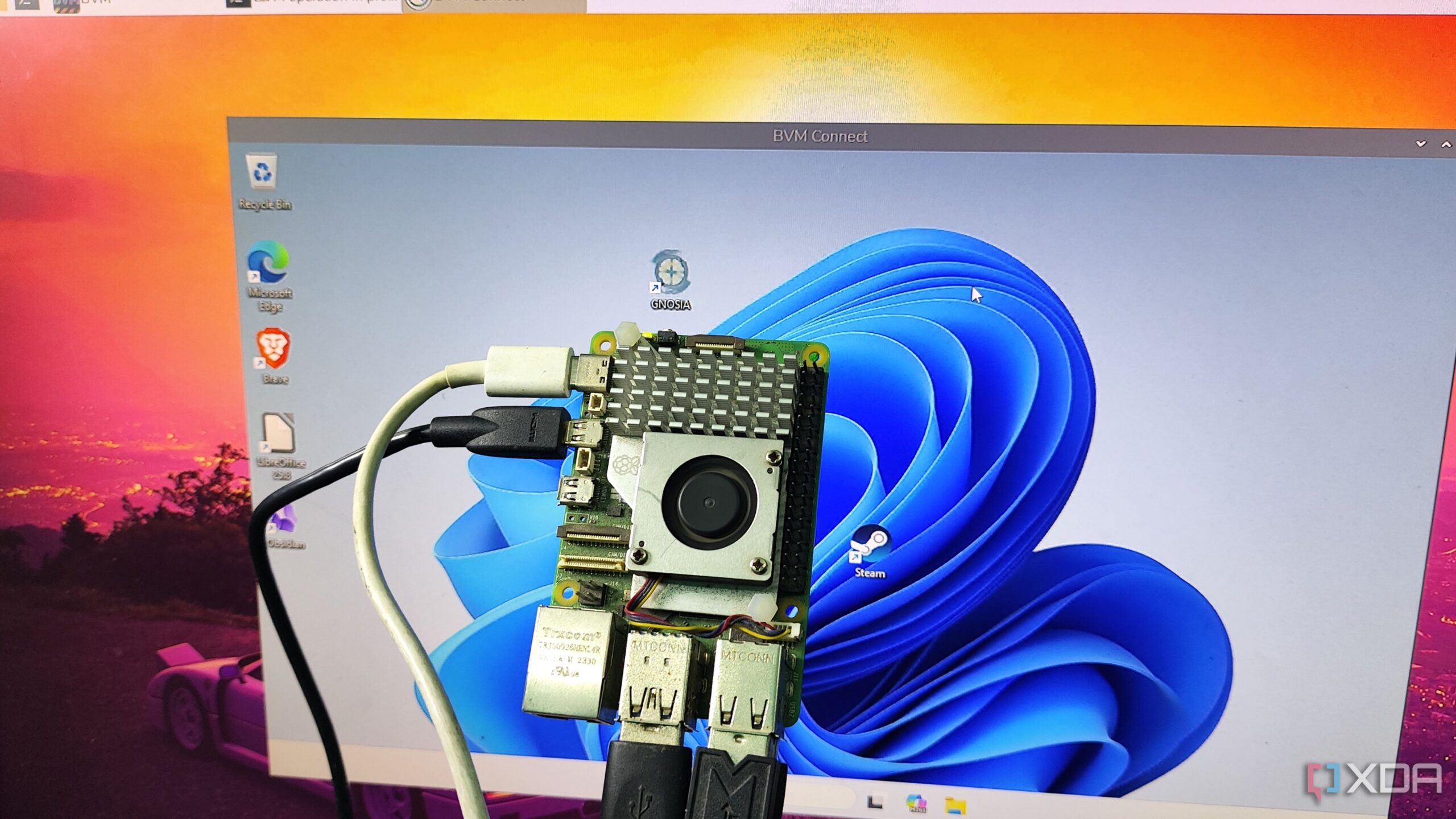
BREAKING: In an exciting development for tech enthusiasts, Raspberry Pi users can now deploy Windows 11 virtual machines (VMs) with surprising ease, thanks to a new setup utilizing Canonical MicroCloud and Botspot VM. This revelation is set to redefine what users can achieve with their compact devices.
This breakthrough comes at a time when Raspberry Pi’s capabilities are constantly being tested against traditional computing powerhouses. Despite initial skepticism about running demanding applications on such hardware, users have found that they can run multiple VMs without severely compromising performance.
The news is particularly significant for developers and hobbyists who rely on Ubuntu Server for their Raspberry Pi projects. As a lightweight operating system, Ubuntu Server allows users to run up to four VMs simultaneously on the latest Raspberry Pi 5 model, provided memory resources are managed effectively.
Previously, attempts to run virtualization platforms like Proxmox on Raspberry Pi faced compatibility challenges, especially with the unofficial RPi 5 BIOS. However, with the integration of MicroCloud packages tailored for Arm architecture, users can now enjoy a smooth virtualization experience.
The process begins with installing Botspot VM, which is now conveniently available via Pi-Apps. This setup is described as user-friendly, requiring minimal configuration and allowing users to run Windows applications effortlessly. Most users report satisfactory performance with various tasks, although 4K displays may strain capabilities. Shifting to a 1080p screen restores responsiveness, making it a viable option for developers working on PowerShell scripts or minor projects.
Why It Matters NOW: This development opens up new avenues for Raspberry Pi users who have long sought to maximize the potential of this affordable computing platform. With the increasing demand for lightweight computing solutions, the ability to run Windows 11 could attract a broader audience, including educational institutions and hobbyists looking to experiment with virtualization.
Moreover, while the performance of VMs on Raspberry Pi is notable, experts recommend prioritizing container technology for extensive projects. Tools like Docker and Kubernetes allow users to manage dozens of containers with ease, providing a more efficient alternative for many applications.
The community surrounding Raspberry Pi continues to innovate and push boundaries, making it an exciting time for tech enthusiasts. As the landscape of computing evolves, the Raspberry Pi is proving that it can hold its own in the face of traditional computing giants.
Next Steps: Tech users eager to explore this new capability should immediately download Botspot VM and Ubuntu Server to start their VM journey. With this newfound functionality, users can expect a wave of creative projects and applications to emerge, showcasing the versatility and power of Raspberry Pi technology.
Stay tuned for more updates as the Raspberry Pi community continues to evolve and adapt to these exciting developments.