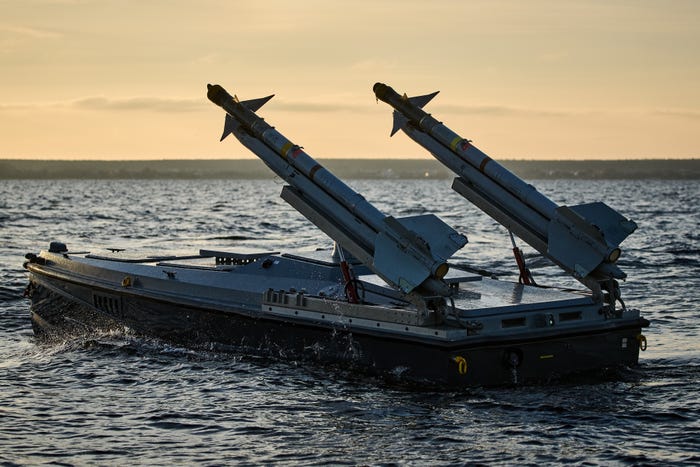
BREAKING: Ukrainian naval drones are driving Russian helicopters away from combat zones, as confirmed by a special forces commander. This pivotal shift underscores the evolving battlefield dynamics in the ongoing conflict.
Ukrainian special forces commander, known by the call sign Thirteen, revealed that Russian helicopters have become “easy targets” for Ukraine’s missile-armed naval drones, particularly the Magura V7. This intelligence, shared at a recent GUR showcase, highlights a significant change in aerial tactics and the increasing effectiveness of Ukraine’s naval drone technology.
As of now, Russian helicopters are steering clear of Ukraine’s naval drones due to their vulnerability to surface-to-air missiles. Thirteen noted that initially, these helicopters presented a “critical threat,” making operations challenging for Ukraine’s forces. However, with the introduction of missiles on naval drones, the tide has turned. “After that, the enemy stopped using helicopters against us altogether,” Thirteen stated.
This development is crucial as it showcases the growing capabilities of Ukraine’s naval drones, which have already achieved notable successes against Russian warships. Reports indicate that these drones have forced Russia to relocate its naval vessels, moving them further from the Ukrainian coastline and increasing air patrols in the region.
Ukraine first claimed a naval drone victory against a Russian helicopter last December 2022, stating that a Magura V5 sea drone successfully destroyed a Russian Mi-8 helicopter. Since then, Ukrainian forces have reported additional successes in targeting helicopters, signaling a shift in air combat strategy.
Russian helicopters have faced significant challenges during the conflict, suffering losses to both air defenses and evolving drone technologies. While they have played a key role in operations ranging from troop transport to logistical support, their effectiveness has declined under the threat of advanced Ukrainian drone capabilities.
The situation is further complicated by the broader use of drones in the conflict. Both sides are increasingly cautious, with Russia employing helicopters for specific missions while avoiding direct engagements with naval drones. Meanwhile, Ukraine has developed new helicopter units dedicated to countering Russian drones, reflecting the ongoing arms race in aerial technology.
The naval drones’ advancements, initially designed for explosive attacks, have now evolved to effectively target a wider range of threats, including helicopters and military assets on rivers. Ukraine continues to manufacture various models, including the Sea Baby, enhancing their weaponry with missile systems to bolster their naval capabilities.
As this conflict continues to unfold, the impact of these developments on the battlefield remains significant. The evolving role of naval drones signifies a turning point in the naval power dynamics in the Black Sea, forcing Russia’s fleet to retreat to safer ports, primarily Novorossiysk, away from Ukrainian shores.
Watch for further updates as Ukraine’s naval drone capabilities continue to shape the dynamics of the conflict and challenge traditional military strategies. The implications of this technological evolution could redefine naval warfare in the region and beyond.