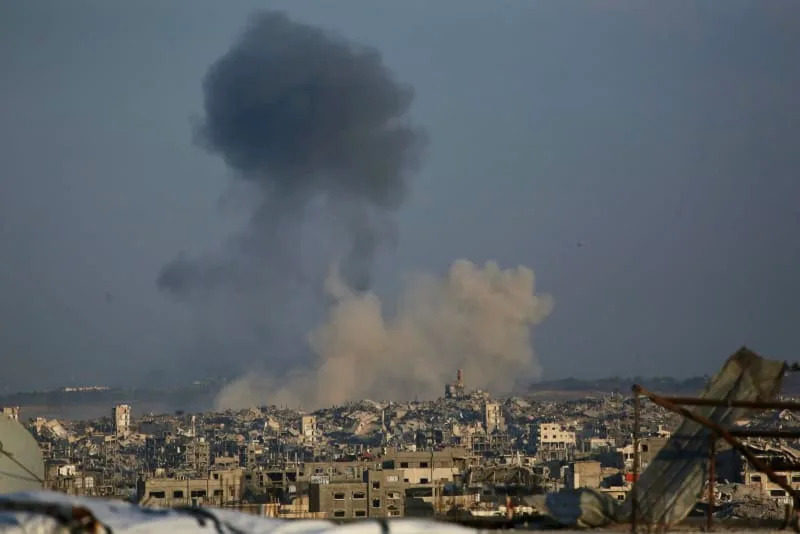
The Israel Defense Forces (IDF) have reported significant developments in their operations against terrorist infrastructure in the Gaza Strip. Recent military actions have led to the destruction of underground tunnels spanning more than four kilometers, as well as the elimination of dozens of terrorists in the northern regions, specifically in Jabaliya, Beit Hanoun, and Beit Lahia.
In a notable incident, IDF forces discovered approximately 10 mortar bombs concealed within a children’s blanket in a residential building located in the Beit Hanoun area. This revelation underscores the ongoing challenges faced by Israeli forces as they contend with the use of civilian structures for military purposes. The IDF has previously encountered similar tactics; in January 2023, a rocket-propelled grenade was found hidden in a child’s bed in Jabaliya.
Ongoing Military Operations
The IDF’s operations are concentrated along what is known as the Yellow Line, a demarcation that designates areas where Israeli forces maintain control under a ceasefire agreement. According to the IDF, they control regions to the east, north, and south of this line, while Hamas and other terrorist groups are prohibited from crossing it. This strategic approach aims to disrupt both above-ground and underground terrorist infrastructure.
Hamas has a long history of utilizing tunnels for military purposes. Since the 1980s, the group has employed these underground pathways for smuggling operations from Egypt and launching offensive actions into Israel. During Operation Protective Edge in 2014, the IDF reported the destruction of 32 cross-border offensive tunnels. However, the internal tunnel network remained largely intact, continuing to serve as a crucial element of Hamas’s military strategy.
The IDF’s recent actions reflect an ongoing commitment to countering threats posed by Hamas and its affiliates. The military’s focus on locating and neutralizing concealed weapons highlights the complexities of conducting operations in densely populated civilian areas, where the risk to non-combatants is a significant concern.
As regional tensions persist, the IDF continues to adapt its strategies to address both immediate threats and the broader implications of ongoing conflicts in the region. The situation remains fluid, and further developments are anticipated as military operations continue.