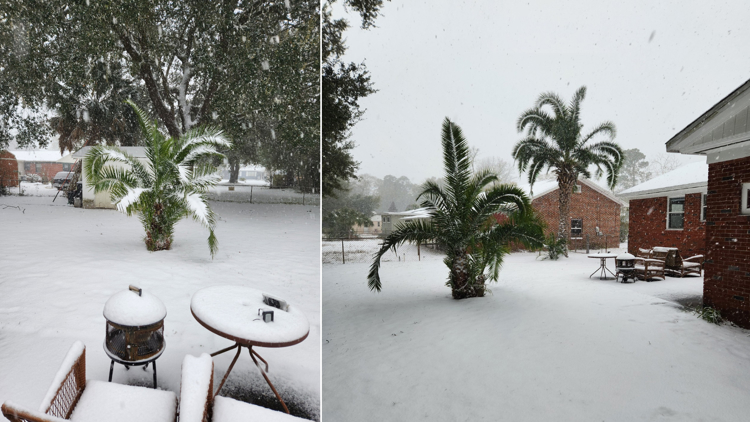
A rare winter phenomenon occurred on January 21, 2025, when parts of the southern United States transformed into a snowy landscape. Texas, Louisiana, and Florida experienced significant snowfall, challenging the perception that these regions are immune to winter weather. The unusual event saw a 1,500-mile stretch covered in heavy snow, leaving residents astonished as they navigated through a winter wonderland.
In Louisiana, snowfall reached over 6 inches near Baton Rouge, with some areas in the Louisiana Delta recording between 8 to 12 inches. Residents of the Florida Panhandle faced similar conditions, as they dug out from beneath the same amounts of snow. This unexpected weather disrupted travel, closed schools, and caught many locals off guard, especially those who had never owned a snow shovel.
Although the Deep South is not typically associated with blizzards, snow is not entirely impossible. Occasionally, a significant push of arctic air travels southward, interacting with warm Gulf moisture to create snowfall. Such events are infrequent but notable; cities like Atlanta, Birmingham, and Jackson have recorded snow in the past decade. Even Houston, known for its hot summers, has occasionally seen a light dusting of snow.
While snowfall in these regions is rare, the impact is profound. Unlike northern states, which maintain fleets of snowplows and salt trucks, southern states lack the infrastructure to effectively manage winter weather. A mere inch of snow can lead to massive traffic disruptions and accidents, with entire cities coming to a standstill. Schools and businesses often close not only due to snow accumulation but also because ice is challenging to handle without proper equipment.
When a “Winter Storm Warning” is issued in southern or Gulf Coast states, the criteria differ significantly from those in colder regions. In places like Minnesota and Michigan, a warning may require at least 6 inches of snow. Conversely, in southern states such as Alabama and Mississippi, a warning can be issued for just 1 to 2 inches. The National Weather Service employs these lower thresholds due to the rarity and severity of snow impacts in warmer areas.
For residents in Alabama or Mississippi, even minimal snowfall can prompt advisories to remain off the roads, as schools may close and power outages can occur from ice accumulation on trees and power lines. The combination of heavy, wet snow and freezing temperatures creates hazardous conditions, making even light snow potentially dangerous.
Interestingly, Hawaii also experiences snowfall, particularly on its highest peaks, Mauna Kea and Mauna Loa. These volcanic summits, reaching nearly 14,000 feet above sea level, can receive several feet of snow during winter storms. This phenomenon occurs when cold Pacific storms send moist air high enough to freeze over the mountains. Locally, this is referred to as “pōhaku hau,” meaning “snow rock.” While this weather pattern does not affect most residents at lower elevations, it highlights that winter extends even into tropical regions.
Snowfall in Florida is so infrequent that each occurrence becomes a topic of local lore. The most notable event took place on January 19, 1977, when snow fell as far south as Miami, marking the only recorded instance in the city’s history. Long-time residents reminisce about snowflakes drifting past palm trees, while headlines proclaimed “The Day It Snowed in Miami.” Since then, northern Florida has experienced sporadic snowfall during significant Arctic cold waves, but such events remain rare.
From the Gulf Coast’s beaches to Hawaii’s volcanic peaks, every U.S. state has recorded snowfall at some point. The unique combination of cold weather and humidity allows snow to appear in unexpected locations. In southern states, even a small amount of snow can paralyze communities unaccustomed to winter weather. Roads in these regions are not designed for freeze-thaw cycles, vehicles typically lack snow tires, and cities do not invest in snow removal equipment for events that may only happen every few years.
When snow does fall in the South, it often melts quickly and creates ice, further complicating driving conditions. Even a half inch of snow can lead to chaos, as communities grapple with an event that is both rare and challenging. As winter continues, residents are reminded of the unpredictable nature of weather and the occasional surprises it can bring.