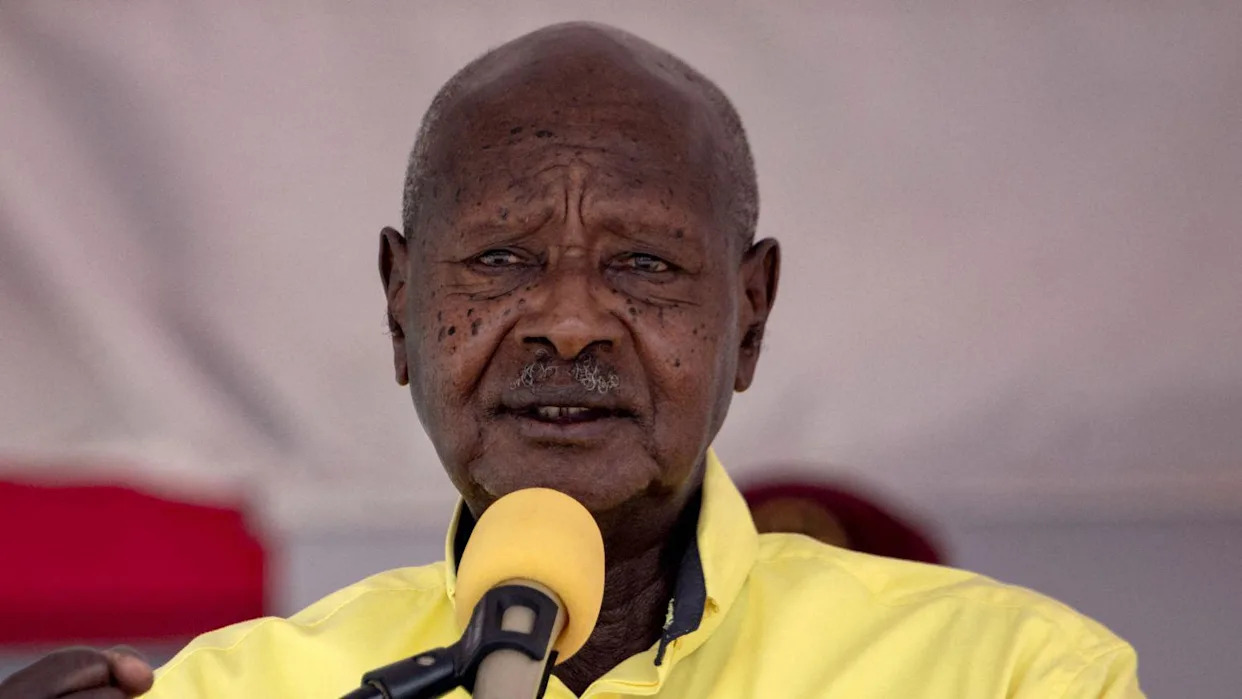
Yoweri Museveni, the long-serving president of Uganda, is campaigning for a seventh term in office as the country approaches its 2024 elections. Having held power since 1986, Museveni has faced criticism for consolidating authority while sidelining opponents and compromising democratic institutions. His administration’s policies have led to significant development and relative peace, yet many Ugandans express concerns about his intentions regarding succession and governance.
Over three-quarters of Uganda’s population is under the age of 40, and for them, Museveni is the only president they have ever known. His ascent to power followed an armed uprising, and despite his age—now 81—he shows little inclination to step down. While some citizens appreciate the stability and development brought by Museveni’s leadership, critics argue that he has maintained control through undemocratic means.
In a notable shift from his earlier stance, Museveni once expressed skepticism about presidential term limits. “We don’t believe in [presidential] term limits,” he remarked to the BBC after securing a fifth election victory. Following that statement, the Ugandan Constitution was amended to remove the age limit for presidential candidates, a change interpreted by many as paving the way for Museveni to extend his rule indefinitely.
Museveni’s early life in Ankole, western Uganda, significantly shaped his political journey. Born in 1944 into a family of cattle keepers, he experienced the violent aftermath of Uganda’s independence from British colonial rule, followed by the tumultuous regimes of Milton Obote and Idi Amin. His political activity began while studying at the University of Dar es Salaam in Tanzania, where he formed alliances with other politically active students.
His prominence rose during the 1970s when he aided in the overthrow of Idi Amin, a dictator responsible for the deaths of an estimated 400,000 people. After Amin’s fall, Museveni rejected Obote’s leadership, claiming electoral fraud, which led him to initiate a guerrilla war. By 1986, his National Resistance Movement (NRM) had seized power, marking the beginning of his lengthy presidency.
Under Museveni’s leadership, Uganda experienced economic growth, with an average annual rate exceeding 6% over a decade. The education sector saw improvements, including a doubling of primary school enrollment, and a successful anti-AIDS campaign helped reduce HIV prevalence. His administration garnered praise from Western nations, although his reputation suffered following military involvement in the Democratic Republic of Congo in 1998.
Critics have increasingly voiced concerns regarding the erosion of democratic freedoms and the independence of institutions. Reports indicate that the judiciary has been compromised, with allegations of “cadre judges” loyal to the government. For instance, in December 2005, armed security forces intervened in a High Court case, re-arresting individuals who had been acquitted of treason charges.
The media landscape in Uganda, while appearing vibrant, has faced significant challenges. Numerous outlets have been raided, and journalists have been detained, raising alarms about press freedom. Notably, Museveni’s critics, including prominent opposition figures like Kizza Besigye and Bobi Wine, have faced severe repression. Besigye, a former ally turned adversary, has been arrested multiple times since first challenging Museveni in 2001. Wine, a popular musician-turned-politician, has also been subjected to police brutality and legal harassment, including incidents of police violence during campaigns.
Recent reports from the United Nations highlight disturbing tactics employed by Ugandan security forces, including the use of live ammunition to disperse peaceful protests and the abduction of opposition members. Despite this climate of fear, Museveni has asserted the stability of Uganda, urging citizens to vote confidently.
Emmanuel Lumala Dombo, spokesperson for the NRM, emphasizes the country’s relative stability, noting that Uganda is now the largest host of refugees in Africa, with over 1.7 million refugees welcomed since Museveni took office. His administration has actively sought foreign investment, forming partnerships with nations such as China and the United Kingdom, with aspirations to elevate Uganda to a middle-income status by 2040.
As Museveni campaigns for another term, he portrays himself as a nurturing figure for Uganda’s youth, affectionately referring to his young supporters as “Bazukulu,” meaning grandchildren in Luganda. With rivals like Bobi Wine, who is significantly younger, Museveni has made efforts to project vitality, including public displays of exercise.
Concerns persist, however, regarding the potential for dynasty-building within the Museveni family. His wife, Janet, serves as the education minister, while his son, Gen Muhoozi Kainerugaba, holds a prominent military position. Speculation about Kainerugaba’s political future looms, with many fearing that his ascension could shift Uganda towards authoritarianism.
As the elections approach, Museveni appears confident in securing a seventh victory, stating, “Uganda is secure. Go out and vote,” during a recent New Year’s address. With nearly four decades in power, he continues to assert the NRM’s dominance in Ugandan politics, leaving many to question the future of democracy in the nation.