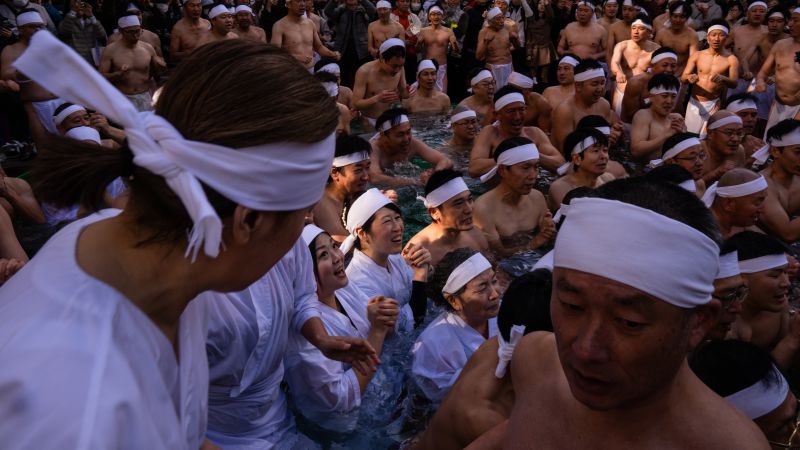
Dozens of worshippers participated in the ancient Japanese ritual known as “Kanchu Misogi” on January 1, 2024, at the Teppuzu Inari Shrine in Tokyo. This cold endurance event, designed to purify the soul and pray for good health, attracted around 100 participants, primarily men dressed in traditional white loincloths, alongside several women in white robes.
The atmosphere at the shrine was charged with energy as percussion and flute music filled the air. A pool of icy water awaited those willing to take the plunge. Participants gathered in the shrine’s courtyard, clasping their hands in front of their chests while chanting “Haraedo-no-Okami,” which refers to the Goddess of purification. This chant served as a spiritual invocation for cleansing their sins.
Before entering the pool, participants jogged around the shrine and engaged in warm-up exercises. Once in the icy waters, they scooped water over themselves with wooden buckets, shouting “ai” as they braced for the cold. Supporters cheered them on, creating a vibrant and encouraging environment. This year marks the 71st iteration of the ritual at the shrine, reflecting a long-standing commitment to purification practices central to Japan’s Shinto tradition.
Significance of Purification in Shinto
Purification is a vital element of Shinto, Japan’s indigenous religion that dates back centuries. The belief is rooted in the idea that sacred spirits inhabit nature and all living things. While the ritual was originally intended as a purification rite for the local deity, it has evolved to welcome public participation through a registration process that closed early this year due to overwhelming interest.
Japan, a constitutional monarchy led by 65-year-old Emperor Naruhito, regards the emperor as the highest authority in Shinto, though his political powers are limited. The Kanchu Misogi ritual is part of the broader New Year celebrations, known as Shōgatsu, which runs until January 3. This period is characterized by various Shinto practices, including “Hatsumode,” the first visit of the year to a Shinto shrine or Buddhist temple, where individuals pray for good fortune and health.
The participation in Kanchu Misogi not only emphasizes physical endurance but also deepens the cultural and spiritual connections among the participants, reinforcing community bonds as they collectively engage in this time-honored tradition.