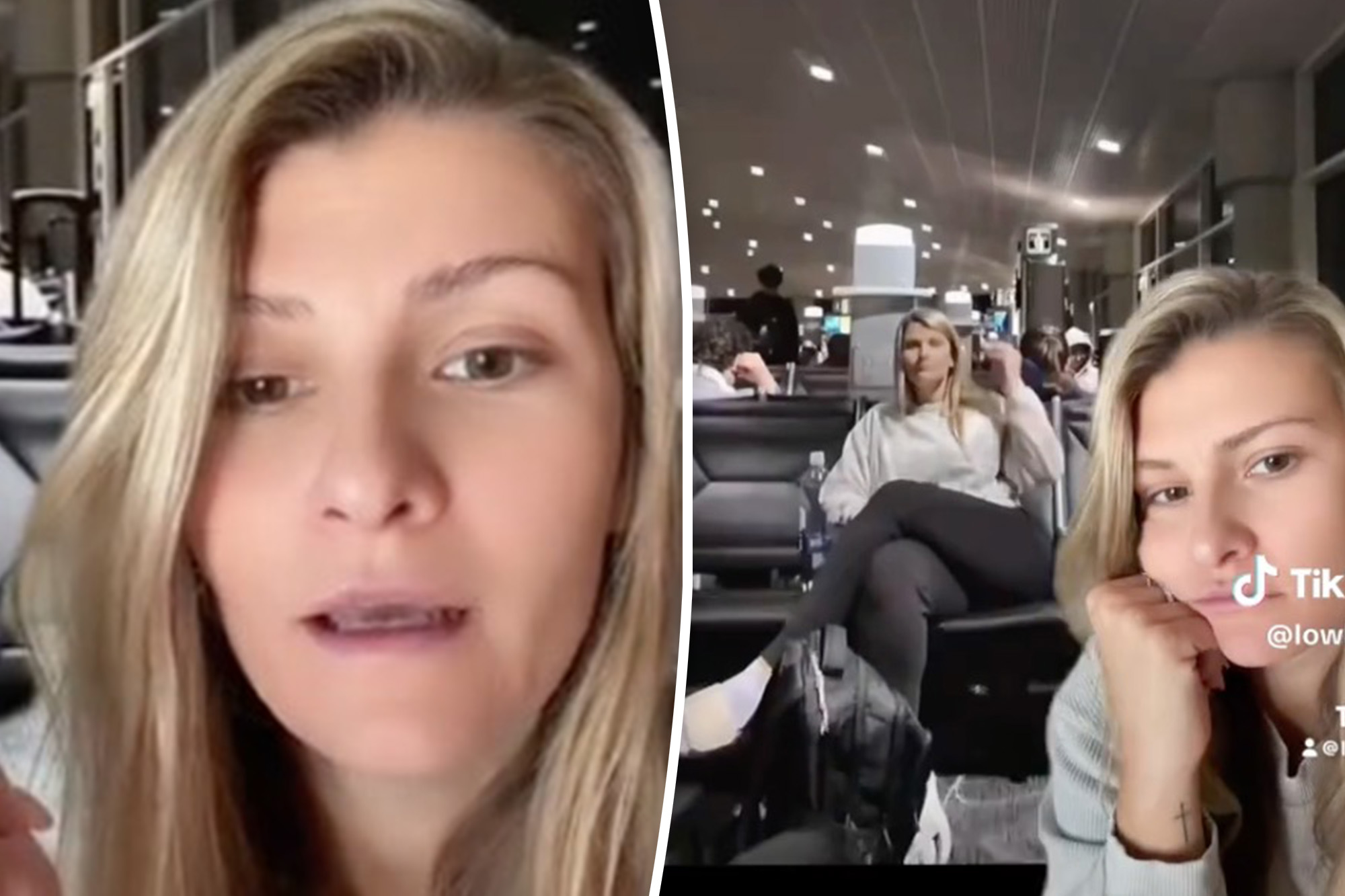
A woman from Tampa, Florida, has raised alarm after discovering footage of herself recorded without her knowledge while waiting at an airport. Lauren Britt highlighted the unsettling ease with which privacy can be violated, especially through new technology, in an eye-opening social media post that has drawn widespread attention.
While at the airport lounge waiting for her flight to Boston, Britt was approached by an unfamiliar man who initiated a brief conversation. Initially, the encounter seemed harmless. However, the situation took a troubling turn when Britt later learned that the interaction had been secretly filmed and shared online. Her brother identified the video circulating on Instagram, prompting Britt to share her own response on TikTok, stating, “Here I am, minding my business at the airport, and this guy starts to talk to me.”
The emergence of camera-equipped glasses has intensified concerns about privacy violations. The first such glasses were introduced in 2012, but advancements in technology have made them more accessible. In 2024, Meta, the parent company of Facebook and Instagram, launched the Ray-Ban Meta AI glasses. These glasses, aimed at assisting low-vision users, come equipped with built-in cameras, speakers, and microphones, raising significant privacy concerns.
Britt’s TikTok video concluded with a provocative question: “Is that creepy? He never asked.” This sentiment resonates deeply, as women have faced unwanted filming in public for years. The discreet nature of the new glasses arguably makes it easier for individuals with ill intentions to exploit unsuspecting women.
In a similar incident earlier in the year, a woman in Sydney reported being filmed by a US content creator using the same glasses. She described the experience as “violating and disgusting” after finding out that her interaction was posted to his 1.3 million Instagram followers. “I was just strolling along, reading the news,” she recounted. “When I looked up, I saw that a man was about to approach me.”
As laws regarding surveillance devices vary across Australia, the legal landscape surrounding such incidents remains complex. In New South Wales, the Surveillance Devices Act prohibits recording conversations without consent, carrying penalties of up to five years in prison. Despite these laws, public interactions can complicate the enforcement of privacy rights.
The growing trend of using technology to capture private moments has alarmed many. Comments on Britt’s video reflect this concern, with viewers questioning the ethics of using such devices. One user remarked, “Why are these even a thing?” while another stated, “That’s such an invasion of privacy.”
In the United States, similar incidents involving male content creators have raised questions about consent and public decency. One TikToker, known as @itspolokid, faced scrutiny after secretly filming women on Australian beaches. Though he was reported to NSW Police, no charges were filed against him, illustrating the challenges in addressing privacy violations in public spaces.
As technology continues to evolve, the implications for individual privacy remain a pressing concern. The incidents involving Britt and others serve as stark reminders of the need for vigilance in the face of advancing surveillance capabilities. The conversation surrounding consent, privacy rights, and the ethical use of technology continues to gain momentum, urging society to reassess what is acceptable in public interactions.