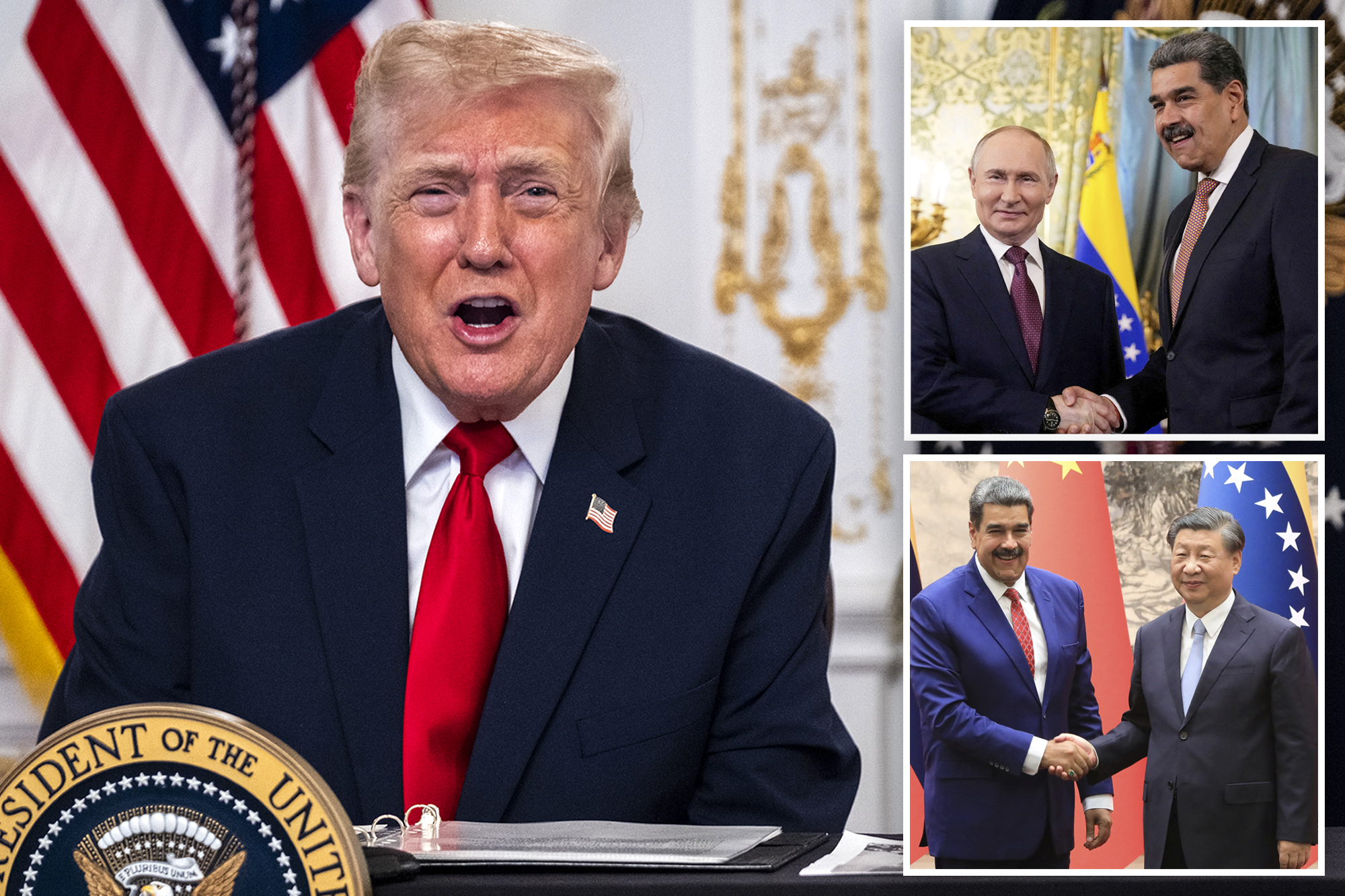
Venezuela’s military has officially recognized Vice President Delcy Rodriguez as the acting leader of the country following the dramatic extraction of President Nicolas Maduro by U.S. forces on March 16, 2024. Defense Minister Vladimir Padrino Lopez confirmed this endorsement in a statement, supporting a ruling from Venezuela’s Supreme Court that appointed Rodriguez as interim president for a period of 90 days.
Rodriguez, who has held the vice presidency since 2018, has played a significant role in managing Venezuela’s oil-dependent economy and its intelligence services. Her ascension to the acting presidency follows the high court’s directive, which took effect immediately after Maduro’s removal. In the wake of these developments, Donald Trump announced that U.S. officials had been in contact with Rodriguez, suggesting she is open to cooperating with American interests.
In a televised address, Rodriguez condemned the U.S. military operation that resulted in Maduro’s capture, describing it as “barbaric” and an “illegal and illegitimate kidnapping.” She asserted that the actions of the U.S. constitute a direct assault on Venezuela’s sovereignty and called for the “immediate release” of Maduro and his wife, Cilia Flores. Rodriguez also expressed a willingness to engage in dialogue with the U.S., stating, “We are willing to have respectful relations.”
While her position remains precarious, Rodriguez faces a complex political landscape. During Trump’s first term, she was subjected to U.S. sanctions due to her alleged role in undermining democratic processes in Venezuela. Trump’s recent comments regarding Rodriguez suggest potential consequences if she does not align with U.S. expectations. He stated, “If she doesn’t do what’s right, she is going to pay a very big price, probably bigger than Maduro.”
U.S. Secretary of State Marco Rubio characterized the ongoing conversations with Rodriguez and her government as “delicate and complicated,” emphasizing the need for mature statesmanship. He reiterated, “Our goals remain the same,” referring to the U.S.’s long-standing objective of instigating political change in Venezuela.
Shortly after the military operation, Maduro and Flores were transported to New York, where they face federal charges linked to drug trafficking and connections with designated terrorist organizations, allegations that Maduro has consistently denied. A video shared by a White House account depicted Maduro smiling while being escorted by U.S. Drug Enforcement Administration agents.
In his statement, Padrino Lopez also claimed that some of Maduro’s bodyguards were killed during the U.S. raid, although he did not provide specific casualty figures. Venezuelan authorities have yet to confirm an official tally of injured or killed individuals resulting from the operation. Trump indicated that while some U.S. forces sustained injuries, there were no fatalities among American personnel.
Padrino Lopez urged Venezuelans to resume their daily activities, including economic and educational endeavors, asserting that “the homeland must follow its constitutional course.” As the political situation continues to evolve, the implications of Maduro’s removal and Rodriguez’s temporary leadership remain uncertain, with significant consequences for both Venezuela and its international relations.