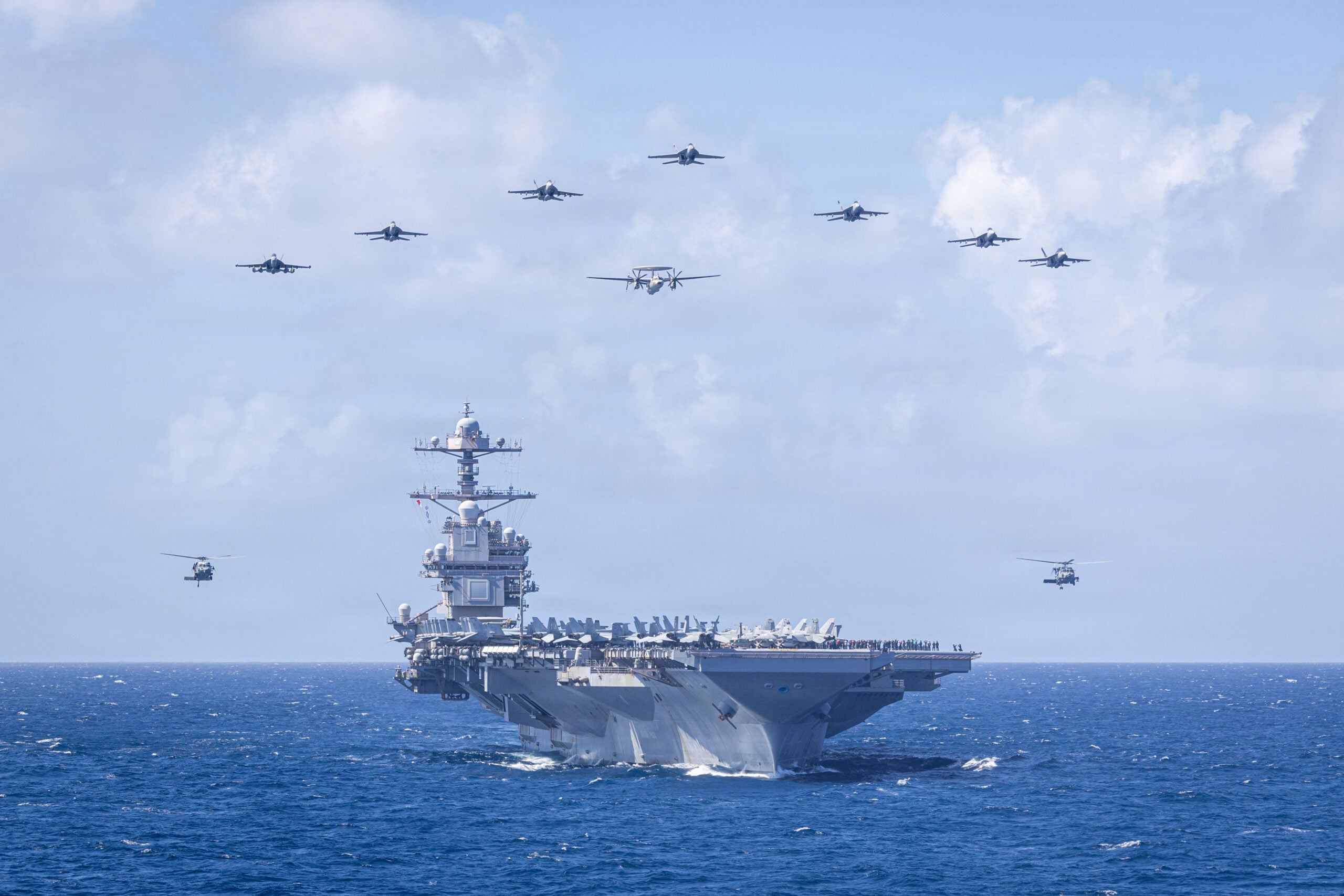
The USS Gerald R. Ford (CVN-78) is currently sailing in the Atlantic Ocean, making its way to the Strait of Gibraltar as part of a strategic deployment to U.S. Central Command. This movement comes amid ongoing tensions with Iran, as confirmed by a U.S. Navy official to USNI News. The carrier, along with its escort vessels, is transitioning from operations in the Caribbean Sea, where it has been since mid-November.
The deployment follows a series of heightened military activities in the region, including a recent raid on former Venezuelan President Nicolás Maduro in Caracas earlier this month. The USS Gerald R. Ford is set to join the Abraham Lincoln Carrier Strike Group, which is actively operating in the Arabian Sea. This coordination aligns with U.S. diplomatic efforts regarding Iran’s nuclear program and reflects the increased military presence in response to the Iranian government’s crackdown on domestic protests.
Record Deployment on the Horizon
The USS Gerald R. Ford, which departed from Naval Station Norfolk, Virginia, in June, has been extended in its deployment to the Middle East. Should the carrier remain in operation until mid-April, it will surpass the post-Vietnam War record for carrier deployments, currently held by the USS Abraham Lincoln (CVN-72) at 294 days. If the Ford’s operational period extends into early May, it could match the 300-day deployments seen during the Vietnam War, particularly those to the Gulf of Tonkin.
Data from USNI News indicates that the figures for carrier deployments only account for operational activities focused on national tasking, not including training exercises or qualification cruises. This method provides a clearer picture of U.S. naval combat readiness. For context, during the COVID-19 pandemic, the USS Nimitz (CVN-68) was deployed for 263 days, reflecting the challenges of restrictions on movement and limited port visits.
Recent Naval History
The last instance of the U.S. maintaining two aircraft carriers in the Middle East took place last summer, when the USS Nimitz and USS Carl Vinson (CVN-70) were briefly present in the Arabian Sea. This occurred following Operation Midnight Hammer, which involved strikes on Iranian nuclear facilities. The current deployment of the USS Gerald R. Ford illustrates the U.S. commitment to maintaining a robust naval presence in crucial international waters amid fluctuating geopolitical dynamics.
As the USS Gerald R. Ford continues its journey, the implications of its deployment extend beyond military readiness, shaping the U.S.’s strategic posture in the region and influencing ongoing discussions surrounding Iran’s nuclear ambitions. The deployment serves as a reminder of the intricate balance between diplomatic efforts and military preparedness on the global stage.