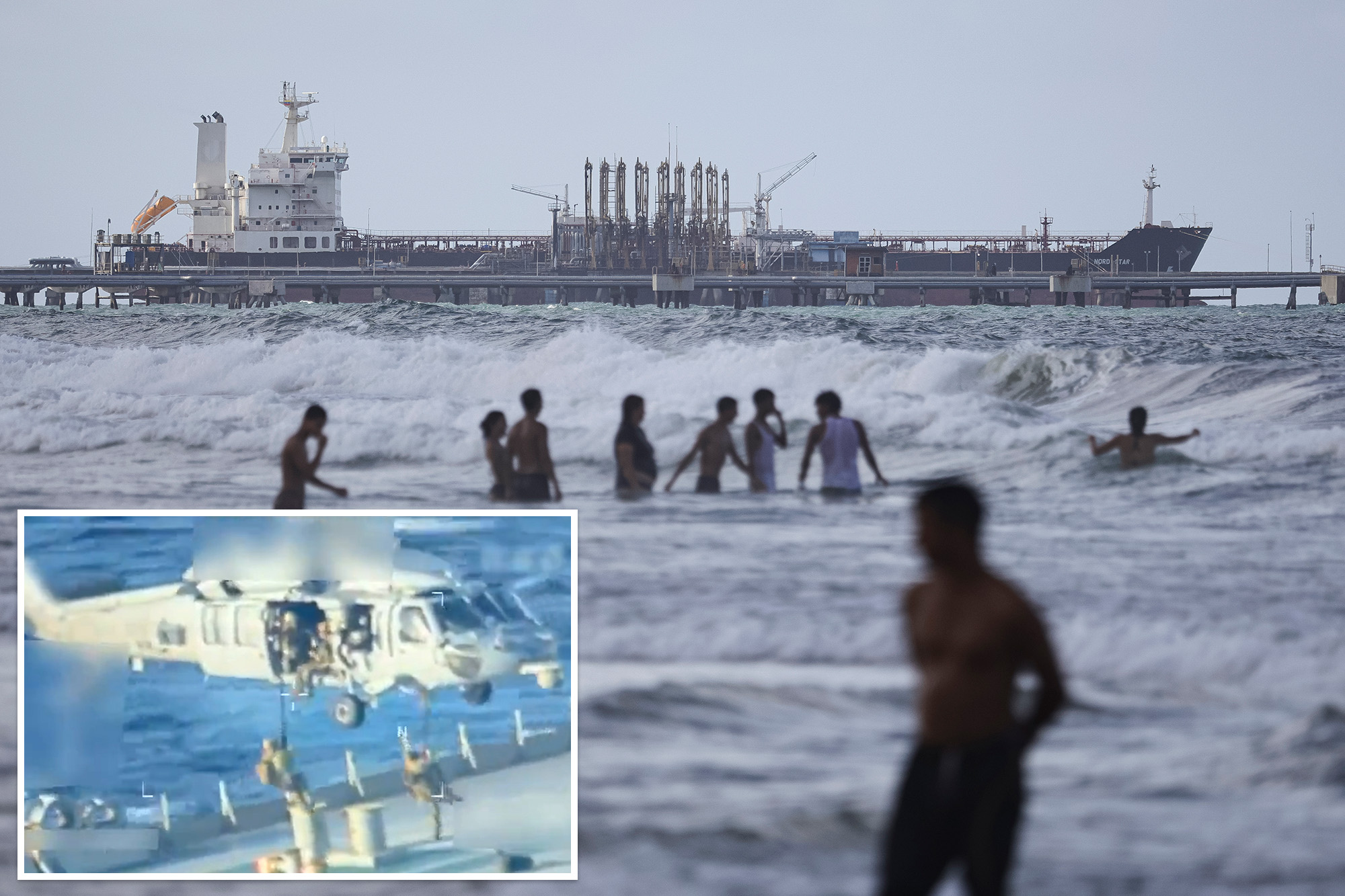
The United States has commenced an operation to intercept and seize a vessel off the coast of Venezuela in international waters, according to three U.S. officials on December 20, 2020. This action follows an announcement by President Donald Trump, who declared a “blockade” on all sanctioned oil tankers entering and leaving Venezuela just days prior.
The officials, who requested anonymity, did not disclose the specific location of the operation but confirmed that the U.S. Coast Guard is leading the effort. Questions directed to the Coast Guard and the U.S. Pentagon were referred to the White House, which has yet to respond to media inquiries.
This seizure marks the second incident in recent weeks where the Coast Guard, in coordination with other agencies, has taken action against a sanctioned tanker. On December 15, U.S. forces successfully seized an oil tanker off the Venezuelan coast, contributing to an effective embargo that has left fully loaded vessels carrying millions of barrels of oil stranded in Venezuelan waters, as operators hesitate to risk seizure.
In a statement made on December 15, Trump emphasized his administration’s aggressive stance, saying, “I am ordering A TOTAL AND COMPLETE BLOCKADE OF ALL SANCTIONED OIL TANKERS going into, and out of, Venezuela.” This directive is part of an ongoing effort to pressure the Venezuelan government amid rising tensions surrounding oil exports.
The implications of this blockade extend beyond immediate military actions. The Venezuelan economy is heavily reliant on oil exports, and the enforcement of these sanctions can significantly impact its financial stability. Analysts suggest that the U.S. strategy aims to cut off crucial revenue streams for the Venezuelan government, which has faced increasing isolation internationally.
As U.S. forces continue to enforce these measures, the situation remains fluid. The international community is closely monitoring the developments, as the potential for escalation exists. The effectiveness of the blockade will likely be measured in the coming weeks as the U.S. maintains its commitment to enforce these sanctions.
These actions are reflective of a broader strategy by the U.S. to influence Venezuela’s political landscape, amid ongoing concerns over human rights violations and the consolidation of power by the government in Caracas. The U.S. has not only imposed sanctions but has also called for international support to bring about change in Venezuela’s governance.
In conclusion, the interception of vessels off the coast of Venezuela underscores the U.S. government’s intensified measures to restrict oil exports from the country. The ongoing situation is poised to have significant economic ramifications for Venezuela and could reshape the geopolitical dynamics in the region. As developments unfold, the world’s eyes remain on this critical flashpoint.