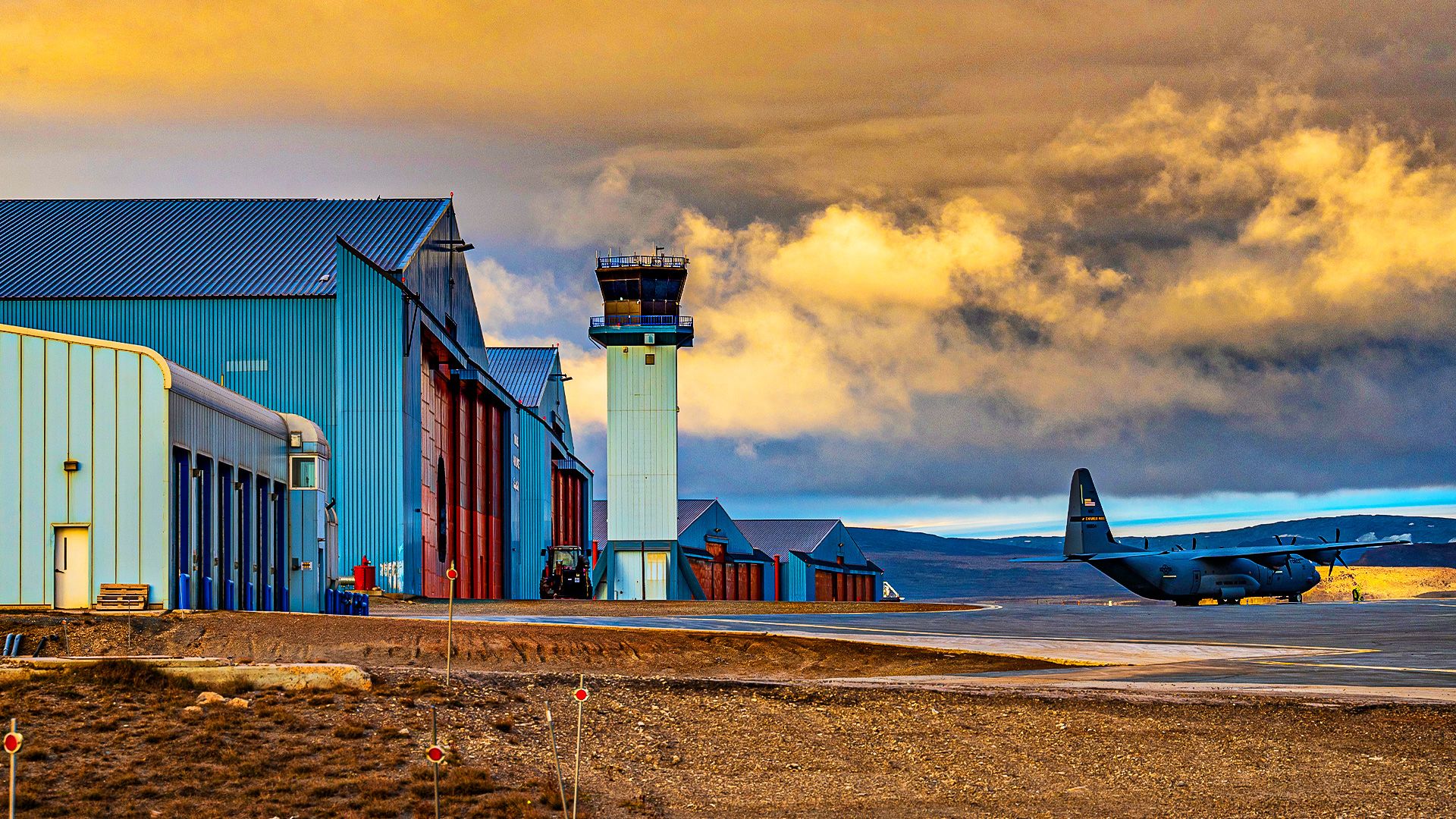
The United States Air Force has officially rebranded its Thule Air Base in Greenland as the Pituffik Space Base, a significant change reflecting its strategic importance in modern military operations. Now known as the northernmost military installation of the United States Department of Defense, Pituffik plays a crucial role in missile warning and defense systems designed to protect the nation from ballistic missile threats.
The transition to Pituffik Space Base highlights the ongoing mission that began under the USAF and continues today under the auspices of the US Space Force. This facility is not only integral to the nuclear deterrence network but also a vital component of NATO and the United States’ modern space surveillance operations.
Strategic Importance in the Arctic
Pituffik’s unique geographical location in the Arctic grants it strategic value, offering a pivotal vantage point for monitoring air and space approaches between North America and Russia. As a key sensor node within the North American Aerospace Defense Command (NORAD), the base’s role is critical for early detection of potential missile threats. The 12th Space Warning Squadron stationed at Pituffik employs an Upgraded Early Warning Radar (UEWR) system designed to track and identify ballistic missiles, ensuring that NORAD can act swiftly in response to threats.
Regular exercises, such as Operation Noble Defender, involve personnel from the United States and Canada, utilizing the base as a hub for NORAD operations. These activities demonstrate the ability to swiftly deploy forces in the Arctic, maintaining “Total Domain Awareness” and deterring adversarial actions.
Pituffik also serves as a Forward Operating Location (FOL) for air defense operations. Its 10,000-foot runway accommodates modern fighter aircraft, including the F-35 Lightning II and F-16, enhancing the base’s operational capabilities in the region.
Advanced Infrastructure and Capabilities
The facility is characterized by its specialized Arctic engineering and advanced sensor capabilities. It features closed-loop systems that can endure extreme cold temperatures, with primary and auxiliary power plants, heating plants, and communication centers designed to operate in conditions as harsh as -85°F. The base’s infrastructure supports a multinational workforce, which fluctuates from 150 to 600 personnel depending on seasonal demands.
Recent investments at Pituffik focus on filling infrastructure gaps, enabling the construction of new refueling hangars and personnel recovery facilities. These enhancements contribute to the base’s role as a central point for NORAD’s modernization efforts. As the Arctic becomes increasingly accessible due to climate change, Pituffik’s strategic relevance continues to grow, particularly in terms of monitoring the GIUK (Greenland, Iceland, United Kingdom) Gap, which is a critical area for tracking Russian naval movements.
The base’s operational history dates back to the early stages of the Cold War, where it served as a staging area for various military operations. Notably, it provided logistical support for the construction of Camp Century, a secretive research facility that tested the feasibility of a sub-ice missile launch site. Pituffik’s legacy includes significant historical moments, such as the January 21, 1968 incident involving a B-52 bomber crash that resulted in radioactive contamination, leading to a reevaluation of nuclear policy at the base.
Pituffik Space Base symbolizes a long-standing military partnership between the United States and the Kingdom of Denmark. Established under a 1951 defense agreement, this arrangement allows for the construction, maintenance, and operation of military installations across Greenland. The agreement also acknowledges Denmark’s authority over Greenland while granting the US “exclusive jurisdiction” over its military operations, thereby ensuring a collaborative defense strategy under the NATO framework.
As geopolitical dynamics evolve, particularly with rising interests from nations like Russia and China in the Arctic region, the role of Pituffik Space Base is set to remain critical. Its strategic location will continue to facilitate both military operations and scientific research, making it a focal point in ensuring security and stability in the increasingly competitive Arctic landscape.