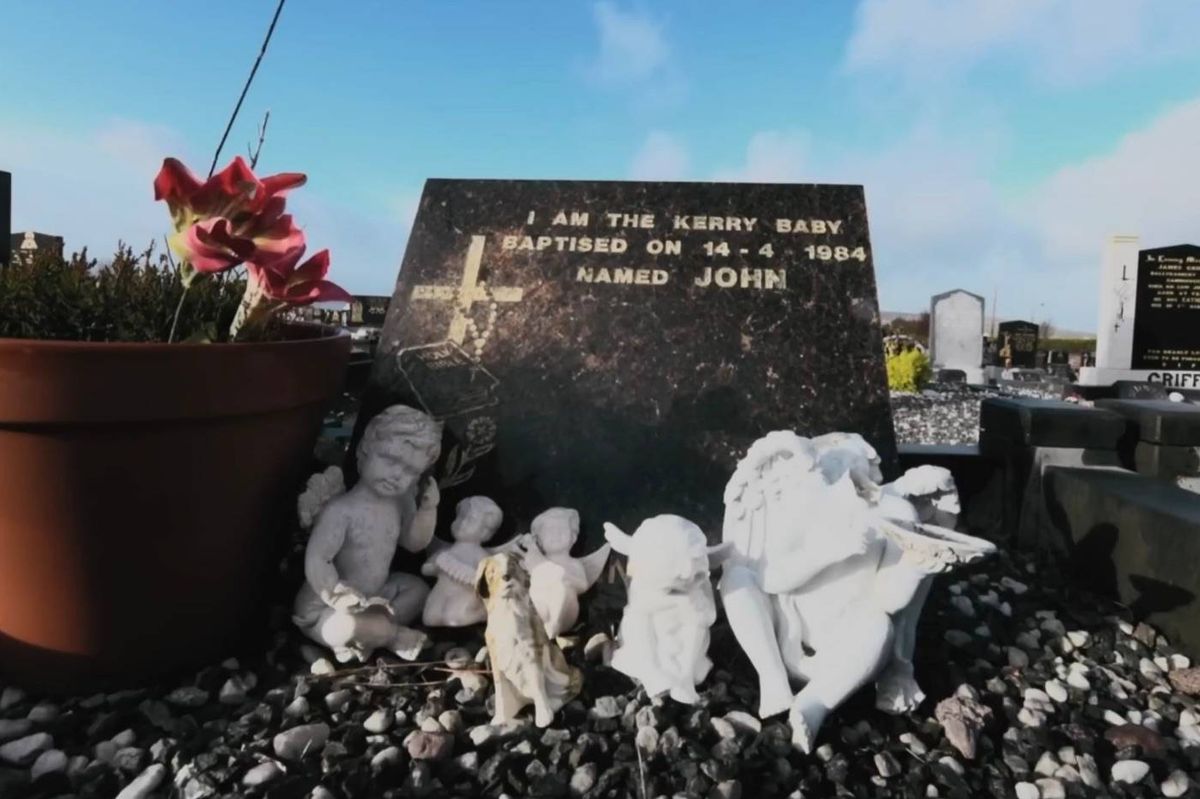
A newborn baby, later named Baby John, was discovered dead on a beach in County Kerry, Ireland, on April 14, 1984. The infant had suffered 28 stab wounds and a broken neck, and his parents remain unidentified nearly four decades later. This tragic case continues to haunt Ireland, particularly as the nation grapples with other unsolved mysteries, including the disappearances of women Deirdre Jacob and Jo Jo Dullard.
Local farmer Jack Griffin stumbled upon Baby John’s body while jogging along White Strand beach. He described the harrowing moment, recalling, “It was pink in colour, face downwards with black hair… I was trying to say to myself it was a doll, but deep down I knew it wasn’t.” The discovery led to a major investigation, with police arriving from Dublin to identify the child and uncover the circumstances of his death.
The investigation quickly focused on Joanne Hayes, a 25-year-old single mother from Abbeydorney, approximately 80 kilometers from where Baby John was found. At the time, Ireland was a conservative society, where divorce and abortion were illegal, and children born outside of marriage were stigmatized. On the same day Baby John was discovered, Hayes was hospitalized, having recently given birth. However, the baby she claimed to have delivered with a married man, Jeremiah Locke, was missing.
Initially, detectives believed they had a breakthrough when Hayes signed a confession, claiming she had given birth to Baby John and subsequently killed him. Her family members also confessed to disposing of his remains. They faced serious charges, including murder. Yet, these confessions were later retracted, with Hayes and her family alleging coercion by the police.
Complicating matters, Hayes had indeed given birth to a son named Shane that week, who was believed to have either been stillborn or died shortly after birth. Blood tests later established that Shane’s blood type was O, matching both parents, while Baby John’s was A. Despite this evidence, investigators posited a controversial theory of superfecundation, suggesting Hayes could have given birth to twins fathered by different men. This theory ultimately failed to hold up under scrutiny, leading to the dismissal of the charges against Hayes.
The case took a darker turn when Hayes was summoned to testify at the Kerry babies tribunal, established to examine police conduct. The inquiry was highly criticized, and at one point, Hayes had to flee the witness stand to be physically sick from the intensity of the questioning.
Significant advances in DNA testing led to a breakthrough in 2018, disproving Hayes’s potential connection to Baby John. Following this, former Taoiseach Leo Varadkar issued a formal apology to Hayes and her family for the distress caused during the investigation. The state also compensated them with €2.5 million (approximately $2.9 million) for the wrongful treatment Hayes endured. Justice Minister Simon Harris described the case as a “defining moment in social history” and condemned the treatment of Hayes as “despicable and unacceptable.”
Despite these developments, the mystery of Baby John remains unsolved. In 2023, new developments surfaced when a man in his 60s and a woman in her 50s were arrested in connection with the case but were released without charge.
Superintendent Flor Murphy has reiterated appeals for public assistance, stating, “I am again appealing to the public for any information in relation to the death of Baby John in 1984. Anyone who comes forward will be treated with sensitivity and compassion.” As the investigation continues, the identities of Baby John’s parents and the circumstances surrounding his death remain a poignant reminder of unresolved tragedies in Ireland’s past.