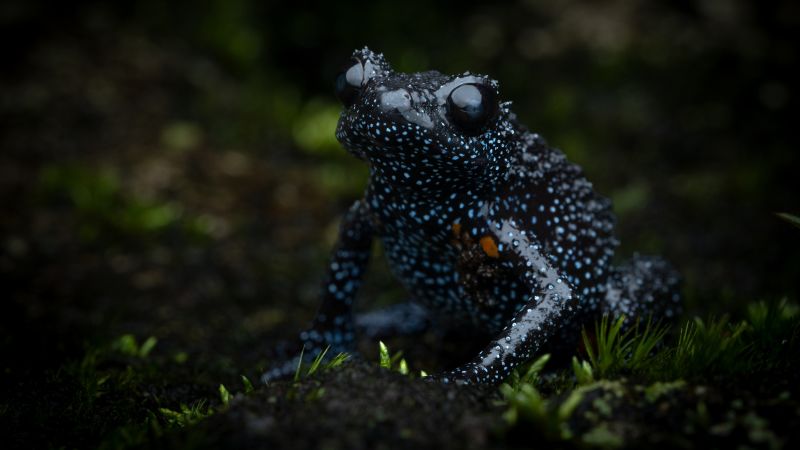
Scientists have raised alarm over the potential extinction of the galaxy frog, a striking amphibian native to the Western Ghats in India, due to unregulated photography activities. A recent study published in Herpetology Notes revealed that an entire group of these endangered frogs has disappeared from their habitat, highlighting the adverse effects of increased human interference.
The galaxy frog, known for its unique starry appearance, is typically found in the humid undergrowth of the Western Ghats, a recognized biodiversity hotspot. These frogs, which measure no larger than a fingertip, rely on their natural environment to thrive, sheltering under rocks, fallen leaves, and decaying logs. However, as scientists discovered, their population is declining significantly.
Rajkumar K P, a researcher from the Zoological Society of London, led a study that tracked the galaxy frogs since 2019. Initially, in March 2020, he identified a group of seven frogs nestled beneath decomposing logs. Upon returning after a period of Covid-19 restrictions, he found that this group had vanished, raising urgent concerns about the survival of the species.
The study identified unregulated photography trips as a major factor contributing to the frogs’ disappearance. Over the past two summers, numerous photographers have invaded the site, trampling the delicate habitat in pursuit of perfect images. As noted in the report, many photographers were familiar with the frogs’ microhabitat from prior publications and local trackers, leading them to disturb the environment by overturning logs and altering the natural setting.
The influx of photographers has led to detrimental consequences for the frogs. Reportedly, groups of up to six photographers have descended on the area during each visit, often handling the tiny creatures in their quest for ideal shots. High-powered camera flashes subjected the frogs to stressful conditions for extended periods, with some sessions lasting around four hours.
The study indicated that the frogs suffered from a lack of hydration, exposure to heat, and increased vulnerability to disease due to direct contact with human hands. While it was reported that two frogs died during these sessions, this claim has not been independently verified by researchers.
In light of these findings, the report advocates for the establishment of strict ethical standards in nature and conservation photography across India. Rajkumar emphasized the necessity of responsible practices, stating, “This sad event is a stark warning for the consequences of unregulated photography. These beautiful yet rare frogs are unlike anything else on our tiny corner of the universe, but without careful and responsible management, we risk them disappearing off the face of the planet for good.”
While Rajkumar acknowledged that photography can play a crucial role in conservation, helping to inform research on animal behavior and distribution, he cautioned against irresponsible practices that can turn this valuable tool into a hazard.
The plight of the galaxy frog serves as a reminder of the delicate balance between human interest and wildlife conservation. As the pressures of tourism and photography increase, it becomes ever more critical to implement regulations that protect vulnerable species and their habitats.