The story of the McDonnell Douglas MD-11 reflects both innovation and challenges within the commercial aviation sector. Designed as a modern successor to the DC-10, the MD-11 aimed for greater efficiency, enhanced range, and advanced technology. Despite its promising features, only 200 MD-11s were produced before the assembly line closed in 2000, making its legacy both unique and complex.
The DC-10’s Foundation and Evolution to the MD-11
The MD-11’s roots trace back to the DC-10, which entered service in 1971 with American Airlines. Developed to meet increasing demands for a widebody aircraft, the DC-10 featured a tri-engine configuration that allowed it to operate from shorter runways while maintaining intercontinental range. Over its production life, the DC-10 saw multiple variants, including passenger, cargo, and military adaptations, achieving substantial global adoption.
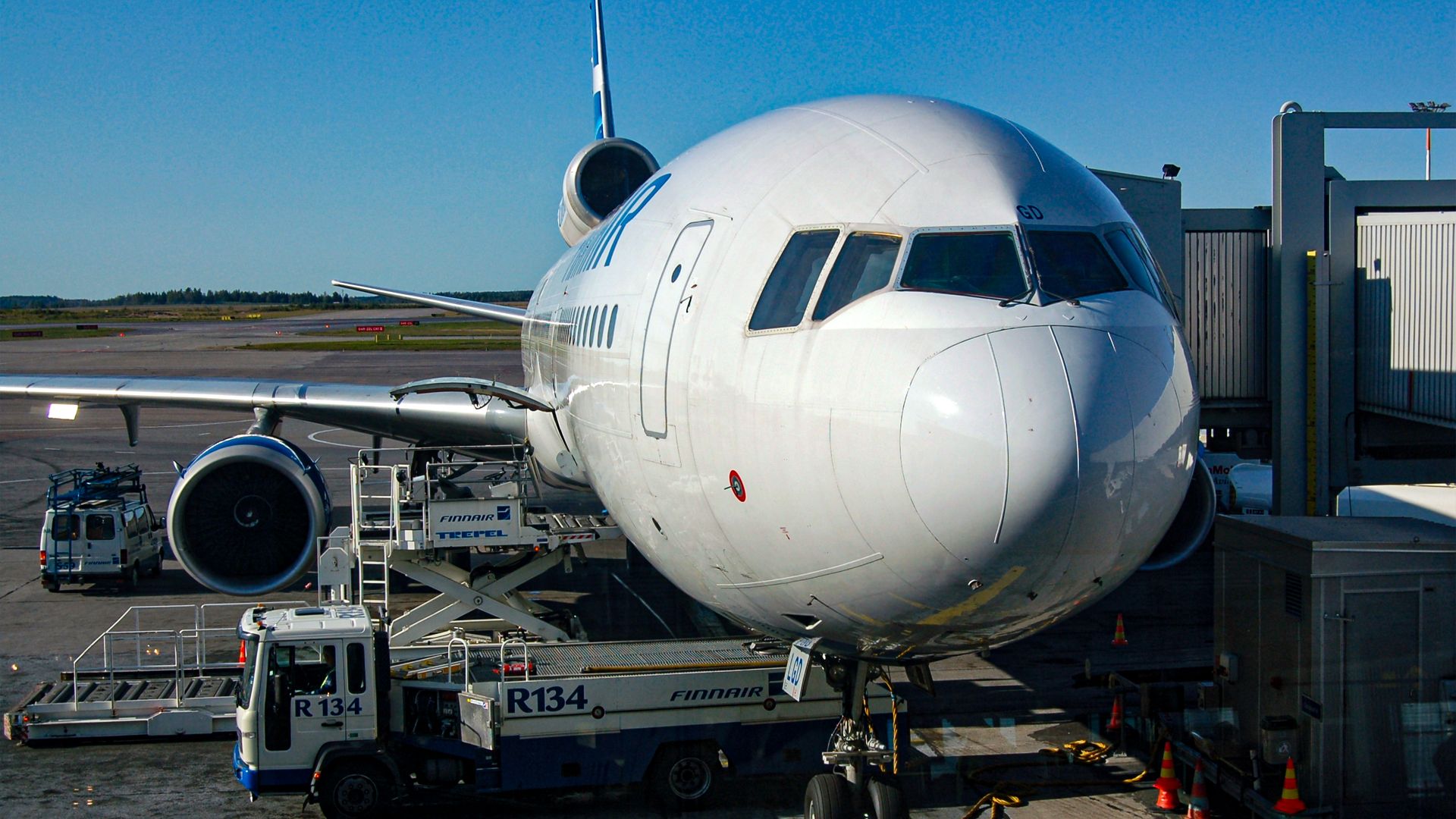
By the early 1980s, however, airlines began seeking more fuel-efficient aircraft. This shift prompted McDonnell Douglas to evolve the DC-10 into the MD-11, featuring a lengthened fuselage that increased capacity and gave it a distinctive appearance. The MD-11 took its first flight on January 10, 1990, with Finnair as its launch customer.
The transition to the MD-11 came at a time when airlines were increasingly leaning towards twin-engine aircraft for long-haul routes. While the MD-11 retained its tri-jet design, it promised improvements in performance that the industry was eager to adopt.
Production Challenges and Commercial Adoption
Production of the MD-11 took place at McDonnell Douglas’s Long Beach, California facility, where the DC-10 had been manufactured. Deliveries began in the early 1990s, predominantly featuring passenger variants. At first, the aircraft appeared well-positioned to attract long-haul operators seeking a modernized tri-jet.
However, as the decade progressed, market dynamics shifted. Airlines increasingly favored twin-engine wide-body aircraft that offered similar ranges with lower fuel consumption and operating costs. This change led to a slowdown in orders for passenger MD-11s, forcing production to rely heavily on freighter and convertible variants.
The most notable operators of the MD-11 included Varig, Swissair, and American Airlines, among others. Despite being a technological advancement, the aircraft’s commercial success never matched expectations.
A key factor was its performance; the MD-11 often burned more fuel than projected when fully loaded, which significantly increased operating costs. This performance gap made the MD-11 less competitive against rising twin-engine models, such as the Boeing 777 and Airbus A330. Consequently, major airlines like Delta and American quickly phased out their MD-11 fleets.
Despite these challenges, the MD-11 found a successful second life as a cargo aircraft. Many of the operational MD-11s were converted to freighters or sold to cargo operators, with companies like FedEx and UPS Airlines relying on the MD-11F for its long range and substantial payload capacity.
The MD-11’s cargo role solidified its reputation, turning it into one of the most recognizable freighters worldwide. As of now, FedEx operates 74 MD-11Fs, while UPS previously had a fleet of 43 before retiring them.
A Legacy Marked by Innovation and Tragedy
The MD-11’s legacy is characterized by both its ambitious design and the operational challenges it faced. Although it never fully realized its potential as a long-haul passenger aircraft, it introduced significant innovations such as a redesigned wing with winglets and a two-crew glass cockpit, aligning with modern aviation standards.
On November 4, 2025, the MD-11F faced scrutiny following a tragic accident in Louisville, Kentucky, where a UPS-operated aircraft crashed shortly after takeoff, resulting in the deaths of 14 individuals. This incident prompted the Federal Aviation Administration (FAA) to ground all MD-11 and MD-11F aircraft pending inspections, marking a pivotal moment in the aircraft’s operational history.
While the MD-11’s passenger service faded, its contribution to cargo transport has ensured its enduring presence in the aviation world. As airlines modernize their fleets, the MD-11’s role is transitioning once again, highlighting the aircraft’s resilience and adaptability.
In conclusion, although only 200 MD-11s were built, their impact on aviation history is profound. The MD-11 stands as a testament to the evolution of commercial aircraft design and the ongoing demand for innovation in the industry. Its legacy, shaped by both triumphs and challenges, continues to influence the aviation landscape today.