Thailand’s Prime Minister Anutin Charnvirakul has reiterated his commitment to military action along the disputed border with Cambodia, despite a recent call for a ceasefire from US President Donald Trump. On Saturday, Thai fighter jets conducted operations in response to ongoing clashes, which have intensified in recent days.
The conflict erupted anew with heavy exchanges of fire between the two nations, marking some of the most severe fighting since a five-day confrontation in July. President Trump, who previously mediated a ceasefire in October, spoke to both leaders on Friday, urging them to “cease all shooting.” However, both Prime Minister Anutin and Cambodian premier Hun Manet did not confirm any agreement in their subsequent statements.
In a post on social media, Anutin asserted, “We will continue to perform military actions until we feel no more harm and threats to our land and people.” His remarks came just hours after Trump’s call, emphasizing the Thai government’s determination to protect its territorial integrity.
The White House has yet to respond regarding the renewed hostilities. Hun Manet stated on Facebook that Cambodia remains committed to a peaceful resolution of disputes in accordance with the previous October agreement.
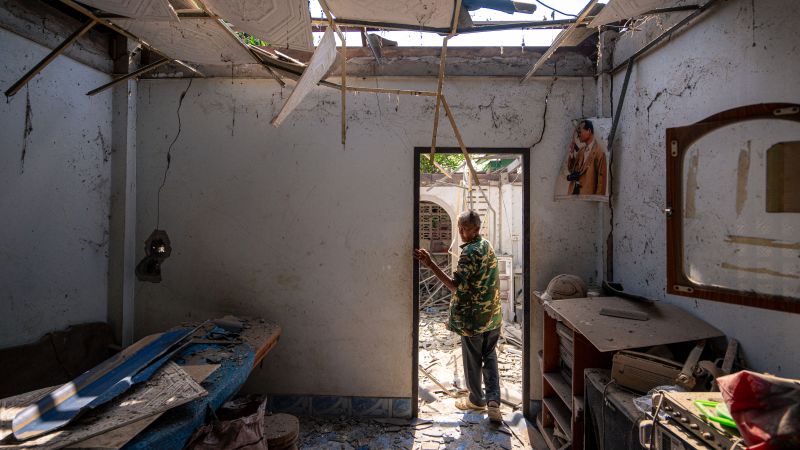
Since March 10, 2024, heavy-weapons fire has been reported at multiple points along the 817-km (508-mile) border, with both sides blaming each other for the escalation. Rear Admiral Surasant Kongsiri, a spokesperson for Thailand’s Defence Ministry, noted that clashes occurred across seven border provinces. He indicated that Cambodian forces had used heavy weaponry, compelling Thailand to retaliate.
In a significant development, Cambodia’s Information Ministry claimed that Thai forces attacked bridges and buildings overnight while also firing artillery from a naval vessel. This prompted a sharp response from Anutin, who dismissed Trump’s characterization of a roadside bomb incident that injured Thai soldiers, stating it was “definitely not a roadside accident.”
Tensions have been exacerbated by ongoing allegations regarding landmines. Thailand has accused Cambodia of laying new mines in the area, a claim that Cambodia rejects. Hun Manet has requested assistance from both the US and Malaysia, which has acted as a mediator in previous peace talks, to verify which side initiated the latest round of hostilities.
As the situation unfolds, the international community watches closely, with President Trump expressing a desire to intervene yet again to restore peace. The conflict continues to pose risks not only to the nations involved but also to regional stability in Southeast Asia.