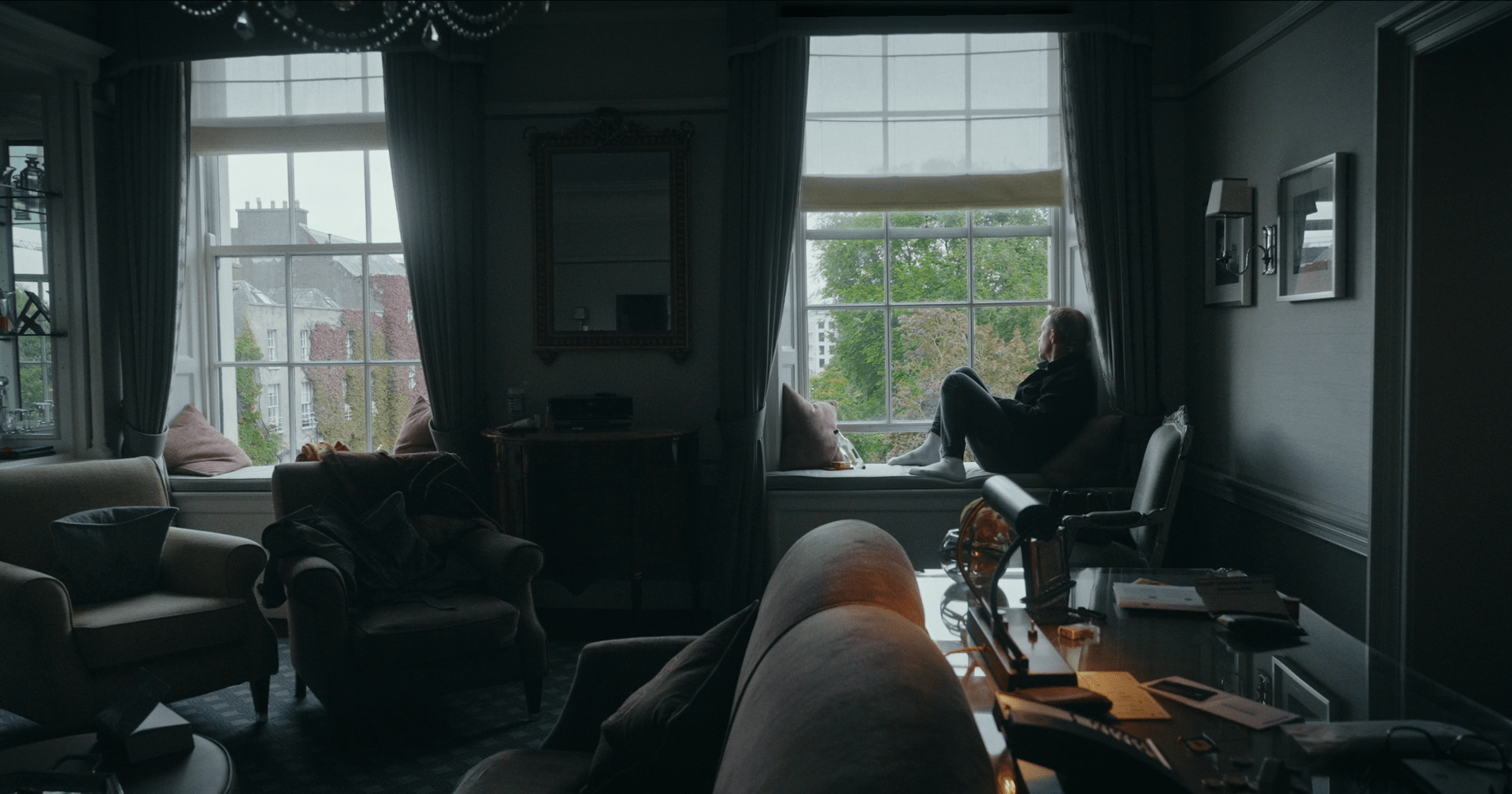
Irish documentary director Sinéad O’Shea confronts contentious topics in her latest film, All About the Money, which premiered on January 21, 2024, at the Sundance Film Festival. The documentary delves into the complexities of wealth, morality, and power through the lens of Fergie Chambers, the great-grandson of former Ohio governor and Democratic presidential nominee James M. Cox.
Chambers, a member of one of America’s wealthiest families, embarks on an unconventional journey that challenges the capitalist status quo. The film captures his evolution as he creates a Communist revolutionary base in rural Massachusetts, exploring themes of revolution and activism. O’Shea’s narrative juxtaposes Chambers’ privileged background with his radical beliefs, making for a compelling examination of wealth’s impact on individual and societal values.
O’Shea’s approach to this documentary stems from her unique discovery of Chambers. A friend living in a project he financed piqued her interest during the COVID-19 pandemic. Intrigued by the contradictions of his life, O’Shea reached out to Chambers, who agreed to participate. She expressed, “The combination of things was so extraordinary. This guy, who’s coming from a family who are so much the establishment within the United States, was so opposed to that.”
All About the Money has been described by Sundance as “a documentary for our times of concentrated wealth and power.” It investigates not only Chambers’ activism in Palestine but also the broader implications of economic inequality, which has escalated in recent years. O’Shea highlights a stark statistic early in the film: 1% of the population in the United States owns as much wealth as 90% of the population combined. This growing wealth gap poses a critical question: how does one navigate ethical responsibilities when endowed with such resources?
The film also examines the political landscape, referencing the October 7, 2023Donald Trump to the political arena. O’Shea reflects on how current events shaped her documentary, emphasizing the importance of contextualizing Chambers’ story against the backdrop of rising dissatisfaction among the populace.
O’Shea’s filmmaking philosophy centers on authenticity and journalistic integrity. She asserts, “The most important thing was to be as truthful and as journalistic as possible.” This approach, however, diverges from traditional observational styles, as she acknowledges her presence in the narrative, aiming to represent the realities she witnesses while minimizing personal bias.
The documentary captures the idyllic Massachusetts setting where Chambers’ base operates. O’Shea aims to reflect the beauty of the landscape, reminiscent of films like The New World by Terrence Malick, while also showcasing the sincerity of the individuals involved in Chambers’ project. One member noted, “I don’t know what took so long for someone to decide to make a documentary here,” indicating a local pride in their efforts.
Chambers’ candidness throughout the filming process provided O’Shea with rich material. His frankness about his financial situation adds layers to the narrative, as he expresses little concern about running out of money. O’Shea describes him as “not a very materialistic person,” despite his affluent background, suggesting that wealth does not solely dictate one’s values or priorities.
The film’s title, All About the Money, encapsulates its exploration of ethical dilemmas faced by those with immense resources. O’Shea considered alternative titles, including Eye of the Needle, referencing a biblical proverb about wealth and moral integrity. This title reflects the central conundrum of the documentary: how does one leverage wealth for good in a world rife with inequality?
Chambers’ initial reaction to the finished product was not entirely positive, as he felt it lacked sufficient political depth. O’Shea acknowledges his perspective, recognizing his deep commitment to his beliefs. “He just feels there’s not enough politics in the film,” she confirmed.
As the film premieres at Sundance, it invites audiences to engage with pressing questions about wealth, power, and morality in contemporary society. O’Shea concludes that the core themes of her documentary resonate beyond Chambers’ individual story, tapping into a larger conversation about capitalism and social responsibility.
With its examination of wealth’s duality—its potential to empower and to corrupt—All About the Money serves as a provocative commentary on our times, challenging viewers to reflect on their own values in the face of economic disparity.