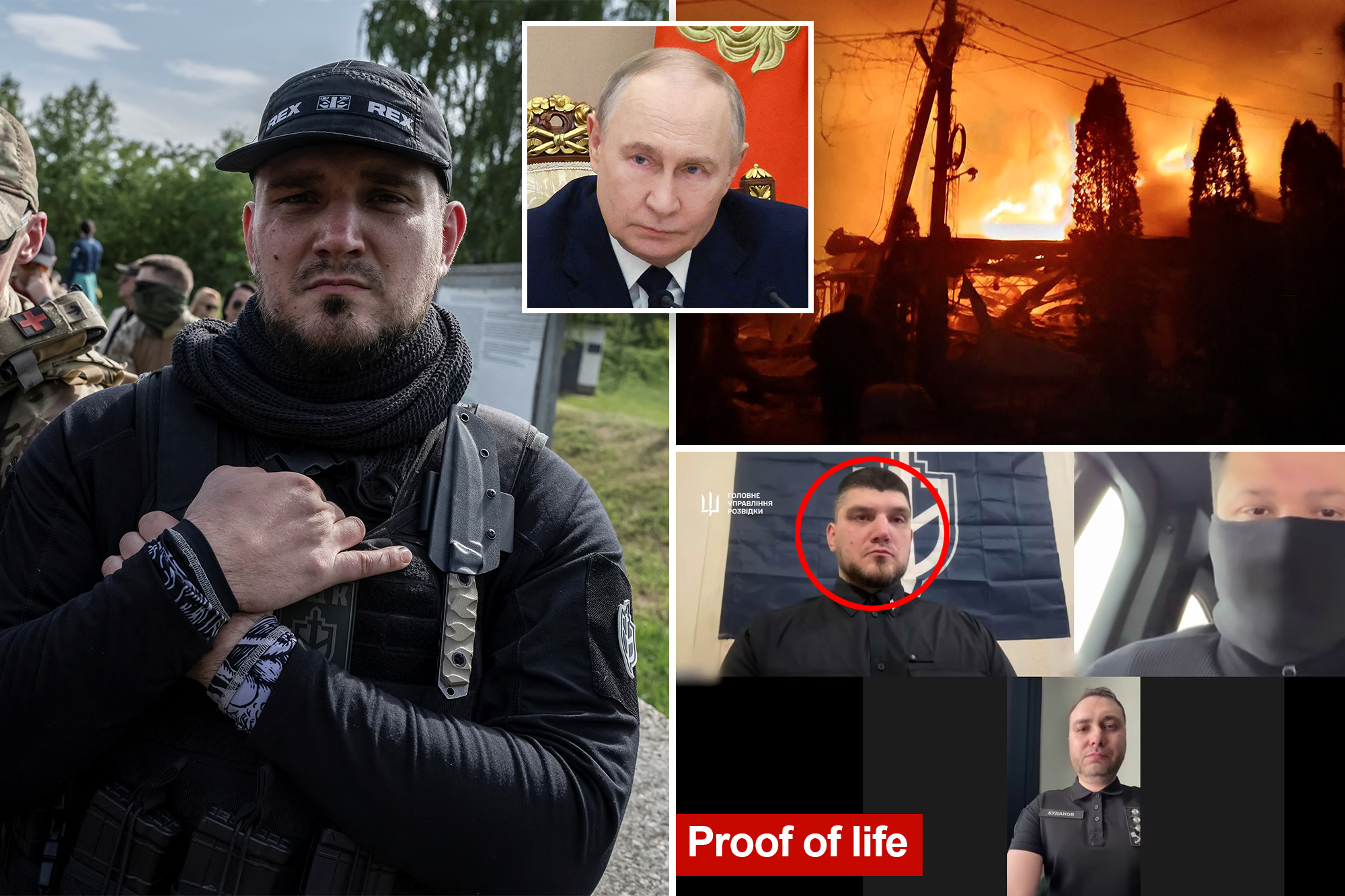
The Kremlin faced an unexpected setback when it inadvertently funded the very conflict it seeks to quell. Russian authorities believed they had eliminated one of their most wanted adversaries, Denis Kapustin, a prominent anti-Putin militant fighting for Ukraine. Instead, it was revealed that his reported death was a ruse, and the $500,000 bounty paid out for his assassination directly supported Ukrainian efforts.
Kapustin, known as “White Rex,” was declared dead on December 27, 2023, following an alleged Ukrainian drone strike. A former football hooligan, he has become a key figure among anti-Putin forces in Ukraine and has been wanted by Russian intelligence for several years. He established the pro-Ukrainian Russian Volunteer Corps (RDK) in August 2022 with the aim of toppling the Putin regime.
After reports of Kapustin’s death surfaced, Russian authorities did not hesitate to pay the bounty. However, unbeknownst to them, the funds were funneled directly to the Ukrainian cause. The RDK confirmed the news of his supposed demise, stating, “We will definitely take revenge, Denis. Your legacy lives on.”
In a surprising twist, Kapustin re-emerged alive on New Year’s Day in a video released by Ukraine’s military intelligence agency, the HUR. General Kyrylo Budanov, head of the HUR, greeted him with a light-hearted remark, stating, “Welcome back to life. I am glad that the money allocated for your assassination was used to support our struggle.”
Kapustin is currently operating within Ukrainian territory, with plans to continue his activities against Russia. His journey to this point has been marked by a significant shift; he relocated to Ukraine in 2017 after his family moved from Moscow to Germany when he was 17. He played a pivotal role in establishing military units that were instrumental in defending Kyiv during the early days of Russia’s full-scale invasion.
The RDK’s objectives focus not only on battling Russian forces but also on bringing what they describe as “peace to Russia.” The group has been classified as a terrorist organization by Russian authorities, which have sentenced Kapustin in absentia to life imprisonment on charges of treason and terrorism.
As the conflict continues, Ukraine remains active in its military operations. Reports indicate that Ukrainian forces launched a series of overnight drone strikes across several Russian regions, including Krasnodar, Tatarstan, and Kaluga. These attacks targeted energy and industrial sites, resulting in significant damage and sparking fires at facilities, including the Ilskiy oil refinery in Krasnodar.
Tensions escalated further as both nations exchanged accusations of targeting civilians. Moscow reported a deadly strike on a hotel in Russian-occupied southern Ukraine. In response, Kyiv maintained that its operations are focused on military and energy infrastructure, despite civilian casualties reported in other areas.
The intelligence capabilities of Ukraine have been noteworthy throughout the conflict. Ukrainian operatives have demonstrated a knack for outsmarting Russian intelligence agencies like the FSB and GRU. In a notable instance, Ukrainian intelligence utilized Russian agents against their own government, sabotaging missions offered by the FSB for financial gain.
In addition to intelligence operations, Ukraine has taken responsibility for several high-profile assassinations of Russian officials. Notable cases include the killing of Lieutenant General Yaroslav Moskalik in April and Lieutenant General Igor Kirillov in December, both of whom were involved in critical military operations.
As the war enters its 1,409th day, the ongoing conflict continues to evolve, with both sides adapting their strategies amid a backdrop of tragedy and resilience. The unexpected twist involving Denis Kapustin highlights not only the complexities of modern warfare but also the shifting dynamics of loyalty and opposition in a deeply divided region.