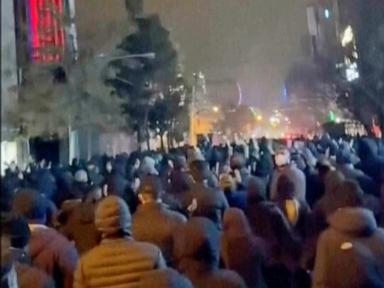
Protests across Iran have intensified, resulting in a tragic death toll of at least 116 people, according to reports from the U.S.-based Human Rights Activists News Agency. The demonstrations, which began on December 28, 2023, in response to the collapse of the Iranian rial, have entered a second week, with protesters taking to the streets in both the capital, Tehran, and the country’s second-largest city, Mashhad. The situation has escalated, with over 2,600 individuals reportedly detained amid widespread violence.
As the Iranian government has imposed a near-total internet blackout and severed international phone lines, gathering accurate information about the protests has become increasingly challenging. Activists abroad fear that this information void may embolden hard-liners within the security services to respond with even greater force against demonstrators.
Support for the protesters has emerged from international leaders, notably U.S. President Donald Trump, who expressed solidarity on social media, stating that “Iran is looking at FREEDOM, perhaps like never before. The USA stands ready to help!!!” Reports from The New York Times and The Wall Street Journal indicate that Trump has received military options regarding a potential strike against Iran, although no final decision has been announced.
Scenes of Protest and Government Response
Online videos, allegedly transmitted using Starlink satellite technology, depict demonstrators gathering in northern Tehran’s Punak neighborhood, where they waved lit mobile phones and banged metal objects while fireworks lit up the night sky. Footage from Mashhad shows protesters confronting security forces, with flaming debris obstructing streets near the Imam Reza shrine, a site of immense significance in Shiite Islam.
Further demonstrations were reported in Kerman, located approximately 800 kilometers southeast of Tehran. In a stark contrast, Iranian state television broadcast clips showcasing calm areas of various cities, notably excluding Tehran and Mashhad, while also covering pro-government rallies in cities such as Qom and Qazvin.
Warnings and International Implications
Amid this unrest, Supreme Leader Ayatollah Ali Khamenei has indicated that a crackdown may be forthcoming. On Saturday, Iran’s attorney general, Mohammad Movahedi Azad, issued a chilling warning that participants in the protests would be deemed “enemies of God,” a charge that carries the death penalty. This statement, conveyed through state television, extended even to those who aid the demonstrators.
The Iranian government’s internet restrictions have led to significant challenges for news coverage within the country, leaving Al Jazeera as one of the few international outlets able to report live from Iran. The blackout has raised concerns regarding the government’s capacity to suppress dissent while controlling the narrative surrounding the protests.
Meanwhile, Iran’s exiled Crown Prince Reza Pahlavi, who called for protests earlier in the week, urged demonstrators to carry historical symbols from the time of the shah to reclaim public spaces. While some protesters have expressed support for the monarchy, it remains unclear whether this reflects an endorsement of Pahlavi or a nostalgic wish for a pre-revolutionary Iran.
The demonstrations are fueled by deep-seated frustrations over economic hardships exacerbated by international sanctions linked to Iran’s nuclear ambitions. As the rial trades at over 1.4 million to $1, calls for change have evolved into direct challenges to the theocratic regime.
In this volatile environment, the eyes of the world remain focused on Iran, as the situation continues to unfold with significant implications for both the nation and the broader international community.