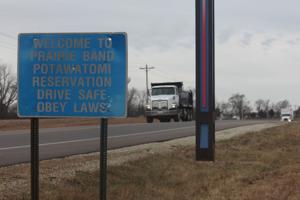
The Prairie Band Potawatomi Nation has sparked significant controversy after signing a federal contract valued at nearly $30 million to design immigration detention centers across the United States. This agreement, finalized in October 2023, has drawn sharp criticism from other Native American groups, who view it as a betrayal of shared histories involving forced displacements.
The tribe, based in Mayetta, Kansas, has its roots in the Great Lakes region, where its ancestors were compelled to relocate in the 1830s. This new development is seen by many as a disturbing parallel to that history, particularly in the context of President Donald Trump‘s mass deportation initiatives. The backlash has prompted leaders within the Prairie Band Potawatomi Nation to reconsider their involvement in the project.
In response to the outrage, tribal officials have indicated their intention to withdraw from the contract. The decision has not come without internal conflict, as many community members have expressed their disappointment over the initiative. They argue that participating in the design of detention centers contradicts the tribe’s values and historical experiences.
The contract involves initial design work for facilities intended to house immigrants, a controversial aspect of U.S. immigration policy. Critics argue that such centers often operate under harsh conditions, raising ethical concerns about the treatment of detainees. This has led to heightened tensions within Native communities, which frequently advocate for the rights and dignity of marginalized groups.
Statements from tribal leaders reflect a growing awareness of the implications of this contract. “We are deeply committed to our community’s values, and this decision does not align with them,” said a spokesperson for the tribe. The tribe’s leadership is now engaged in discussions to determine the best course of action moving forward.
Despite the backlash, the Prairie Band Potawatomi Nation had previously viewed this contract as an opportunity for economic development. The revenue generated from the project was expected to support various tribal initiatives and services. However, the moral and ethical considerations now overshadow potential financial benefits.
As the situation unfolds, many in the Native American community are watching closely. The implications of this contract extend beyond the Prairie Band Potawatomi Nation, reflecting broader tensions surrounding U.S. immigration policy and its impacts on indigenous rights. The community’s response highlights a critical dialogue about identity, history, and the responsibilities of tribal nations in contemporary society.
The future of the contract remains uncertain as tribal leaders navigate the complexities of economic development versus ethical considerations. The outcome may set a precedent for how tribal nations engage with federal contracts, particularly those that intersect with contentious social issues.