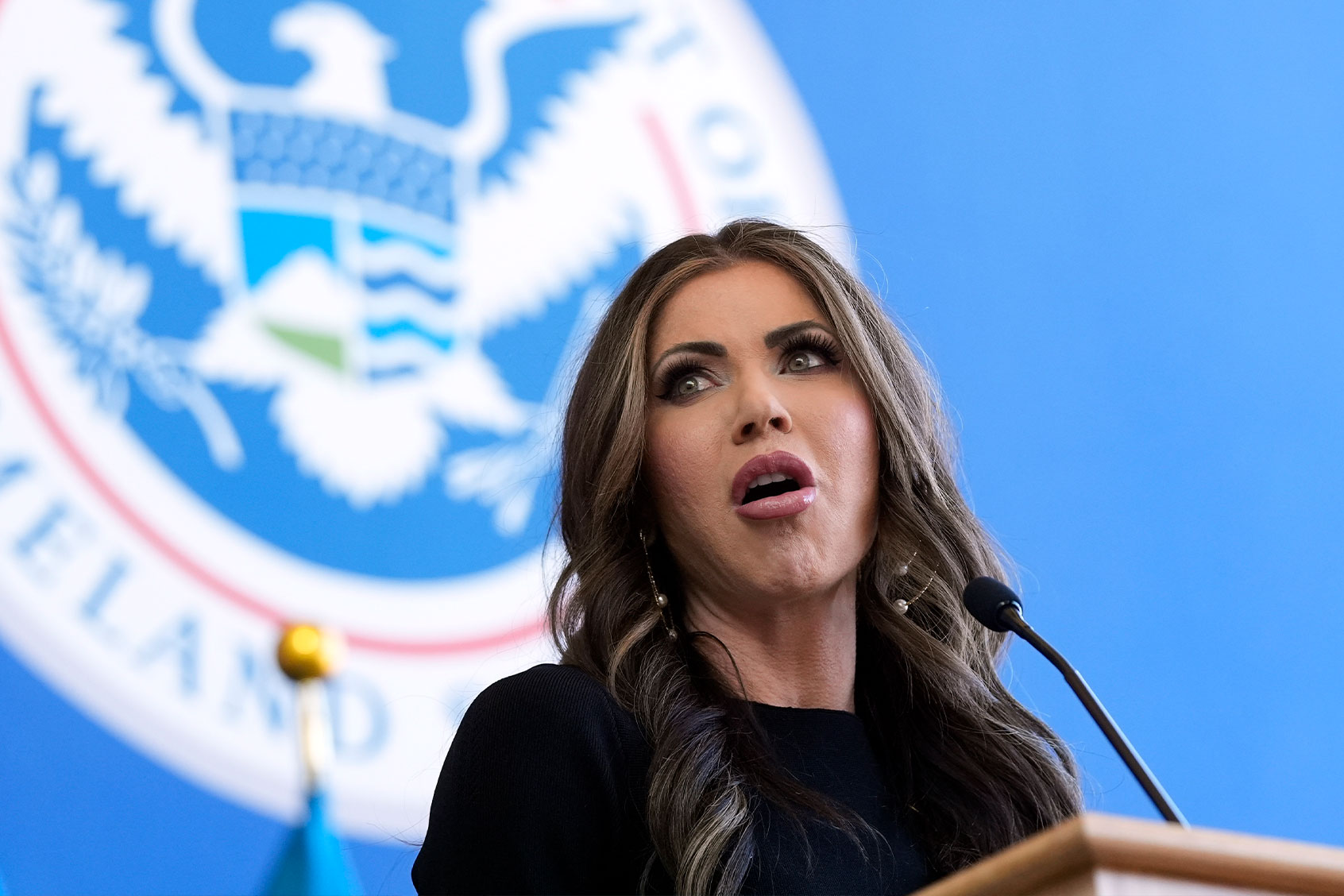
Kristi Noem, the head of the Department of Homeland Security, confronted CBS News anchor Margaret Brennan during a recent interview, criticizing her for naming ICE agent Jonathan Ross. This incident unfolded on the January 18, 2026 episode of “Face the Nation,” following Ross’s involvement in a fatal shooting incident earlier in the month. The agent shot and killed Renee Good in Minneapolis, claiming he acted in self-defense as she allegedly used her vehicle as a weapon against him.
During the interview, Brennan inquired about Ross’s current status, prompting an immediate response from Noem. “Let me talk to you about the officer, Jonathan Ross,” Brennan stated, to which Noem quickly interrupted, saying, “Well, don’t say his name. For heaven’s sakes. We shouldn’t have people continue to dox law enforcement.” Noem’s comments reflect a broader concern about the safety of law enforcement officials and their families in the wake of public scrutiny.
Brennan countered Noem’s insistence by pointing out that Ross’s name is public information. The exchange highlighted a tension between transparency and the protection of individuals involved in controversial law enforcement actions. Noem maintained her stance, saying, “I know, but that doesn’t mean it should continue to be said. He got attacked with a car that was trying to take his life. People have attacked him and his family.”
Noem Addresses Broader Issues of Law Enforcement Tactics
The discussion also touched on broader issues surrounding law enforcement tactics in Minneapolis. Brennan questioned Noem about the recent detention of Aliya Rahman and the use of tear gas against a family with an infant during protests. Noem defended the actions taken by law enforcement, attributing the tense situation to violent protesters. She stated, “That family was caught up in that situation because of violent protesters that were impeding law enforcement operations.”
In this context, Noem shifted some of the responsibility to local leadership, specifically targeting Minnesota Governor Tim Walz and Minneapolis Mayor Jacob Frey. She criticized them for allowing what she described as a culture of violence to persist in the city. “It’s a terrible situation that that family had to go through, and I hope it never happens again,” Noem remarked. “The mayor and the governor have allowed this kind of violence to be perpetuated across Minneapolis.”
The interview concluded without clarification on whether Ross had returned to work following the incident, leaving questions about the implications of this case for law enforcement practices and community relations in Minneapolis.
As the debate over law enforcement tactics and transparency continues, the incident involving agent Ross and the ensuing public discussion underscore the complexities surrounding policing, accountability, and public safety in the United States.