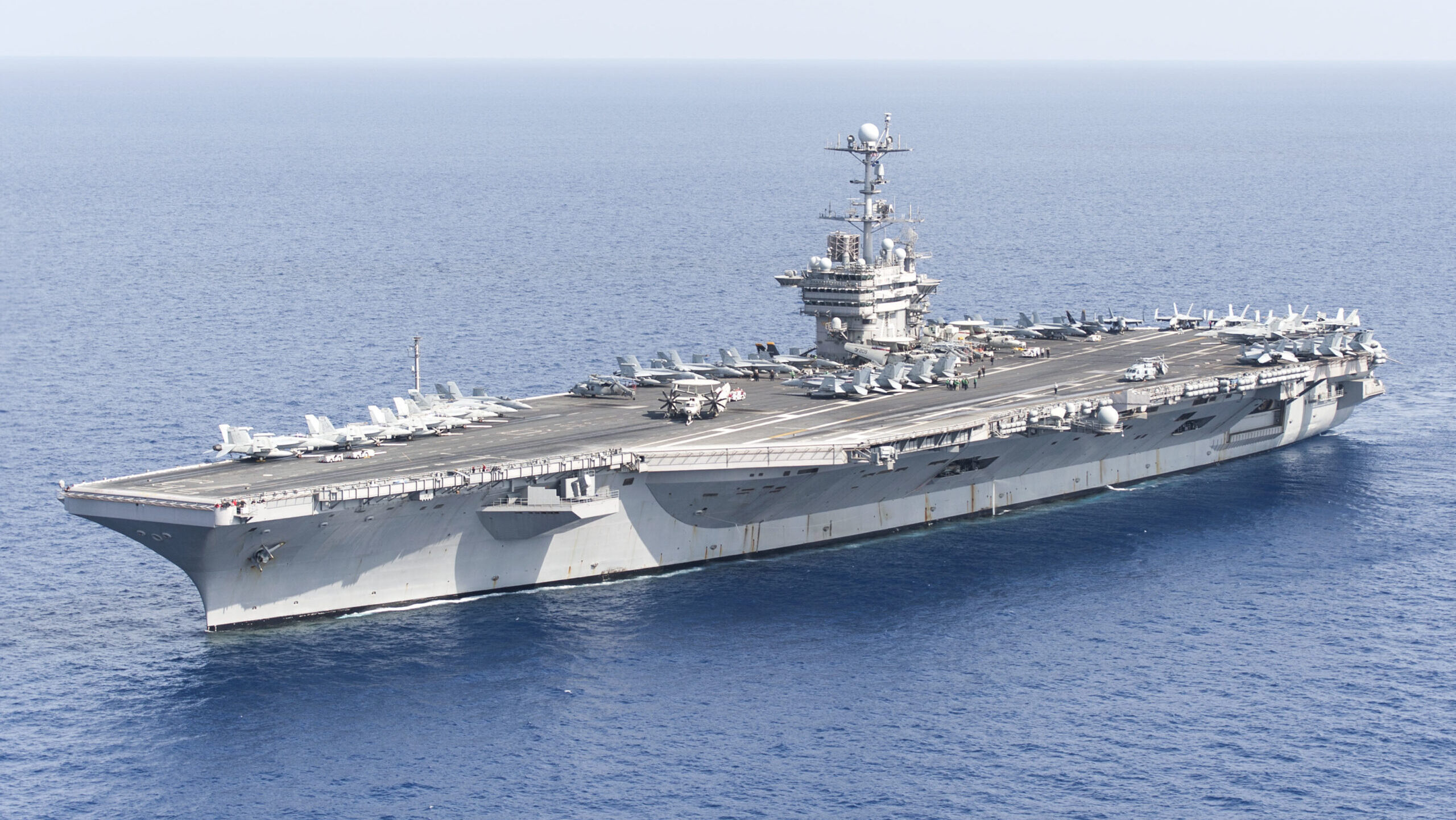
The United States Navy has released the findings of four investigations into serious incidents during the recent deployment of the Harry S. Truman Carrier Strike Group, attributing the mishaps to inadequate training and poor decision-making among crew members and commanders. The reports, made public on March 15, 2024, emphasize significant failures in communication and judgment under pressure during operations aimed at countering Houthi rebel attacks in the Red Sea.
The investigations cover several critical events, including a December 22 incident involving the USS Gettysburg (CG-64), which mistakenly fired missiles at friendly F/A-18 aircraft, a collision with the commercial vessel Besiktas-M on February 12, and two separate incidents in April and May where F/A-18s fell off the carrier. While there were injuries among the crew, there were no fatalities reported.
Navy officials stated, “These investigations assessed underlying procedural compliance and standards and reviewed how a Carrier Strike Group prepares for and responds to adversity during combat operations.” Each investigation was conducted independently and thoroughly, leading to appropriate accountability measures being taken.
The report on the December 22 incident found that crew members at all levels of command shared responsibility for failing to identify critical warning signs and for overly relying on technology. The commanding officer of the USS Gettysburg was particularly criticized, with investigators deeming his decision to engage the F/A-18s as “neither reasonable nor prudent.” It was noted that low situational awareness played a role in the misidentification of the aircraft, which was exacerbated by a lack of integrated training opportunities and cohesion within the Carrier Strike Group.
In an analysis of the February 12 collision with the Besiktas-M, the Navy determined the incident was “avoidable.” Investigators drew comparisons to two deadly collisions involving Navy destroyers in 2017 that resulted in the deaths of 17 sailors. Similar to those past incidents, the current investigation highlighted issues of inadequate training, overwork, and sleep deprivation among crew members. The report indicated that poor bridge resource management led to the collision, putting eight sailors in close proximity to the impact site.
The report also emphasized the close call experienced by those sailors, with Adm. Stuart Munsch noting, “My team spoke with those eight sailors, and they will never forget how close they came to losing their lives. Neither should we.”
Investigations into the loss of two F/A-18s revealed a series of procedural failures. On April 28, an F/A-18 was lost when the carrier executed a sharp turn to evade enemy fire, during which aircraft were being repositioned on the flight deck. Investigators cited insufficient communication between various teams managing the flight deck, which contributed to the loss of control over the aircraft. The plane was valued at $36 million, and the associated dolly was worth $61,000.
A similar incident occurred on May 6, when an F/A-18 crashed as an arresting cable snapped during its landing attempt. Investigators attributed this mishap to a malfunctioning component and highlighted several issues that went unnoticed during pre- and post-operation inspections. The financial impact of this incident totaled approximately $60 million for the aircraft, along with $207,000 for repairs to the cable and related equipment.
The Navy’s findings underscore a critical need to enhance training protocols and ensure adequate staffing levels to prevent similar incidents in the future. The high operational tempo and combat conditions have created a challenging environment for the crews, contributing to the strains observed during these operations. Addressing these underlying issues will be vital to maintaining safety and effectiveness in future deployments.