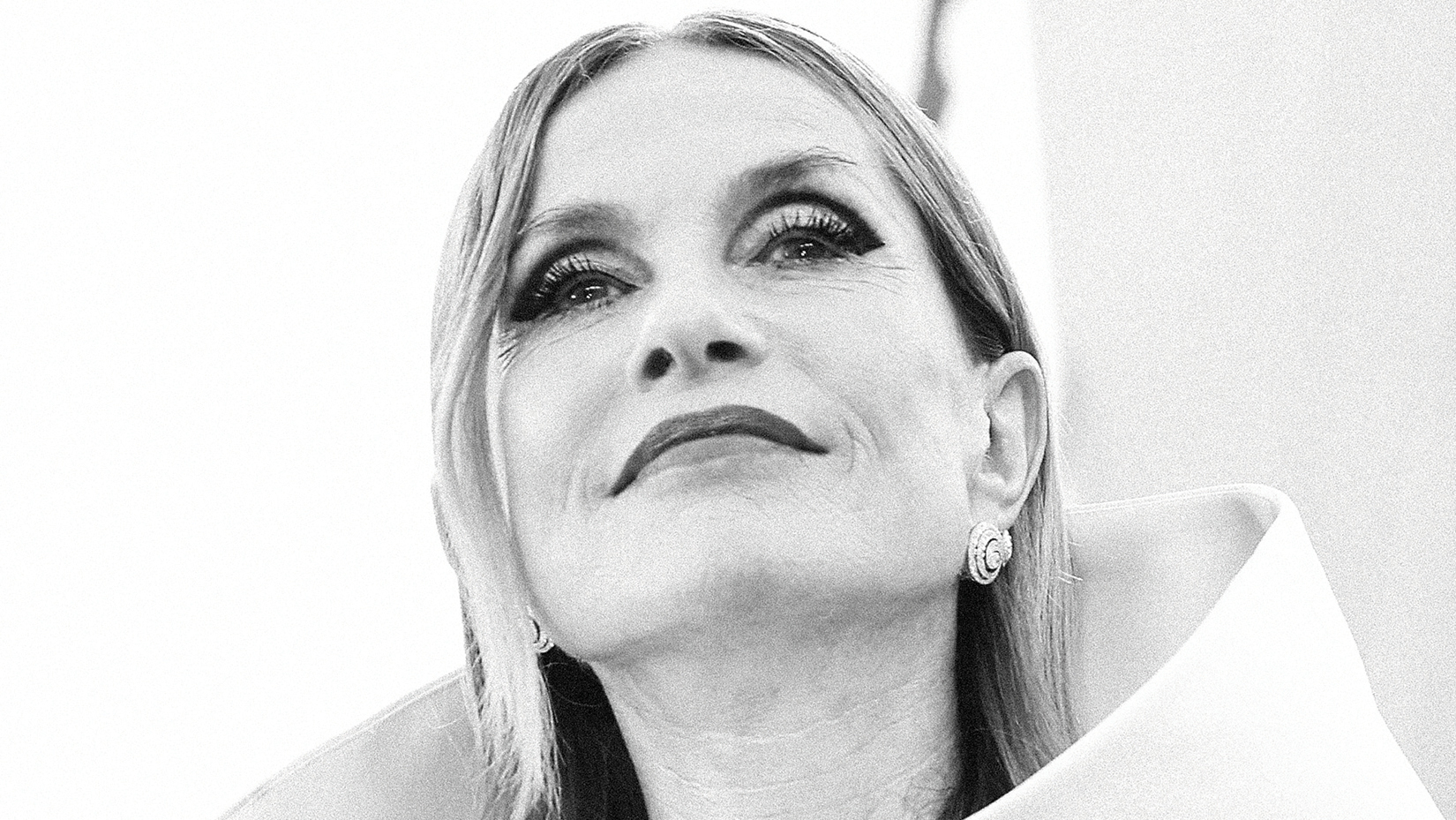
French actress Isabelle Huppert continues to captivate audiences with her latest role in The Blood Countess, which premiered at the Berlin Film Festival. Directed by avant-garde filmmaker Ulrike Ottinger, this film sees Huppert play the infamous Elizabeth Báthory, a historical figure known for her gruesome legend as a vampire who allegedly bathed in the blood of virgins. This performance marks another unexpected turn in Huppert’s extensive film career, which spans over 50 years and includes more than 120 films.
Huppert’s portrayal of Báthory is delightfully over-the-top, reminiscent of campy horror films. The opening scene, set in the canals of Vienna, features her floating on a crimson-draped barge, evoking a surreal 1980s rock video aesthetic. “It doesn’t happen so often for me to get offered a role like this, so unusual,” she told The Hollywood Reporter prior to the festival. This role is a refreshing deviation from her more serious work, akin to her performances in Mon Crime (2023) and 8 Women (2002).
Exploring Huppert’s History with Berlinale
Huppert’s connection to the Berlin Film Festival is profound. Her first feature, The Bar at the Crossing, premiered there in 1971, a time when the city was divided by the Berlin Wall. Since then, she has had a total of twelve films screen at the festival, including The Blood Countess. This extensive history showcases her remarkable range as an actress, from the serious to the absurd.
In 8 Women, which won a Silver Bear for its ensemble cast, Huppert’s comedic prowess shines through her role as an uptight aunt caught in a murder mystery. This film allowed her to explore humor within the confines of her traditionally serious persona. In contrast, her performance in The Piano Teacher established her as a symbol of erotic repression, but in 8 Women, she skillfully transitions that tension into laughter.
In 2005, Huppert starred in 4.48 Psychosis at the Berliner Festspiele, showcasing her talent in theater as well. Her experience in German theater has profoundly influenced her film career, giving her the ability to navigate between extremes, from the emotional to the absurd.
A Unique Blend of Humor and Horror
Huppert’s ability to balance comedy and drama is evident in films like The Nun (2013), where she plays a mother superior with questionable methods, and in Things to Come (2016), where her character experiences the absurdities of life amidst personal crises.
Interestingly, The Blood Countess not only offers a campy narrative but also features a musical number by drag queen and Eurovision winner Conchita Wurst, adding a layer of humor that connects with the biting satire often found in Austrian literature. Huppert notes this dark humor is a hallmark of her artistic expression.
Huppert’s collaboration with Ottinger and the incorporation of elements from Austrian literature reflect a long-standing tradition of stylized cruelty and irony in her work. The film blends performance art with cinema, showcasing Huppert’s unique ability to oscillate between stark emotion and playful excess.
As she reflects on her relationship with Berlin, Huppert acknowledges the city’s influence on her art. “A festival also reflects the soul of the place where it takes place,” she explains. With its rich cultural landscape, Berlin has provided a supportive environment for Huppert to explore her craft.
In summary, Isabelle Huppert continues to challenge and delight audiences with her performances. The Blood Countess is not just another film; it is a testament to her versatility and a celebration of cinema that embraces both the grotesque and the humorous. As she navigates her storied career, Huppert remains an enduring figure in the world of film, consistently redefining the boundaries of her art.