Iran has conditionally agreed to resume nuclear negotiations with the United States, marking the first discussions since military strikes targeted its nuclear facilities in 2024. The meeting is set to take place in Istanbul, with Iran’s deputy foreign minister, Abbas Araghchi, expected to engage with US Special Representative Steve Witkoff and Jared Kushner. This development follows escalating tensions, particularly after the Trump administration’s military action against three Iranian nuclear sites last summer.
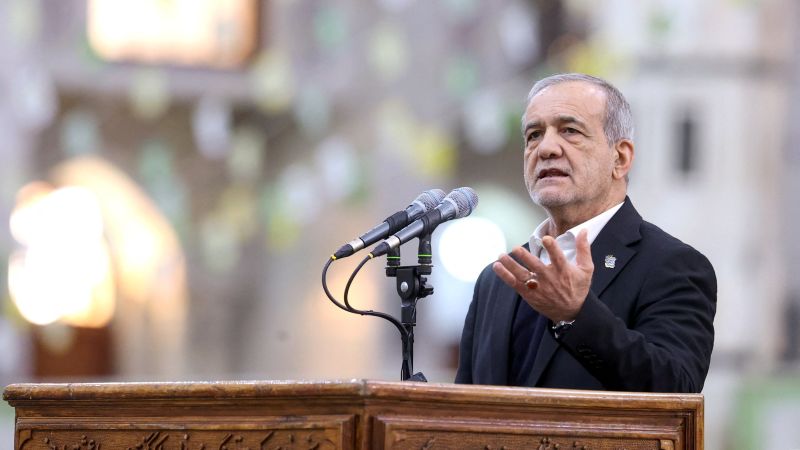
In a statement on social media, Iranian President Masoud Pezeshkian confirmed the negotiations, emphasizing that they will proceed only under specific conditions. He stated, “I have instructed my Minister of Foreign Affairs, provided that a suitable environment exists — one free from threats and unreasonable expectations — to pursue fair and equitable negotiations.” Pezeshkian noted that the decision to engage came after requests from regional allies. He asserted that any discussions would align with Iran’s national interests.
Tensions in the region have intensified, particularly following warnings from Ayatollah Ali Khamenei, Iran’s Supreme Leader. Khamenei cautioned that any US military action against Iran could escalate into a broader regional conflict. The situation has been further complicated by President Trump’s deployment of a naval strike group to the area and threats of renewed military action if Iran does not agree to a new nuclear deal.
Diplomatic efforts have surged in recent days, with countries like Qatar, Turkey, and Egypt facilitating discussions to reduce the risk of conflict. The upcoming talks in Istanbul will also include foreign ministers from Egypt, Oman, Pakistan, Qatar, Saudi Arabia, and the United Arab Emirates, highlighting the international interest in resolving the situation.
President Trump has expressed some optimism regarding the negotiations, stating that Iran is “seriously talking” with the US. Meanwhile, Araghchi conveyed confidence in reaching a deal. However, Iranian officials have expressed firm stances on certain issues. Ali Bagheri, head of Iran’s Supreme National Security Council, declared that Iran has “no intention” of negotiating its enriched uranium stockpiles, a point of contention in previous discussions.
The International Atomic Energy Agency (IAEA) has raised alarms about Iran’s uranium enrichment activities, noting that Iran is the only non-nuclear weapon state enriching uranium to levels of 60%. In a recent statement, Ali Shamkhani, an advisor to Khamenei, remarked that the US must provide concessions if Iran is to consider reducing its uranium enrichment.
Reports indicate that Iran is making efforts to fortify its nuclear sites deeper underground following the US strikes. Additionally, the Iranian government has restricted inspections by the UN’s nuclear watchdog, further complicating transparency in its nuclear program.
Previously, Iran and the US engaged in indirect nuclear talks in April and May 2025, but these discussions were halted after an Israeli strike on Iranian facilities led to renewed hostilities. Iran had ruled out direct talks with the US until now, making this tentative agreement a significant shift in diplomatic relations.
As the international community watches closely, the outcome of the Istanbul negotiations could have profound implications for regional stability and global security. The stakes are high, and both sides appear motivated to find a pathway forward amidst escalating tensions and military posturing.