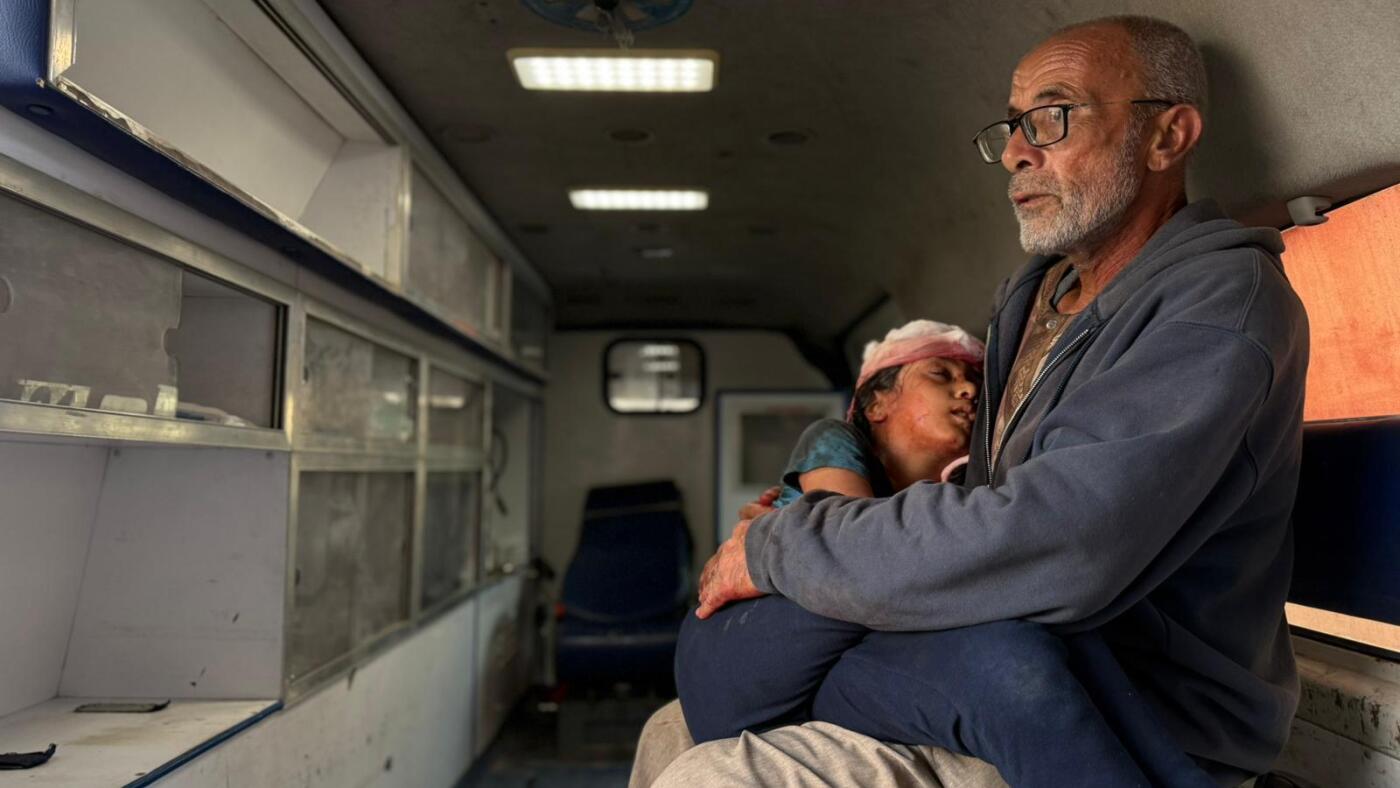
The tragic death of Bayan Al-Ankah, a ten-year-old girl reportedly shot by the Israeli military in a displaced persons camp in Gaza, has highlighted the ongoing humanitarian crisis in the region. Her death is part of a broader pattern, with several hundred Palestinians reported killed during a ceasefire between Hamas and Israel. The precarious situation is exacerbated by what mediators from Qatar and Egypt describe as near-daily Israeli attacks, which threaten the fragile truce.
The success of the U.S.-backed ceasefire hinges on two critical actions: the deployment of an international force to Gaza and the disarmament of Hamas. However, key nations involved in this phase of the ceasefire are still locked in discussions over the logistics and implications of these steps. The U.S. aims to have international forces in Gaza by early 2026, but this ambitious timeline faces significant obstacles.
A recent document from the U.S. State Department, obtained by NPR, outlines the vision of the Trump administration for the international troops. They are to support the demilitarization of Gaza, dismantle terrorist infrastructure, and decommission weapons used by militant groups. Despite this plan, many countries have expressed reluctance to send troops to confront Hamas directly regarding its weaponry.
The United Nations Security Council has mandated international forces to operate in Gaza until the end of 2027, yet the specifics of their role remain ambiguous. A recent meeting convened in Doha by the United States brought together representatives from numerous countries to discuss plans for the proposed International Stabilization Force (ISF). While details of troop commitments are yet to be finalized, nations such as Italy, Egypt, Indonesia, Azerbaijan, and Turkey have been identified as potential contributors.
During the Doha Forum, Turkey’s Foreign Minister Hakan Fidan asserted that Turkey could play a leading role in sending troops into Gaza, but emphasized that military personnel should act as peacekeepers along the border, rather than engaging in the disarmament of Hamas. “We shouldn’t expect from the ISF work that has not been completed by Israeli security forces,” he stated.
Other nations, particularly in the Muslim world, have echoed similar sentiments. Egyptian Foreign Minister Badr Abdelatty indicated that his country would not support the deployment of troops to forcibly disarm Hamas, advocating instead for a peacekeeping mandate focused on monitoring violations of the ceasefire.
Israel has expressed skepticism regarding the effectiveness of an international force in disarming Hamas. Israeli Prime Minister Benjamin Netanyahu remarked that while the U.S. aims to establish a multinational force, he is doubtful of its ability to fulfill Israel’s primary objective of disarming Hamas. Additionally, Israel opposes Turkey’s participation, viewing it as a nation sympathetic to Hamas.
Qatari Foreign Ministry spokesman Majed Al-Ansari noted that disagreements persist among nations about the sequencing of disarmament and troop withdrawal. He emphasized that a lack of decisive action could jeopardize the ceasefire. “Sequencing is the issue,” he explained. “When does disarmament happen? How does it happen?”
While Hamas has indicated a willingness to discuss disarmament, it insists that such measures must be linked to a legitimate political process leading to the establishment of a Palestinian state. During an interview, Bassem Naim, a negotiator for Hamas, expressed readiness for a ceasefire lasting several years, contingent upon the assurance that Gaza will not face further attacks.
Hamas has signaled its openness to the ISF as a peacekeeping entity, provided it serves as a buffer between Israeli forces and Palestinians. Nevertheless, Hamas leaders have made it clear that any international presence should not be placed within Palestinian population centers.
As negotiations continue, the humanitarian situation in Gaza remains dire. Aid agencies report that despite the ceasefire, Israel has not permitted sufficient quantities of aid to flow into the territory. The United Nations has highlighted that a quarter of families in Gaza are subsisting on just one meal a day, while basic medical supplies are scarce.
The devastation wrought by the conflict has left more than 90% of homes in Gaza damaged or destroyed, with over 70,000 Palestinian lives lost, according to the Gaza Health Ministry. The situation is exacerbated by harsh winter conditions, which have led to further suffering among the displaced.
As the international community grapples with the complexities of deploying troops and achieving a lasting peace, the plight of the Palestinian people continues to unfold against a backdrop of uncertainty and violence. The next steps in this fragile ceasefire remain in limbo, with critical decisions pending that will determine the course of peace and stability in the region.