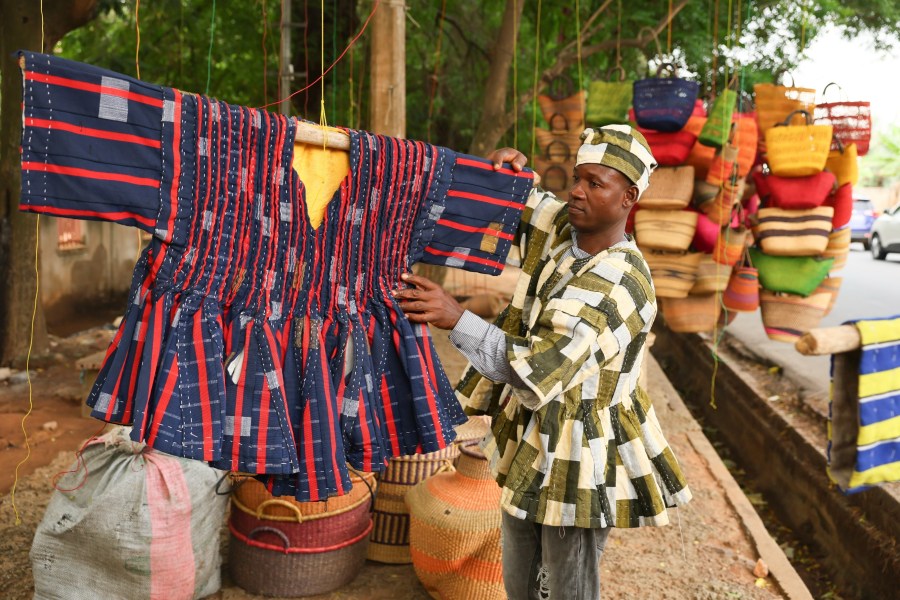
Ghanaians are increasingly donning traditional fugu smocks as a response to recent mockery faced by their president, igniting a renewed sense of cultural pride across the country. This shift has been particularly noticeable in urban areas, where the vibrant, multicolored garments are now a common sight on the streets.
In central Accra, vendor Clement Azaabire has witnessed a surge in interest for the fugu smocks he has sold for the past 15 years. These garments, associated with communities in northern Ghana, feature distinctive striped patterns and have gained attention as symbols of heritage. Azaabire hangs the neatly sewn garments on lines, with the fabrics gently swaying in the breeze, illustrating a vibrant cultural revival.
The recent ridicule aimed at the president for his choice of clothing has prompted many Ghanaians to embrace their traditional attire. Social media platforms and public discussions have contributed to this cultural resurgence, as individuals express their support for local craftsmanship and heritage. The fugu smock, once seen as a niche garment, is now being worn proudly by people from various backgrounds.
This cultural movement is more than just a fashion statement; it supports local economies and artisans. Azaabire has noted that sales have increased significantly, with many customers eager to purchase the smocks to showcase their Ghanaian identity. Prices for these garments vary, with many affordable options available, making them accessible to a wider audience.
As the trend continues to grow, the impact is being felt beyond just the streets of Accra. Local markets are bustling with activity, as vendors report higher foot traffic and increased sales. This change reflects a broader economic benefit, as the demand for traditional clothing boosts local production and fosters community ties.
The embrace of fugu smocks symbolizes a collective response to external perceptions and a celebration of Ghanaian culture. Ghanaians are reclaiming their identity and pushing back against the stigma associated with traditional attire. The fugu smock has now transcended its regional origins to become a national emblem of pride, unity, and resilience.
As the country moves forward, this cultural renaissance serves as a reminder of the importance of heritage in shaping modern identities. The fugu smock, once relegated to the background, has stepped into the spotlight, showcasing the rich tapestry of Ghana’s diverse cultural landscape.
The recent events surrounding the president’s attire have inadvertently sparked a movement that emphasizes the significance of cultural expression in every facet of life. Ghanaians are not just wearing their heritage; they are living it, embodying a spirit of unity that resonates throughout the nation.