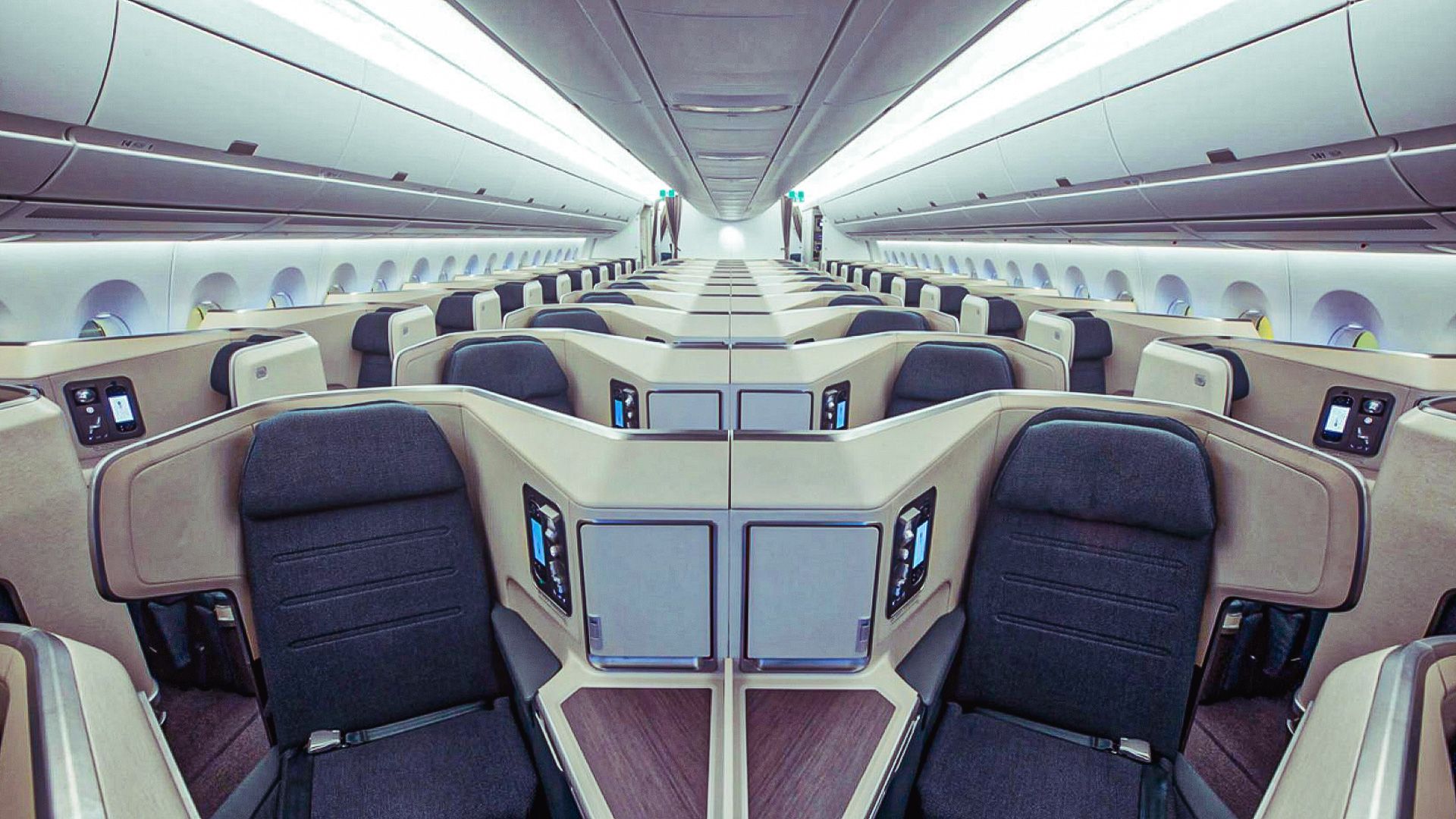
The Airbus A350-1000 stands out as the highest-capacity next-generation widebody aircraft in operation, designed for ultra-long-haul flights that exceed traditional long-haul routes. An analysis conducted by Cirium aviation analytics reveals the premium travel options available on some of the world’s longest routes currently served by this aircraft. While many airlines utilize the A350-1000, a true first-class cabin is often absent. Instead, passengers typically have access to high-end business-class products, including Qatar Airways’ Qsuite, Cathay Pacific’s long-haul business cabin, Etihad Airways’ business studio, and Ethiopian Airlines’ Cloud Nine class.
To understand the costs associated with these premium cabins, we examine bookable fares and recent benchmarks for various city pairs. This analysis highlights how prices can fluctuate based on the airline, specific route, and season. Factors such as overall inventory levels, day-of-week pricing, holiday surcharges, and corporate agreements can influence fares significantly, sometimes by thousands of dollars. Notably, on ultra-long-haul routes, premium cabins command substantial price premiums, thus increasing profitability for airlines while accommodating high operational costs.
Qatar Airways’ Routes: Premium Experience from Doha
One of the most notable routes operated by Qatar Airways is the nonstop service between Doha and Los Angeles. This route exemplifies the A350-1000’s capabilities, being one of the longest missions for the aircraft. Qatar’s premium offering, the Qsuite, caters to business travelers, although it does not equate to a traditional first-class service. Business-class round-trip fares on this route generally start at approximately $5,000, before considering fluctuations associated with peak travel times and last-minute bookings.
The demand for this route is bolstered by a large origin and destination market, as well as connecting traffic to South Asia, the Gulf, and East Africa through Qatar’s Doha hub. As demand increases, premium cabin availability can diminish rapidly. Conversely, travelers willing to be flexible with their dates often find attractive sales, making premium travel more accessible.
Dallas/Fort Worth and Competitive Advantages
Qatar Airways also operates a nonstop service to Dallas/Fort Worth International Airport (DFW), mirroring the profile of its Los Angeles connection but with enhanced connectivity through American Airlines. This route attracts significant corporate and leisure demand due to the seamless access it provides to a multitude of destinations across Asia and the Middle East via Doha. Business-class fares on the Doha to Texas route begin in the mid-$5,000s, with economy tickets priced considerably lower.
The competitive landscape in Dallas allows Qatar Airways to leverage its nonstop services and premium offerings. Travelers looking for deals on Qsuite seats should monitor price trends closely, as fare spikes often align with school breaks and major Islamic events. Additionally, considering adjacent departure days or alternative gateways can unlock more affordable premium experiences.
Cathay Pacific’s Long-Haul Services
Cathay Pacific operates ultra-long-haul flights connecting Hong Kong International Airport (HKG) and New York’s John F. Kennedy International Airport (JFK). Although the airline’s first-class cabins are reserved for select routes on Boeing 777-300ER aircraft, the A350-1000 provides a robust business-class experience. Prices for this flagship service typically hover around HKD 50,637, equivalent to approximately $6,800, showcasing how peak travel weeks can escalate costs.
The competitive nature of business travel between these two global hubs significantly influences pricing. Schedule reliability and partnerships are critical, as Cathay Pacific sells not only New York as a destination but also as a gateway to the wider American Northeast. Travelers seeking the best fares should book as far in advance as possible to secure lower rates.
Cathay Pacific also operates a service from Hong Kong to Chicago O’Hare International Airport (ORD), which, while slightly shorter in distance, offers similar premium capabilities. Sample business-class round-trip fares on this route are approximately $6,900, reinforcing the notion that shorter flights do not always correlate with lower prices. The combination of corporate demand and seasonal fluctuations contributes to higher overall yields.
Etihad Airways: Premium Capacity on A350 Missions
Etihad Airways’ A350-1000 services to the United States provide an insightful case study in premium capacity deployment. Although the airline’s most luxurious offerings, such as the Residence, are found on other aircraft, the A350-1000 operates as a two-cabin platform. On the route from Abu Dhabi International Airport (AUH) to Hartsfield-Jackson Atlanta International Airport (ATL), business-class fares can start as low as $4,400. This price point, while higher than some Gulf-to-US routes, remains competitive within the premium market.
The attractiveness of this route lies in its strategic location, as Atlanta serves as a major connecting hub. Furthermore, Etihad’s Abu Dhabi hub is optimized for connections to India and parts of Asia, ensuring that premium cabins fill quickly, especially during peak travel periods. As travelers assess their options, understanding the variability in fare pricing is crucial, as airlines often release discounted fares well in advance before increasing prices when inventory tightens.
The analysis of the world’s longest A350 routes reveals the intricate dynamics of premium travel pricing. These routes not only connect some of the highest-yielding destinations globally but also highlight the importance of premium cabins in maintaining profitability for airlines. As the industry shifts away from traditional first-class offerings, modern lie-flat business class cabins have emerged as the primary choice for premium travelers seeking comfort on lengthy flights.