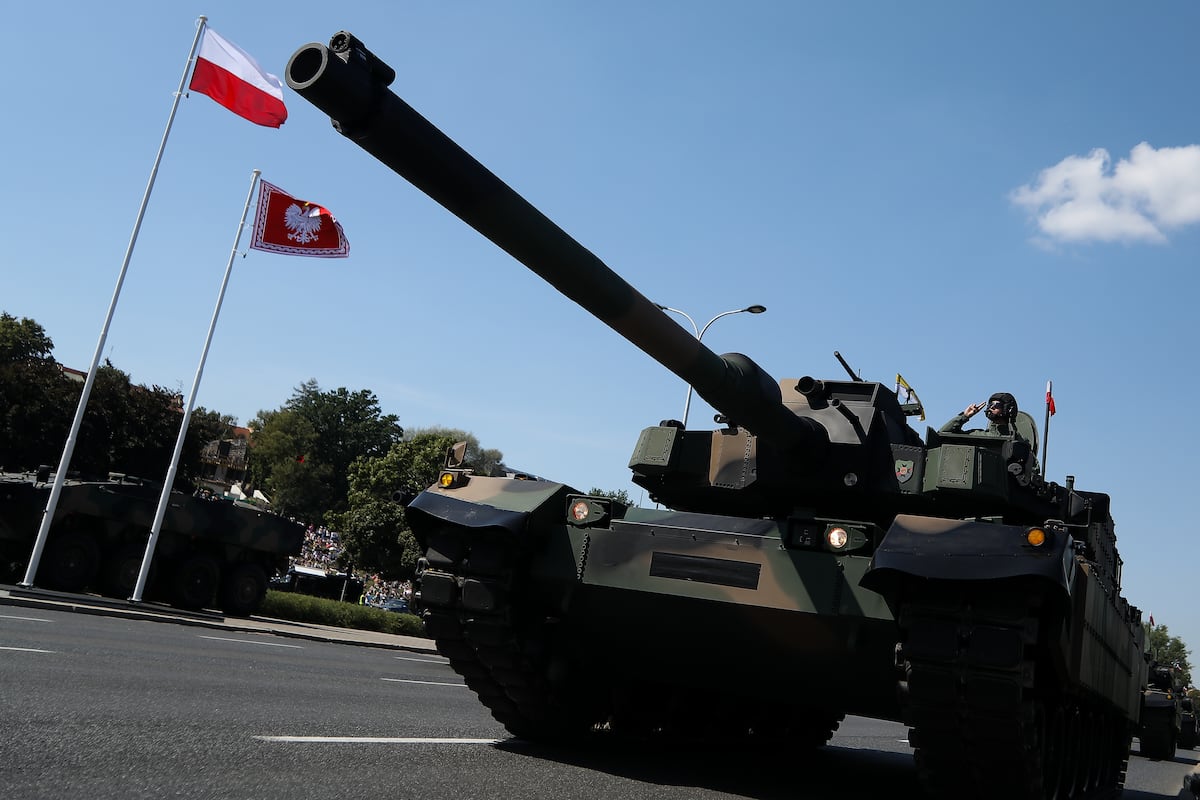
European NATO countries have significantly reduced their dependence on the United States for arms imports over the past year, according to new analysis from the Stockholm International Peace Research Institute (SIPRI). The shift in defense procurement has seen these nations increasingly turn to suppliers such as South Korea, France, and Israel for their military needs.
The SIPRI report, published on March 9, 2023, reveals that the U.S. accounted for 58% of major arms imports by NATO’s European member states during the 2021-2025 period. This marks a decrease from 64% in the previous five years, reflecting a notable shift in defense strategies and procurement practices.
In the wake of Russia’s invasion of Ukraine in 2022, European nations ramped up their defense spending, resulting in a more than threefold increase in arms imports. As concerns about security and reliability in U.S. defense commitments have grown, European leaders are now looking for alternatives to American arms. SIPRI highlighted that “threat perceptions concerning Russia, compounded by uncertainties over the USA’s commitment to defending its European allies, have boosted demand for arms among European member states.”
While European defense industries have been ramping up production and intra-EU orders have increased, countries still imported significant amounts of U.S. arms, particularly in the form of combat aircraft and long-range air-defense systems. SIPRI researcher Katarina Djokic noted that despite a rise in domestic production, the reliance on U.S. combat jets and defense technology remains prominent.
As of the end of 2025, twelve European nations had a total of 466 F-35 fighter jets ordered or preselected, including 39 jets ordered in the past year alone. South Korea emerged as the second-largest supplier to European NATO members, accounting for 8.6% of their arms imports, up from 6.5%. Israel’s share also grew to 7.7%, while France increased its share to 7.4% from 6.5%.
The global arms market has seen a substantial uptick, with major arms transfers rising by 9.2% from the previous five-year period—the most significant increase since 2011-2015. SIPRI Director Mathew George stated that while deliveries to Ukraine since 2022 have been a key factor, many other European nations are also significantly increasing their arms imports to bolster military capabilities against the perceived threat from Russia.
U.S. arms shipments to Europe surged by 217% in the 2021-2025 period compared to the previous five years. This includes weapons supplied to Ukraine, with SIPRI counting arms purchased by other nations for transfer to Ukrainian forces among U.S. exports. Despite the growing competition, the U.S. remains the world’s largest arms exporter, holding a market share of 34%, followed by France at 9.8% and Russia at 6.8%.
For nations importing arms, U.S. equipment offers advanced capabilities and serves as a means to strengthen ties with Washington. SIPRI Senior Researcher Pieter Wezeman remarked on the dual nature of arms exports, indicating that the U.S. views them as a crucial tool of foreign policy while fostering its arms industry.
Germany has now surpassed China to become the world’s fourth-largest arms exporter, with 24% of its exports directed to Ukraine. Italy has also climbed to sixth place, with a substantial portion of its arms exports going to the Middle East. The data indicates that order volumes can provide insights into future export trends.
By the end of 2025, the U.S. had outstanding orders for 936 combat aircraft, with France following with over 180 aircraft on order. In terms of major warships, the United Kingdom has at least 34 on order, indicating a robust defense procurement landscape across Europe.
In a broader context, Ukraine emerged as the largest weapons importer during the 2021-2025 period, accounting for 9.7% of global arms imports, with the U.S. supplying 44% of these imports. Yet, as U.S. military aid to Ukraine has decreased in 2025, the volume of arms transfers to the country has notably declined.
In Asia, India remains the second-largest arms importer, although its share of global imports decreased by 4% in the same period. Other nations in the region have also increased their arms purchases significantly, with Pakistan’s imports rising by 66%, Japan’s by 76%, and Taiwan’s by 54%. These trends are largely driven by concerns over China’s military capabilities.
The data illustrates how geopolitical dynamics continue to shape defense spending and arms procurement strategies worldwide. As nations reassess their military alliances and security needs, the landscape of global arms trading is likely to evolve further.