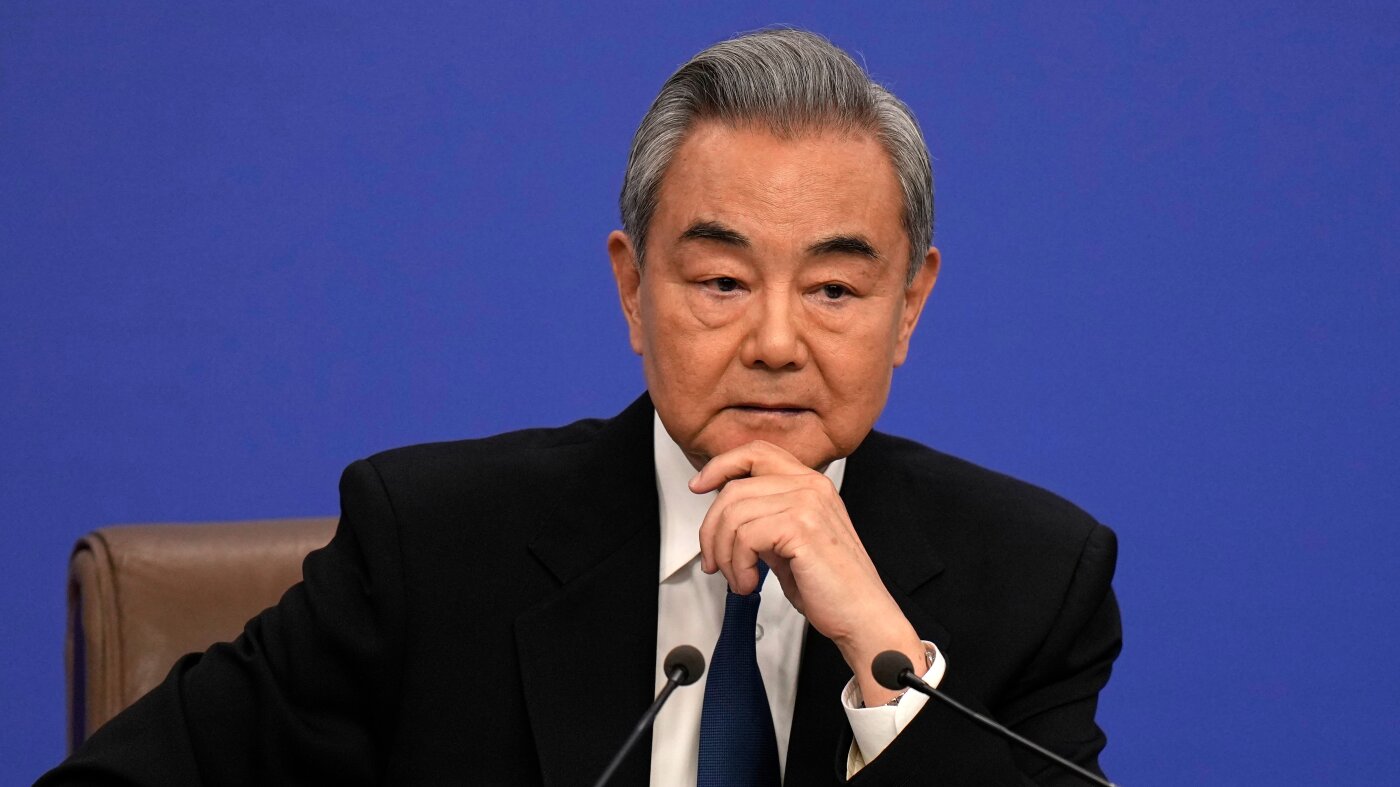
China’s Foreign Minister, Wang Yi, delivered a significant address on Sunday, addressing key global issues during an annual political meeting in Beijing. He emphasized that the ongoing U.S.-Israeli conflict with Iran “should not have happened” and is harmful to all parties involved. While criticizing the United States, Wang also indicated that a potential meeting between President Donald Trump and Chinese President Xi Jinping could still take place later this month.
Wang’s comments highlight China’s desire for dialogue with the United States, stressing that the world cannot afford conflict between the two largest economies. He articulated China’s position on five major international topics, offering a glimpse into the country’s diplomatic stance.
China’s Stance on the Iran Conflict
Wang called for an immediate halt to the fighting in Iran, urging all involved parties to return to negotiations. He stated, “Might doesn’t make right, and the world cannot revert to the law of the jungle.” The minister underscored the importance of respecting the sovereignty and security of Iran and its neighbors in the Middle East. To facilitate peace talks, China plans to send an envoy to the region for mediation. Nonetheless, it is important to recognize that China maintains a more strategic alignment with Iran than with the U.S. and Israel, largely due to its substantial oil imports from Iran and the impacts of the Iranian blockade on the Strait of Hormuz.
Relations with the United States and Europe
Wang reiterated China’s aim for “peaceful coexistence” and “win-win cooperation” with the United States, emphasizing that neither country can reshape the other. He remarked, “We can choose how we want to engage.” This statement reflects China’s ongoing concern regarding U.S. efforts to contain its rise. Wang also sought to alleviate European fears about China’s growing influence, suggesting that Europe should view China as a “global partner” rather than a competitor. He encouraged European nations to embrace opportunities within the Chinese market, saying, “We are glad to see European friends stepping out of the ‘small attic’ of protectionism.”
Criticism of Trade Protectionism
In a veiled critique of President Trump’s global trade tariffs, Wang described trade protectionism as “akin to locking oneself in a dark room.” He argued that while such measures might shield a nation from external challenges, they also cut off vital opportunities and engagement. In a contrasting move, China announced it would fully lift tariffs on all imports from most African countries starting on May 1. This initiative aims to enhance Africa’s access to the Chinese market, although Wang did not address recent concerns regarding sluggish domestic demand in China. The country has set its lowest economic growth target since the 1990s, aiming for a range between 4.5% and 5% for this year.
Concerns Regarding Japan and Taiwan
Relations between China and Japan are currently tense, particularly following remarks from Japanese Prime Minister Sanae Takaichi, who suggested Japan might intervene if China were to invade Taiwan. Wang reiterated that “Taiwan never was, is not, and will never be a country,” asserting that Taiwan is an internal matter for China and that Japan has no authority to interfere.
Support for Palestine and Gaza
On the issue of Gaza, Wang articulated China’s support for a two-state solution in Palestine. He stated, “Any other arrangements or new mechanisms must reinforce – rather than undermine – the two-state solution.” He welcomed international initiatives aimed at establishing a ceasefire but acknowledged that significant work remains to be done. While China was invited to join Trump’s Board of Peace, it has yet to participate in this forum.
Wang’s briefing underscores China’s commitment to playing a proactive role in international diplomacy, advocating for dialogue and cooperation amid global tensions.