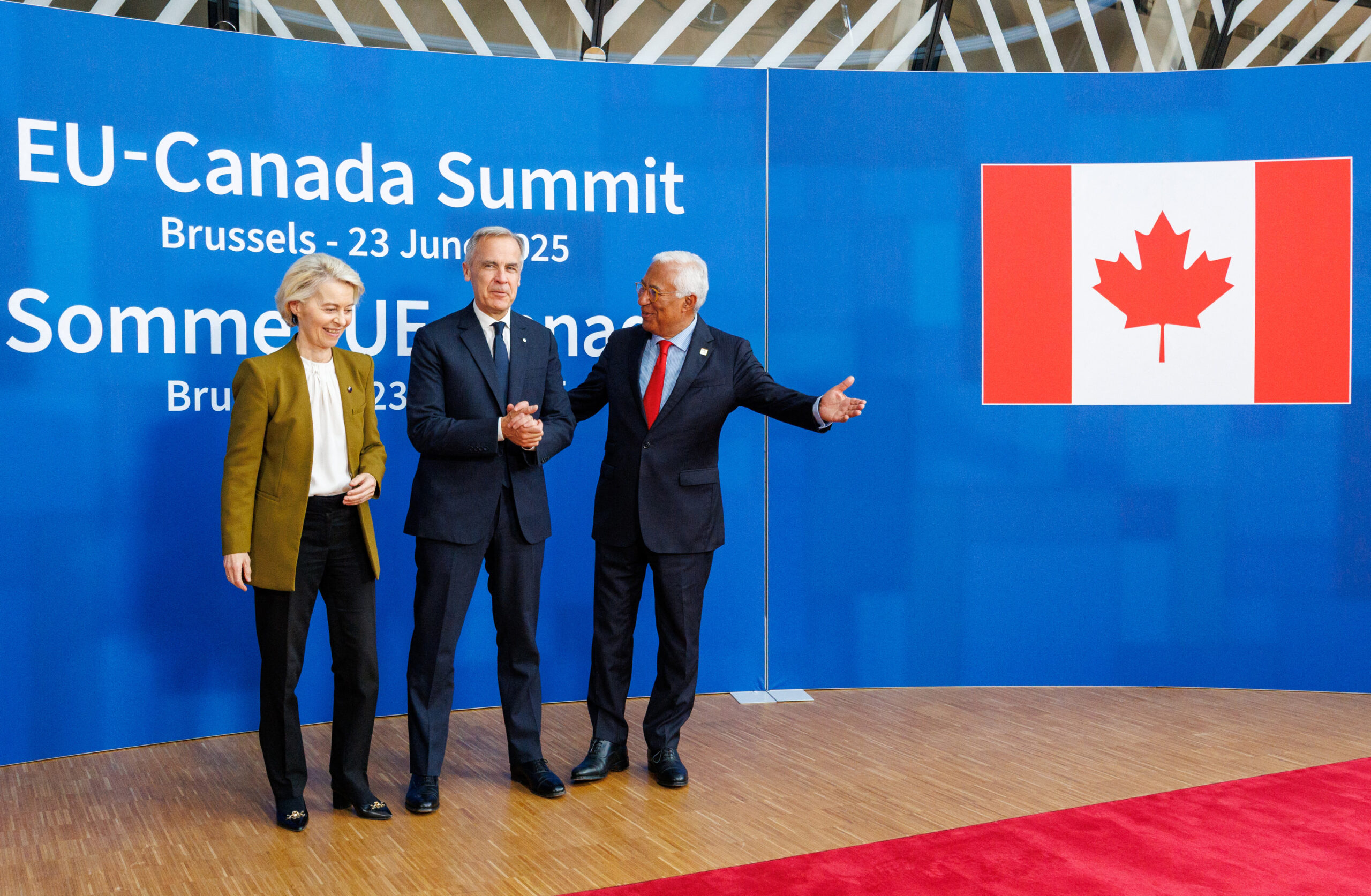
Canada has officially become the first non-European Union (EU) country to participate in the bloc’s significant rearmament program, known as Security Action for Europe (SAFE). This initiative, which has a funding capacity of €150 billion, aims to enhance military readiness through joint procurement of defense equipment, including fighter jets and submarines.
Canadian Prime Minister Mark Carney announced this pivotal development on March 15, 2024. He highlighted that joining SAFE could unlock billions of dollars in defense opportunities for Canadian businesses and draw new, reliable suppliers for the Canadian Armed Forces. “Participation in SAFE will attract massive new opportunities for national manufacturers to build and export Canadian-made capabilities,” Carney remarked.
Implications for Canada’s Defense Procurement
At present, Canada is assessing its options for next-generation fighter jets. The country has already committed to acquiring 16 F-35 aircraft but is considering a mixed fleet that includes the Swedish-made Gripen as a competitive alternative. The implications of joining SAFE could extend to various other military technologies, including conventional submarines and maritime domain awareness systems.
Details surrounding Canada’s participation in SAFE are still being finalized. Negotiations are currently underway to ratify a bilateral agreement between Ottawa and the EU, designed to expedite the process and possibly exempt Canada from certain eligibility rules. Notably, SAFE stipulates that no more than 35% of a project’s component costs can come from outside the EU, the European Economic Area, or Ukraine to qualify for funding.
Despite the restrictions, countries can gain access through financial contributions, which raises questions about how much Canada is prepared to invest in the program. The specific nature of this financial commitment remains unclear, particularly whether it is a one-time fee or tied to future procurement obligations. Similar discussions recently delayed the United Kingdom’s entry into SAFE, where disagreements over financial support led to stalled negotiations.
Strategic Partnerships and Future Prospects
As Canada moves forward with its defense procurement goals, experts suggest that SAFE funding could also be directed towards advanced technologies, such as drones and anti-submarine warfare platforms. Roger Hilton, a Canadian defense fellow at the think tank GLOBSEC, indicated that Canada is likely to seek partnerships within Europe. He emphasized the importance of aligning with nations that share similar strategic priorities, particularly regarding Arctic security and North Atlantic defense.
Hilton pointed out that Canada may gravitate towards countries with robust aerospace and naval industries, including France, Germany, Italy, Sweden, and Spain. These nations are seen as having the necessary industrial capabilities and consortium models favored by SAFE.
As Canada embarks on this new chapter of defense cooperation with the EU, the potential for significant advancements in its military capabilities and international partnerships appears promising. The coming weeks will be critical as both Canada and the EU work to finalize the terms of this historic collaboration.