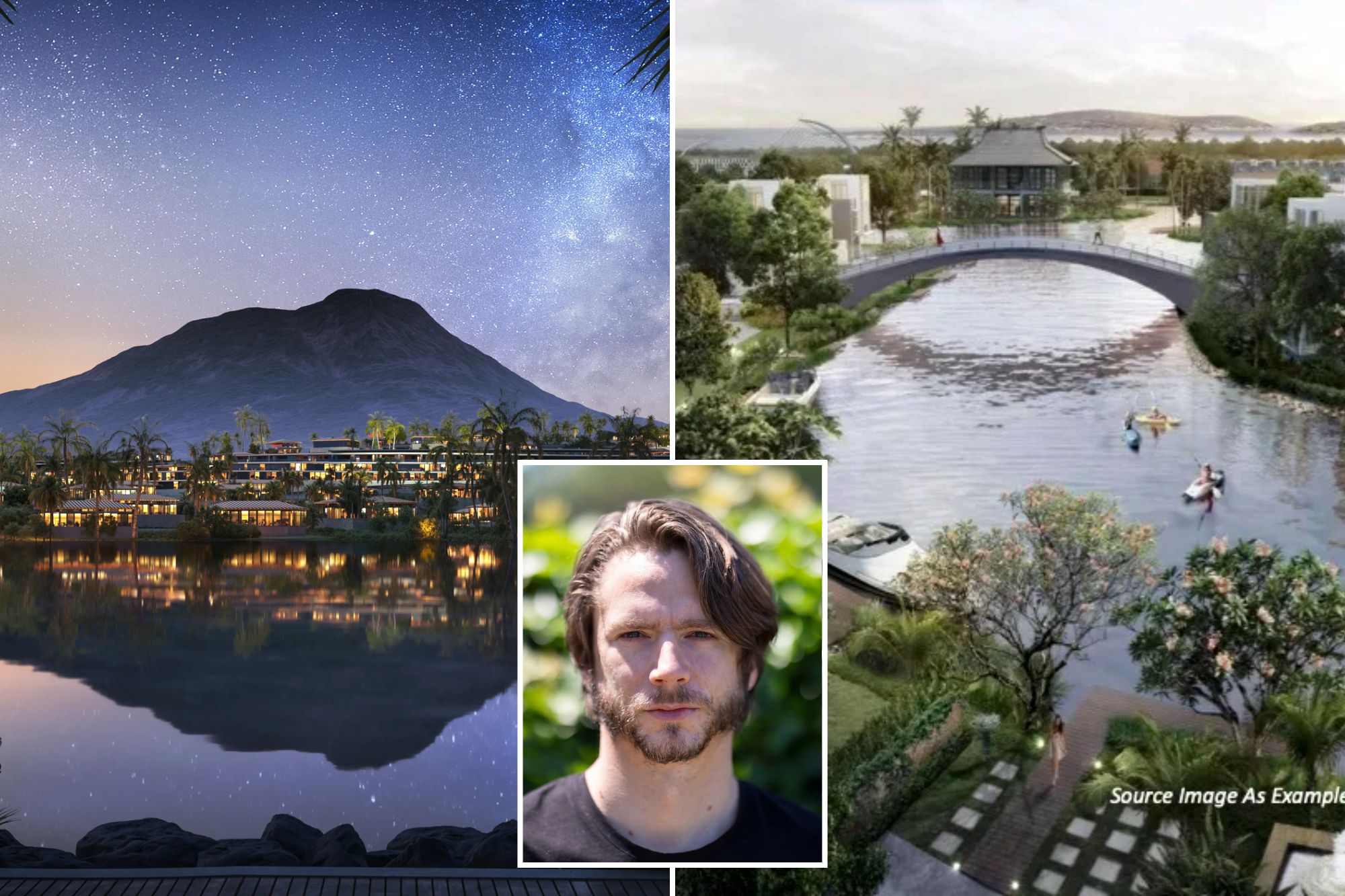
Billionaires are venturing beyond traditional investments, aiming to build their own cities that promise innovative governance and luxurious living. These tech utopias, often situated in economically developing regions, are being designed with unique laws and regulations that allow their creators significant control over local governance. This movement reflects a growing dissatisfaction with existing political structures, as highlighted by Mark Lutter, founder of the Charter Cities Institute, which advocates for new cities to provide improved governance and alleviate poverty.
One notable project is Prospera in Honduras, where approximately 1,000 residents live in a gated community equipped with a beach and golf course. Backed by prominent investors such as Peter Thiel, Prospera operates under its own legal framework, allowing for unique arbitration processes where U.S. judges resolve disputes online. Health enthusiast Bryan Johnson has expressed interest in its progressive health regulations, particularly regarding longevity treatments. For prospective residents, studio apartments start at $120,000, while oceanfront villas can reach around $850,000.
On the Caribbean island of Nevis, cryptocurrency millionaire Oliver Janssens is developing a community called Destiny. Spanning four square miles, Janssens aims to establish a family-friendly environment, distancing it from libertarian ideals. He envisions selling 1,000 units annually, with homes priced between $500,000 and $3 million. Still in negotiations with the local government, Janssens emphasizes the importance of adhering to the constitution of St. Kitts and Nevis, which he describes as a safeguard for his project.
In West Africa, venture capitalist Patri Friedman is working on multiple Alpha Cities. While still largely conceptual, these cities aim to foster industry clusters, including geothermal-powered data centers and electric vehicle manufacturing. Friedman noted that host countries aspire to emulate the rapid development seen in Singapore, transitioning from low-income to high-income economies.
Contrasting these ambitious developments, the California Forever initiative seeks to restore the American dream with a billion-dollar funding plan. This project, spearheaded by former Goldman Sachs trader Jan Sramek, encompasses 94 square miles of land designed for walkable neighborhoods and advanced manufacturing hubs in innovative industries. The founders hope to break ground in 2027 with plans for expansive green spaces surpassing the size of Central Park.
Meanwhile, British actor Idris Elba is spearheading a modernization effort on Sherbro Island in Sierra Leone, a project inspired by his grandfather’s legacy. This initiative, described as an eco-city project, aims to intertwine traditional African culture with modern infrastructure, including a central wind farm. Elba’s vision reflects a commitment to enhancing the living standards of local residents.
Despite the optimism surrounding these projects, Akon City in Senegal serves as a cautionary tale. The R&B singer’s ambitious plan to create a solar-powered city based on the fictional Wakanda has faltered. As of 2025, only a reception building has been constructed, with reports indicating insufficient investment and halted progress. Plans are now underway for a more pragmatic development, focusing on a vacation resort.
The push for these tech-centric cities by billionaires raises questions about governance, social responsibility, and the impact on local communities. As these projects evolve, they will undoubtedly shape the landscape of urban development and governance in the years to come.