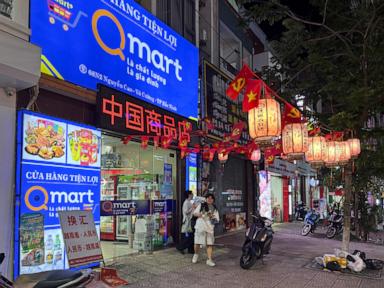
Bac Ninh, located just north of Hanoi, has transformed into one of Vietnam’s most significant manufacturing hubs. The shift is largely driven by an influx of investment as companies exit China to escape tariffs imposed during the trade tensions instigated by former U.S. President Donald Trump. This city, once known for its rice fields and traditional Quan Ho folk songs, is now a vibrant center for electronics and other high-tech industries.
The region’s rapid development began in 2008 when Samsung established its first phone factory there, making Vietnam its largest offshore manufacturing base. This boom continued as Chinese firms diversified their operations in response to U.S. tariffs. As a result, Bac Ninh has attracted considerable foreign investment, making it a focal point in Vietnam’s emergence as a global manufacturing powerhouse.
Despite the impressive growth, Bac Ninh faces significant challenges. Rising labor costs, which have increased by 10% to 15% since 2024, alongside worker shortages and inadequate infrastructure, are highlighting the limitations of its rapid ascent. The competition is intensifying as countries like Indonesia and the Philippines vie for the same manufacturing projects. To maintain its momentum, Vietnam is striving to move into higher-value manufacturing and broaden its export markets.
Investment and Infrastructure Developments
Vietnam’s government is proactively addressing infrastructure needs to sustain its growth. Recent projects include a new highway linking Bac Ninh to the Chinese border, significantly reducing travel time. Additionally, a railway connection between Hanoi and Haiphong, the country’s largest seaport, is underway to improve logistics.
On December 19, 2024, Bac Ninh broke ground on an expansion of its industrial zone, focusing on high-tech manufacturing sectors such as electronics, pharmaceuticals, and clean energy. This initiative is part of a broader national strategy, which includes launching 234 major projects worth over $129 billion ahead of a pivotal National Party Congress in January 2025.
The presence of Chinese companies is also expanding, with some establishing language schools to facilitate communication and ease operational challenges. However, as competition for skilled labor intensifies, costs associated with the “China plus one” strategy—where companies shift production from China to other countries—are increasing.
Challenges Ahead and Future Goals
Although Bac Ninh continues to attract substantial foreign investment, its ability to replace China as the world’s manufacturing leader is limited. Jacob Rothman, co-founder and CEO of Velong Enterprises, noted that while Vietnam is appealing, it lacks the comprehensive manufacturing ecosystem China has developed over decades.
Logistics and infrastructure in Vietnam still lag behind China, according to Brian Bourke, global chief commercial officer at SEKO Logistics. Some companies are beginning to hedge their investments by diversifying production locations, with reports indicating a shift in furniture manufacturing to India.
As Vietnam aims to enhance its economic profile, its leaders are keenly aware of the challenges posed by rising costs and stiff competition. Prime Minister Pham Minh Chinh emphasized the need for Vietnam to innovate and expand its economic reach, stating, “We must reach far into the ocean, delve deep underground and soar high into space.”
Vietnam’s goal is to become a wealthy nation by 2045, aspiring to join the ranks of Asia’s “tiger economies” by moving from low-cost assembly to producing higher-value goods. The government is offering various incentives, such as tax breaks on imported machinery, to encourage modernization and investment in technology.
As the landscape of global manufacturing continues to evolve, Bac Ninh stands at a crossroads, grappling with the pressures of its rapid growth while striving to secure its position in an increasingly competitive market. The city’s future will depend on its ability to adapt and innovate in the face of these challenges.