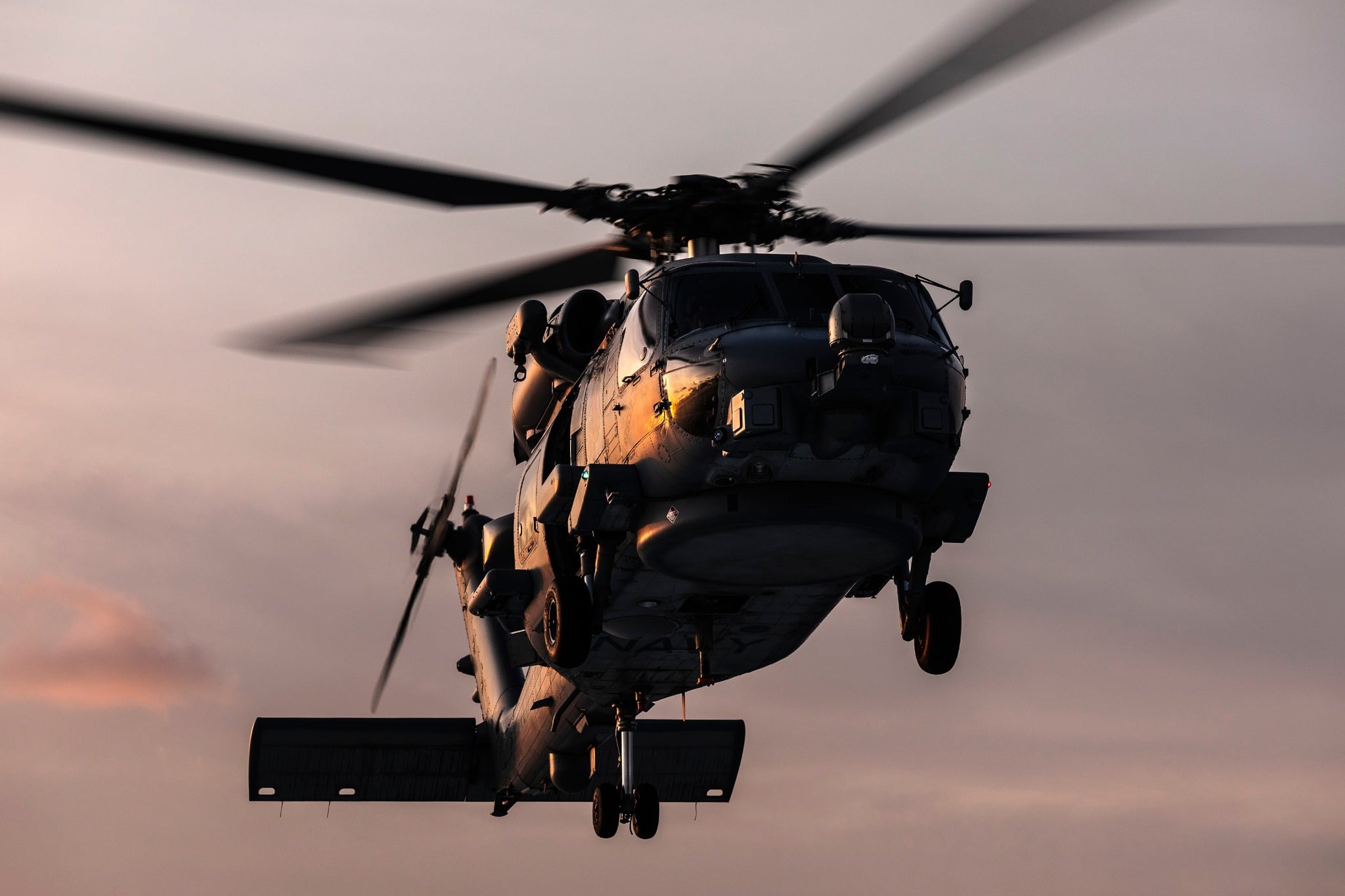
A Royal Australian Navy helicopter experienced an “unsafe and unprofessional interaction” with a People’s Liberation Army Navy helicopter over the Yellow Sea on March 4, 2024. The Australian government reported that its MH-60R Seahawk was forced to take evasive action during the incident when the Chinese helicopter approached at an unsafe distance and matched its altitude.
The encounter occurred while the MH-60R was operating in international waters, part of Operation Argos, which aims to enforce United Nations Security Council sanctions against North Korea. The Australian Defense Department stated that the Chinese helicopter increased its speed and maneuvered aggressively towards the Australian aircraft, posing a clear risk to personnel and equipment.
The statement emphasized that “this was an unsafe and unprofessional manoeuvre that posed a risk to our aircraft and its personnel.” It further asserted that the actions of HMAS Toowoomba, from which the helicopter had launched, were consistent with international law at all times. Fortunately, the MH-60R was not damaged, and no personnel were injured during the interaction.
Australia has called for all nations, including China, to conduct military operations in a safe and professional manner. The Australian Defense Force has a long history of conducting maritime surveillance in the region and exercises its rights to freedom of navigation and overflight in international waters.
In response, China’s Ministry of National Defense rejected the Australian characterization of the incident, claiming it was a “complete distortion of facts.” Spokesperson Senior Colonel Jiang Bin stated that Australia was conducting reconnaissance under the pretense of the UN mission, describing the operations as provocative and detrimental to China’s national security.
According to Jiang, China’s actions were defensive and proper, in line with international law. He emphasized that United Nations Security Council resolutions do not authorize any nation to deploy military forces or conduct surveillance in another country’s jurisdiction under the guise of monitoring violations of those resolutions.
The incident is part of a broader trend, as Australia, along with Canada, France, Germany, Italy, the Netherlands, New Zealand, and the United Kingdom, has been conducting monitoring missions in the Yellow Sea and East China Sea since 2018. These operations have reportedly faced harassment from Chinese vessels and aircraft, while Beijing maintains that these missions are merely a cover for intelligence gathering on China.
In the lead-up to this incident, HMAS Toowoomba and its sister ship, HMAS Warramunga, departed in early February as part of the Australian Defense Force’s Regional Presence Deployment program. Warramunga has since been active in the Indian Ocean following participation in the Indian Navy’s Exercise MILAN 2024.
Australia has documented several unsafe encounters with Chinese military assets in recent years. Notably, in October 2025, a Chinese fighter jet released flares near a Royal Australian Air Force P-8A Poseidon Maritime Patrol Aircraft over the South China Sea. Additionally, in November 2023, HMAS Toowoomba was involved in an Operation Argos mission when a Chinese destroyer approached closely, causing minor injuries to Australian divers conducting operations in the water.
The situation in the region remains dynamic, with Chinese military aircraft frequently conducting reconnaissance operations near Japan. On March 2, two Chinese Y-9 Electronic Intelligence aircraft were reported to have conducted reconnaissance flights in Japan’s southwest, prompting a response from Japanese fighter aircraft.
Moreover, Russian naval activity has also been noted, as Russian warships, including submarines, have been sighted around Japan. The Russian Navy Pacific Fleet confirmed that several vessels departed Vladivostok for operations in the Asia Pacific, which includes conducting training exercises while navigating international waters.
As tensions continue to rise in the region, the international community remains watchful of the interactions between military forces, emphasizing the need for adherence to established protocols and international law to ensure maritime safety and security.