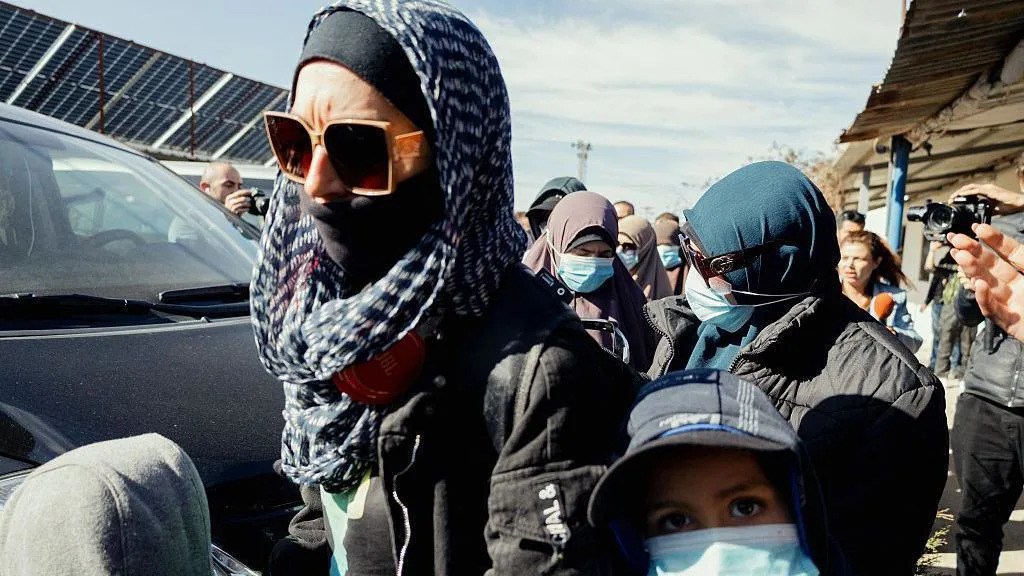
Australia has barred a citizen linked to the Islamic State (IS) group from returning to the country for up to two years. This individual is part of a group of 34 Australian women and children who attempted to return home after being released from a Syrian camp earlier this week. Syrian authorities turned them back due to “technical reasons.”
Home Affairs Minister Tony Burke announced the ban on Wednesday, stating it was issued “on advice from security agencies.” He added that the remaining 33 individuals do not meet “required legal thresholds” for a similar ban. The Australian government has consistently refused to repatriate this group, which is believed to include the wives, widows, and children of IS fighters, with 23 children among them.
Prime Minister Anthony Albanese emphasized that these families will not receive government support for their return. “You make your bed, you lie in it,” he stated at a press conference, referring to the choices made by those who aligned themselves with a “brutal, reactionary ideology that seeks to undermine and destroy our way of life.”
Despite the government’s position, legal experts have raised concerns about its obligation to allow citizens the right of return. In response to reports that some members of the group hold valid Australian passports, Albanese affirmed that his government would not “breach Australian law.”
Context of the Situation
The group currently resides in the al-Roj camp in northern Syria, where they are among dozens of Australians held since 2019, when IS was driven from its last stronghold in the region. The camp houses over 2,000 individuals from 40 different nationalities, predominantly women and children. Notably, it is also believed to include individuals such as Shamima Begum, who lost her British citizenship on national security grounds in 2019.
Concerns regarding the potential return of these Australians have been raised by opposition politicians. Liberal Party Senator Jonno Duniam questioned how only one member of the group could be deemed a risk while the others were considered safe. He offered to help amend laws to exclude more individuals from the group.
International Implications
The al-Roj camp has gained attention due to reports of severe malnutrition and limited access to basic resources for the women and children living there. The camp’s director, Hakmiyeh Ibrahim, called on all nations with citizens in limbo to repatriate them. “Take your citizens, take these children and women,” she urged. Ibrahim highlighted the dangers of the ideologies surrounding the children, warning that “the more time passes, the more complicated the situation becomes.”
Several foreign governments, including those of France, the Netherlands, and the UK, have also declined to repatriate most of their citizens still held in Syria. As the situation develops, the Australian government faces ongoing pressure from legal and human rights advocates regarding the treatment and rights of its citizens abroad.